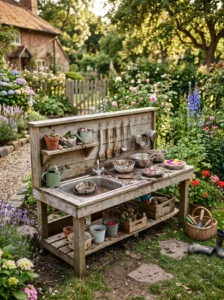
A mud kitchen is one of those outdoor play projects that looks simple at first glance—until you start building one and realize there are dozens of little decisions to make. One of the biggest questions parents and DIY enthusiasts face is surprisingly specific: what should you use for the sink?
Many people assume they need to buy a brand-new sink or spend extra money on specialized outdoor play equipment. The reality is that the sink area of a mud kitchen is often the easiest and cheapest part to create if you know where to look. Old household items, recycled materials, thrift-store finds, and simple DIY solutions can work just as well as expensive alternatives.
The sink is more than just a decorative feature. It gives children a place to mix mud pies, wash leaves, rinse toy dishes, and enjoy sensory play. A good sink setup can make a mud kitchen feel much more realistic while encouraging imaginative outdoor play for hours.
The challenge is finding an option that balances cost, durability, safety, and appearance. Some materials hold up better in the weather, while others are easier to install or maintain.
In this guide, you’ll discover nine budget-friendly mud kitchen sink ideas that are practical, creative, and easy to build. Whether you’re creating a mud kitchen from pallets, repurposed furniture, or a simple wooden frame, these ideas will help you create a fun and functional play space without spending a fortune.
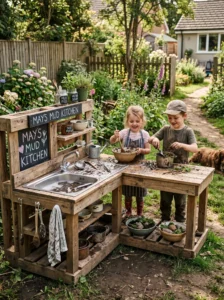
1. Repurpose an Old Stainless Steel Kitchen Sink
If you can get your hands on an old kitchen sink, you’ve probably found one of the best mud kitchen solutions available.
Stainless steel sinks are incredibly durable and naturally designed to handle water, dirt, and daily wear. Since many homeowners replace perfectly functional sinks during kitchen renovations, you can often find them for free through local classifieds, recycling centers, or family members.
This option works especially well in medium and large mud kitchens where children have enough workspace around the sink. The deep basin gives kids plenty of room to mix mud, collect natural materials, and wash toy dishes.
When installing one, make sure the sink is securely supported underneath. Stainless steel can be heavier than people expect, particularly double-bowl models. Sand any sharp edges and remove old plumbing parts before use.
A practical benefit is easy cleanup. At the end of the day, you can simply hose the sink down and it’s ready for the next play session. Many parents find that children naturally gravitate toward the sink area because it feels similar to a real kitchen, making imaginative play even more engaging.
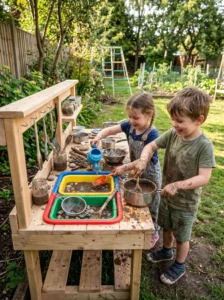
2. Use a Plastic Washing Basin
Sometimes the simplest solution turns out to be the smartest one.
Plastic washing basins are inexpensive, lightweight, and available in many sizes. They fit easily into a cutout in a wooden countertop and require very little installation effort. For families working with a tight budget, this is often one of the most practical choices.
The lightweight design makes it ideal for smaller mud kitchens or temporary setups. You can even remove the basin when needed for cleaning or storage during harsh weather.
Choose a sturdy, thick plastic model rather than the cheapest option available. Thin plastic can crack after prolonged exposure to sunlight and rough play. Neutral colors such as gray, green, or black often blend better with outdoor spaces than bright colors.
One common mistake is selecting a basin that’s too shallow. Children tend to add lots of water and mud during play, so a deeper container helps reduce spills.
Many parents appreciate how easy these basins are to replace if they become damaged. Instead of worrying about expensive repairs, you can simply swap in another inexpensive basin and keep the mud kitchen functioning smoothly.
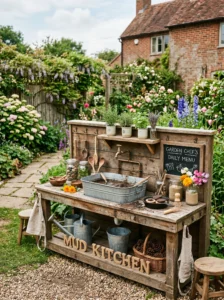
3. Install a Metal Utility Tub
A metal utility tub offers a rustic look that suits many backyard mud kitchens.
Galvanized tubs are commonly used for gardening and farm purposes, which means they’re built to handle outdoor conditions. Their vintage appearance also adds charm to homemade play kitchens.
This idea works particularly well in farmhouse-style gardens or natural play areas. The larger size provides plenty of room for multiple children to play together without constantly competing for space.
When installing a utility tub, ensure it sits securely within the countertop opening. Because these tubs are often round or oval, you’ll need to measure carefully before cutting.
A useful tip is to drill a small drainage hole if water tends to collect after rain. Standing water can attract insects and make maintenance more difficult.
The slightly rugged appearance encourages messy play, which is exactly what a mud kitchen is meant for. Children feel free to experiment with mud, leaves, sticks, and water without worrying about making a mess. In many ways, the rustic look actually improves the overall outdoor play experience.
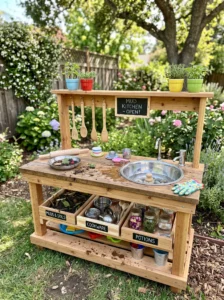
4. Reuse a Large Mixing Bowl
A large stainless steel mixing bowl can become an excellent mud kitchen sink with almost no effort.
This option is particularly attractive because many households already have an extra mixing bowl tucked away in a cabinet. The rounded shape fits naturally into countertop openings and provides a clean, polished appearance.
Mixing bowls work best in compact mud kitchens where space is limited. Their smaller footprint leaves more room for play surfaces, storage shelves, and pretend cooking areas.
When selecting a bowl, choose one with a wide opening and sufficient depth. Very shallow bowls may overflow quickly during water play activities.
Installation is straightforward. Simply cut a circular opening slightly smaller than the bowl’s rim so it rests securely in place. Adding a small bead of weatherproof sealant around the edge can help prevent movement.
Parents often appreciate how easy stainless steel bowls are to clean. They resist staining and generally maintain their appearance even after years of outdoor use. It’s a small upgrade that can make a homemade mud kitchen feel surprisingly professional.
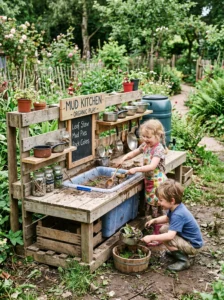
5. Turn a Storage Bin Into a Sink
Storage bins are one of the most overlooked materials for mud kitchen projects.
Many plastic storage containers are sturdy enough to function as sinks while offering significantly more capacity than traditional basins. This makes them ideal for children who enjoy mixing large batches of mud or collecting natural materials.
The rectangular shape fits easily into most DIY countertops. It also creates a more realistic sink appearance compared to round containers.
Look for bins made from heavy-duty plastic designed for garage or utility storage. These tend to hold up better against sunlight and rough handling.
A common mistake is choosing transparent bins. While they work initially, scratches and dirt often become more visible over time. Solid-colored bins generally look cleaner and last longer.
One advantage is flexibility. If your child outgrows the mud kitchen or you decide to redesign it later, the bin can return to its original storage purpose. This makes it one of the most practical budget-friendly options available.
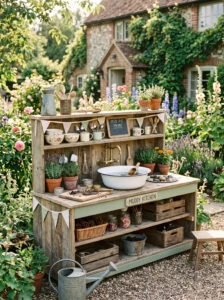
6. Use an Old Enamel Basin
Few sink ideas add as much character as an old enamel basin.
These vintage-style basins often appear at flea markets, garage sales, and thrift stores. Their classic look creates a charming, nostalgic feel that works beautifully in cottage gardens and natural play areas.
Enamel-coated metal is durable and generally handles outdoor use well when properly maintained. The smooth surface is also easy for children to rinse and clean during play.
This sink style works particularly well in decorative mud kitchens where appearance matters as much as functionality. White enamel with contrasting trim can become a standout feature.
Check carefully for chips or rust before purchasing. Minor imperfections are usually fine, but extensive damage may shorten the basin’s lifespan.
Many parents love the visual appeal these basins bring to a backyard. Instead of looking like a simple toy station, the mud kitchen feels like a thoughtfully designed outdoor feature that complements the overall garden environment.
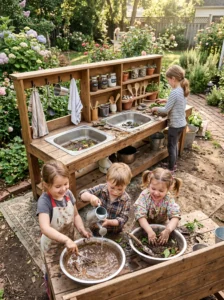
7. Create a Double-Sink Setup With Two Bowls
A double sink instantly makes a mud kitchen feel more realistic and interactive.
Using two matching bowls or basins allows children to separate activities. One side can hold water while the other contains mud, leaves, stones, or pretend food creations.
This idea works particularly well for families with multiple children. Having separate sink spaces reduces disagreements and encourages cooperative play.
When planning the layout, leave enough workspace between the sinks for comfortable movement. Crowding them too closely can make the kitchen feel cramped.
Matching containers create a cleaner appearance, although mixing sizes can also work if you’re aiming for a more rustic DIY style.
The practical advantage is versatility. Children naturally invent more complex play scenarios when multiple workstations are available. What starts as a simple mud pie activity often evolves into an elaborate pretend restaurant or outdoor bakery.
For relatively little additional cost, a double-sink design can significantly increase the functionality of your mud kitchen.
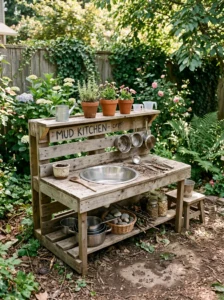
8. Upcycle a Pet Water Bowl
Pet water bowls are surprisingly effective mud kitchen sinks.
Large stainless steel dog bowls are affordable, weather-resistant, and designed to handle constant water exposure. Their sturdy construction makes them ideal for energetic outdoor play.
This solution works best for smaller mud kitchens, toddler play stations, or compact backyard spaces where every inch matters.
Choose a bowl with a wide opening rather than a deep, narrow design. Wider bowls are easier for small hands to access and clean.
Installation requires little effort. Simply cut a matching opening in the countertop and drop the bowl into place. Many pet bowls have rolled edges that help them sit securely.
One of the biggest benefits is durability. These bowls are designed for daily use and typically resist rust, cracking, and fading. For a very modest investment, you get a sink that can survive years of muddy adventures.
Sometimes the most creative DIY solutions come from completely unexpected places, and pet bowls are a perfect example.
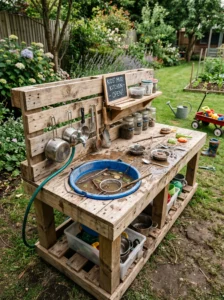
9. Build a Removable Bucket Sink
A removable bucket sink is one of the most flexible mud kitchen options available.
Instead of permanently installing a basin, you create a space where a bucket can slide in and out as needed. This design makes cleaning, refilling, and storage incredibly convenient.
It works especially well in regions with harsh winters or frequent storms where outdoor equipment may need occasional protection.
Choose a sturdy plastic bucket with a comfortable size for children. Avoid extremely large buckets, as they can become heavy when filled with water and mud.
A simple wooden frame around the bucket opening helps keep everything stable during play. Some builders even add handles for easier removal.
The practical advantage is maintenance. If the bucket becomes dirty, damaged, or worn out, replacing it takes only minutes and costs very little.
Parents often appreciate how easy this setup is to manage. Instead of dealing with complicated drainage systems or permanent fixtures, they can simply remove the bucket, empty it, and put it back in place. It’s a straightforward solution that delivers excellent functionality without adding complexity.
Comparison Table
| Type | Best Use | Material | Style/Vibe | Difficulty Level |
|---|---|---|---|---|
| Old Kitchen Sink | Large mud kitchens | Stainless Steel | Realistic & Professional | Medium |
| Plastic Basin | Budget-friendly builds | Plastic | Simple & Practical | Easy |
| Metal Utility Tub | Rustic outdoor spaces | Galvanized Metal | Farmhouse | Medium |
| Mixing Bowl | Small mud kitchens | Stainless Steel | Clean & Modern | Easy |
| Enamel Basin | Decorative gardens | Enamel-Coated Metal | Vintage Cottage | Medium |
| Bucket Sink | Flexible DIY projects | Plastic | Functional & Casual | Easy |
How to Choose the Best Mud Kitchen Sink
Choosing a mud kitchen sink is less about finding the perfect product and more about matching the sink to your space, budget, and intended use.
Start with size. A sink should feel proportional to the mud kitchen itself. Large sinks can overwhelm small play stations, while tiny sinks may frustrate children who enjoy messy sensory play. Measure your countertop carefully before purchasing or repurposing any container.
Material selection is equally important. Stainless steel remains one of the best choices because it resists rust, cleans easily, and handles outdoor conditions well. Plastic is often the most affordable option and works perfectly for casual backyard use. Galvanized metal and enamel provide extra character but may require occasional maintenance.
Think about durability. Mud kitchens are exposed to rain, sunlight, dirt, and frequent use. Thin plastic containers may save money initially but often need replacement sooner. Spending slightly more on a durable basin can provide better long-term value.
Maintenance should also influence your decision. Removable sinks are usually easier to clean than permanently installed options. If convenience matters, choose a design that can be lifted out and rinsed quickly.
Budget is another consideration. Fortunately, many excellent mud kitchen sinks cost very little. Thrift stores, garage sales, renovation leftovers, and recycling centers are often better sources than buying new products.
One common mistake is focusing too much on appearance and not enough on practicality. A beautiful sink isn’t useful if it constantly tips over, leaks, or becomes difficult to clean. Another mistake is choosing materials with sharp edges or damaged surfaces that may create safety concerns.
The best mud kitchen sink is one that encourages creative play, withstands outdoor conditions, and fits comfortably within your budget. Simple solutions often perform just as well as expensive alternatives.
Conclusion
Creating a fun and functional mud kitchen doesn’t require expensive materials or complicated construction techniques. In fact, some of the best sink ideas come from everyday items that might otherwise end up unused in a garage, shed, or donation pile.
From repurposed kitchen sinks and mixing bowls to plastic basins, utility tubs, and removable buckets, there are plenty of affordable ways to add a practical water station to an outdoor play area. Each option offers unique advantages depending on your available space, budget, and design preferences.
The most important thing is choosing a sink that can handle outdoor conditions while giving children enough room for imaginative, messy play. Durability, ease of cleaning, and safe installation matter far more than having the most elaborate setup.
A well-designed mud kitchen encourages creativity, sensory exploration, and outdoor activity. Whether you build a simple play station over a weekend or create a more detailed backyard feature, the right sink can become the heart of the entire project.
Keep your design practical, use materials you can easily maintain, and don’t be afraid to repurpose items you already own. Often, the most memorable mud kitchens are the ones built with creativity rather than a large budget.
FAQs
1. What is the best material for a mud kitchen sink?
Stainless steel is usually the best option because it resists rust, handles outdoor weather well, and is easy to clean. Durable plastic is another excellent budget-friendly choice.
2. Do mud kitchen sinks need running water?
No. Most mud kitchens use containers filled manually with water. Children enjoy the sensory play experience even without a connected plumbing system.
3. Can I use a plastic container as a mud kitchen sink?
Yes. Many DIY builders use plastic washing basins, storage bins, or buckets. Just choose sturdy plastic designed for repeated outdoor use.
4. How deep should a mud kitchen sink be?
A depth of around 6–10 inches works well for most children. This provides enough room for water and mud play without becoming difficult to access.
5. How do I keep a mud kitchen sink clean?
Remove debris regularly, rinse the sink with a garden hose, and allow it to dry when possible. Removable sink designs make maintenance much easier.
6. Is a double sink worth adding?
If multiple children use the mud kitchen, a double sink can be extremely useful. It allows different activities to happen at the same time and encourages cooperative play.
7. Where can I find inexpensive mud kitchen sinks?
Check thrift stores, garage sales, online marketplaces, recycling centers, and renovation leftovers. Many people give away old sinks and basins for free.
8. What mistakes should I avoid when choosing a sink?
Avoid containers with sharp edges, weak plastic, poor support underneath, or sizes that don’t match your mud kitchen. Functionality should always come before appearance.