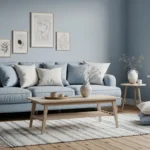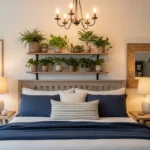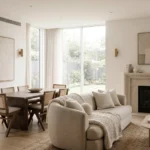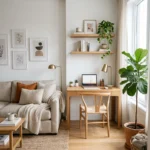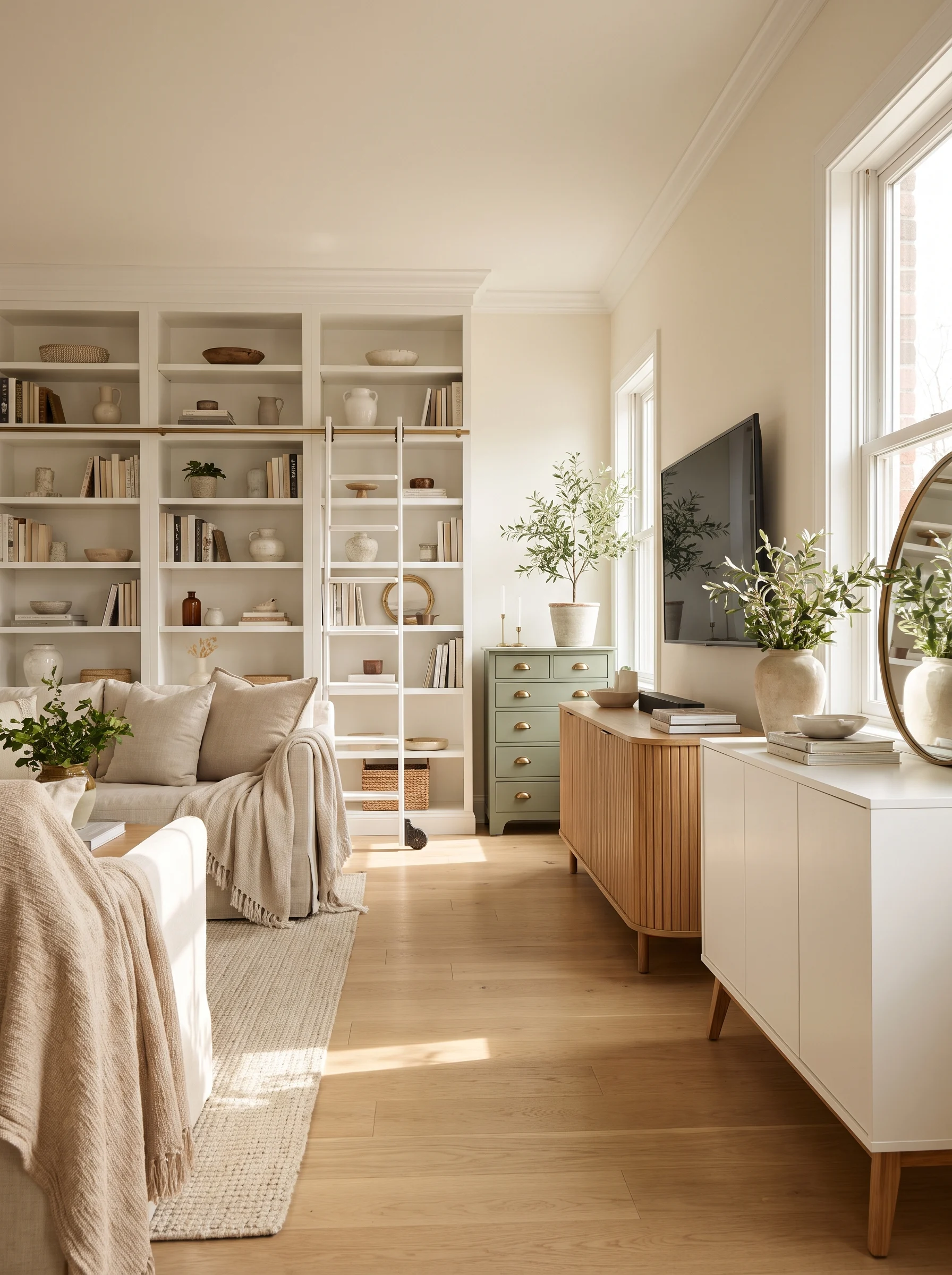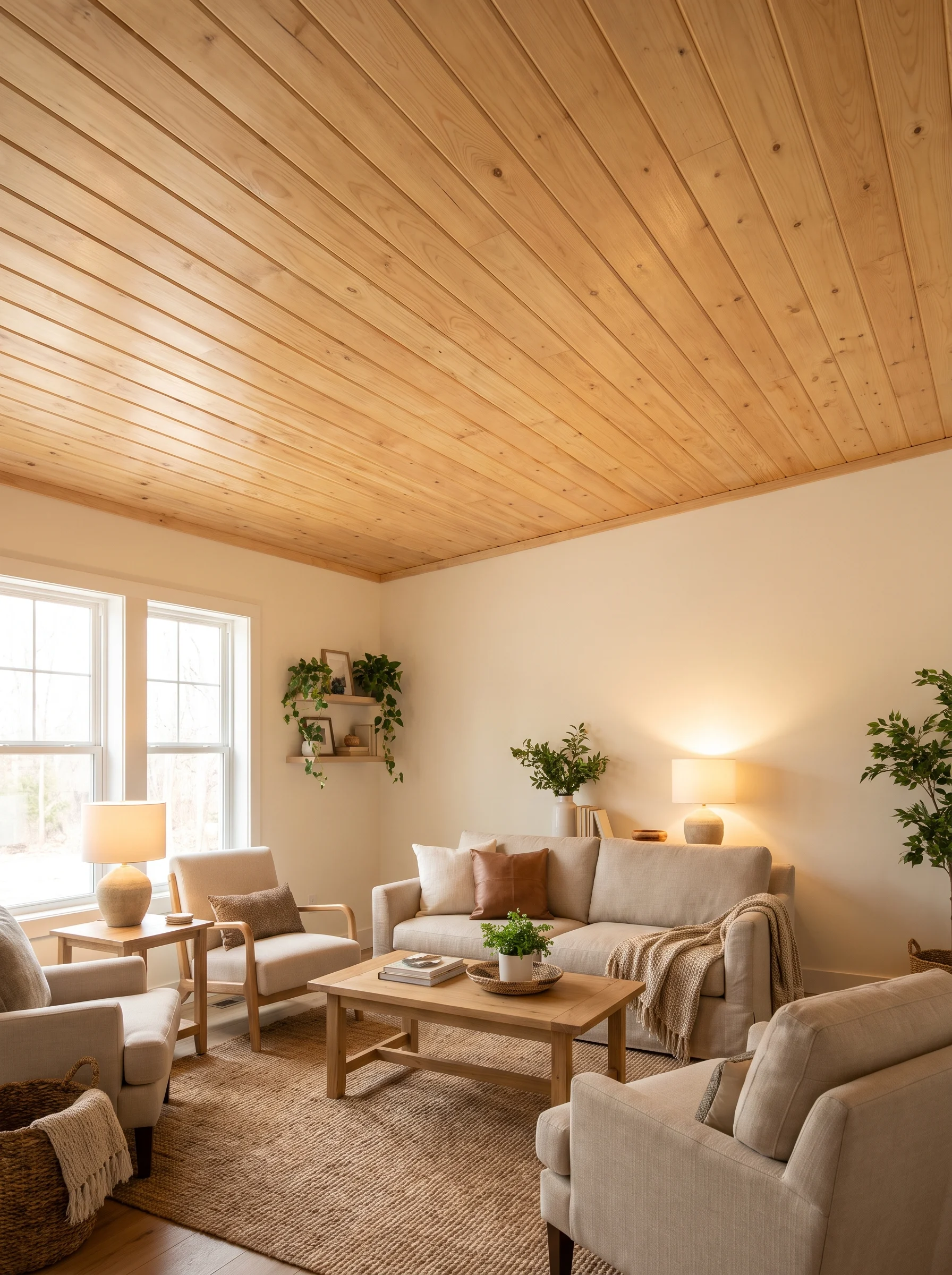
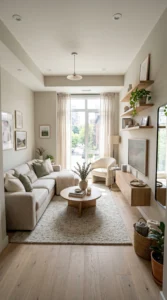
Small living rooms can be surprisingly difficult to arrange well. Most people assume the problem is the room size itself, but honestly, the bigger issue is usually furniture placement. A cramped room with bulky furniture pushed against every wall can feel stressful to sit in, even if the room is technically “organized.” On the other hand, a small living room with smart spacing and intentional furniture choices can feel calm, functional, and much larger than it actually is.
A lot of homeowners and renters make the same mistake: they try to fit everything they would put in a large living room into a smaller one. Oversized sectionals, too many tables, awkward TV placement, and blocked walkways quickly turn the space into a daily frustration. You end up bumping into furniture, struggling to clean corners, or feeling like the room never looks tidy no matter how often you organize it.
The good news is that arranging a small living room is less about decorating talent and more about understanding flow, scale, and purpose. Once you know how furniture affects movement and visual balance, the room starts working with you instead of against you.
In this guide, you’ll learn practical, step-by-step ways to arrange furniture in a small living room without making it feel crowded. From choosing the right sofa size to creating better walking paths and using vertical space properly, these ideas are realistic, easy to apply, and designed for everyday living — not just for pretty Pinterest photos.
1. Start With the Largest Furniture Piece First
The easiest way to make a small living room feel chaotic is by randomly placing furniture one piece at a time. The smarter approach is to begin with the largest item in the room — usually the sofa. Once that anchor piece is positioned correctly, everything else becomes much easier to arrange.
This works because the sofa naturally controls traffic flow and visual balance. In a compact room, even moving the sofa a few inches can completely change how spacious the room feels. Most designers recommend placing the sofa against the longest wall unless the room layout clearly supports floating furniture.
This idea works especially well in apartments, narrow living rooms, or open-concept spaces where every inch matters. If the room also includes a dining area or workspace, your sofa placement helps define separate zones without needing walls.
Try avoiding oversized sectionals unless your layout truly supports them. Instead, choose apartment-sized sofas with exposed legs because they visually lighten the room. Neutral colors also help prevent the space from feeling visually heavy.
In real life, a properly placed sofa changes how the room feels immediately. Suddenly people can walk through comfortably, conversations feel more natural, and the room stops looking like furniture was “forced” into it.
2. Create a Clear Walking Path
One of the most overlooked parts of furniture arrangement is movement. If people have to squeeze sideways around tables or step over corners to cross the room, the layout is already failing — even if it looks stylish.
A clear walking path makes a small living room feel bigger because your brain reads open movement as spaciousness. Ideally, you want at least 24–30 inches of walking space around major furniture pieces whenever possible.
This works best in family living rooms, studio apartments, or homes where the living room connects directly to another area like the kitchen or hallway. Traffic flow matters even more in homes with kids or pets because crowded layouts become frustrating very quickly.
Avoid placing coffee tables too far into pathways. Instead, center them tightly around seating areas. Side tables should stay compact and proportional to the sofa. If your room is extremely small, consider skipping bulky accent chairs altogether and using poufs or stools instead.
The practical benefit is immediate. Cleaning becomes easier, people stop bumping into furniture, and the room feels calmer. Small spaces naturally feel busy, so good movement paths reduce that visual stress more than most people expect.
3. Float Furniture Away From the Walls
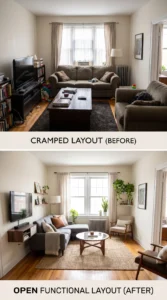
A lot of people automatically push every piece of furniture against the walls because they think it creates more space. Ironically, this often makes a small room feel stiff and cramped.
Pulling furniture slightly away from the wall creates breathing room and depth. Even a gap of 3–5 inches behind a sofa can visually open the room. Your eye notices the extra dimension, which makes the layout feel more intentional instead of squeezed in.
This technique works particularly well in square living rooms or rooms with enough center space for a balanced seating arrangement. It’s also useful in modern or minimalist interiors where openness matters.
You do not need to float every piece. Usually, just moving the sofa or accent chairs slightly forward is enough. Pair this with a slim console table behind the sofa if you want extra storage without clutter.
One mistake to avoid is floating furniture too far into the room. In a small space, oversized gaps can actually shrink usable floor area. Keep proportions realistic.
Daily life feels smoother with this setup because the room gains subtle depth. It also makes lighting look better since shadows and spacing create a softer, more layered appearance.
4. Use Multi-Functional Furniture
Small living rooms work best when furniture earns its place. If a piece only serves one purpose and takes up a lot of space, it’s usually not worth keeping.
Multi-functional furniture solves this problem by combining storage, seating, and practicality into fewer items. Think storage ottomans, nesting tables, lift-top coffee tables, or benches with hidden compartments.
This idea is especially useful for apartments, shared homes, or smaller family spaces where storage is limited. Instead of adding more shelves and cabinets, you reduce clutter by making furniture itself more useful.
Choose pieces that still look visually light. A giant storage trunk may technically save space, but it can overwhelm the room visually. Softer materials, slim frames, and lighter wood tones usually work better in compact living rooms.
A storage ottoman, for example, can function as a coffee table, footrest, hidden blanket storage, and even extra seating for guests. That’s four jobs from one piece of furniture.
In everyday use, multifunctional furniture reduces mess faster because everything has a place to go. The room stays easier to maintain, which honestly matters more than having perfectly styled shelves.
5. Choose the Right Rug Size
A rug can either make a small living room feel connected or make it feel awkwardly chopped apart. Surprisingly, rugs that are too small are one of the most common decorating mistakes in compact spaces.
A properly sized rug creates visual unity. Ideally, at least the front legs of your sofa and chairs should sit on the rug. This anchors the furniture together and prevents the room from looking scattered.
This works best in living rooms with multiple seating pieces or open layouts where you need clear zone definition. Larger rugs also help narrow rooms appear wider because they stretch the eye across the floor.
Avoid tiny rugs floating in the center of the room with empty floor surrounding them. That setup actually emphasizes how small the room is.
Light-colored rugs with subtle patterns tend to work best because they brighten the floor without overwhelming the space. Flat-weave rugs are also practical for smaller rooms since they’re easier to clean and visually lighter.
The difference is noticeable immediately. The room suddenly feels coordinated instead of pieced together randomly. Even inexpensive furniture looks more polished when the rug size is correct.
6. Keep Furniture Proportional to the Room
Furniture scale matters more in small living rooms than almost anything else. A sofa that looked perfect in a showroom can completely dominate a compact apartment once it’s inside.
The goal is balance, not simply “small furniture.” You want pieces that fit comfortably while still leaving breathing room around them. Bulky arms, oversized recliners, and deep sectionals often eat valuable floor space unnecessarily.
This approach works in nearly every small living room, especially older homes where room dimensions tend to be tighter. Apartment-sized furniture collections are often designed specifically for these situations.
Choose sofas with slimmer arms and raised legs. Glass or acrylic tables can also visually reduce heaviness because they allow light to pass through. Avoid matching oversized furniture sets that make the room feel crowded instantly.
A common mistake is using too many tiny furniture pieces to compensate. That can actually create clutter. Instead, focus on fewer well-scaled items.
When proportions feel right, the room becomes more relaxing to spend time in. You stop feeling boxed in, and even simple activities like watching TV or having guests over feel more comfortable.
7. Use Vertical Space Wisely
When floor space is limited, the walls become incredibly important. Smart vertical storage helps free up the room without making it feel crowded.
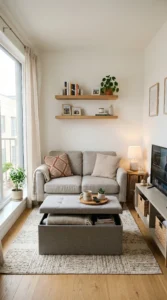
Tall shelving units, floating shelves, and wall-mounted lighting allow you to store or display items without sacrificing valuable floor area. This creates better balance in smaller rooms where horizontal space disappears quickly.
This works especially well in apartments or homes with limited storage closets. Vertical arrangements also help draw the eye upward, which makes ceilings appear taller.
Stick to organized, intentional wall storage rather than filling every inch with decor. Too many shelves or decorations can make the room feel visually noisy. A few clean lines work much better than overcrowded walls.
Wall-mounted TV units are particularly useful because they eliminate bulky entertainment centers. Floating shelves beside the TV can provide storage without adding heaviness.
In daily life, vertical storage keeps surfaces cleaner and easier to manage. The room feels less chaotic because clutter moves upward instead of spreading across tables and corners.
8. Position the TV Strategically
TV placement often controls the entire furniture arrangement in a living room, especially smaller ones. A poorly positioned television can force awkward seating angles and waste valuable space.
The best TV placement usually allows comfortable viewing without blocking windows or pathways. In many small rooms, mounting the TV on the wall saves far more space than using a bulky media cabinet.
This strategy works well in modern apartments, narrow living rooms, or multifunctional spaces where flexibility matters. Wall mounting also creates cleaner visual lines, making the room feel less crowded.
Avoid placing the TV too high. Many people mount televisions near ceiling level, which becomes uncomfortable during long viewing sessions. Eye-level positioning generally feels better.
If storage is needed underneath, use slim floating cabinets instead of oversized entertainment units. Choose cable management solutions so cords don’t visually clutter the room.
A thoughtfully placed TV makes the room feel more organized instantly. Seating arrangements become easier, and the room naturally feels more balanced instead of revolving awkwardly around one giant screen.
9. Use Light Colors to Open the Room
Color affects how large or small a room feels more than people realize. Dark, heavy tones can make compact living rooms feel closed in, while lighter colors create openness and brightness.
This doesn’t mean your room has to be plain white. Soft beige, warm gray, muted greens, and light earthy tones work beautifully while still adding personality.
Light colors reflect natural light better, which visually expands the room. This is especially helpful in apartments or homes with limited windows.
For furniture, lighter upholstery often works better in small spaces because it reduces visual weight. Pair it with textured pillows or throws for warmth instead of relying on dark bulky furniture.
One mistake people make is using too many contrasting colors in a small room. Strong visual breaks can make the space feel busy and fragmented. A softer color palette creates smoother visual flow.
The result feels calmer in daily life. The room appears cleaner, brighter, and less mentally exhausting — which honestly matters after a long day when you just want to relax.
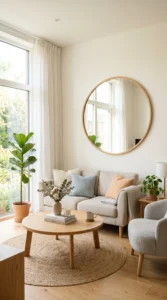
10. Add Mirrors to Reflect Space
Mirrors are one of the oldest small-space tricks for a reason: they genuinely work. A well-placed mirror reflects light and creates the illusion of additional depth.
This technique works best in living rooms with natural light sources. Positioning a mirror across from a window helps bounce brightness around the room and prevents dark corners.
Large mirrors generally work better than multiple tiny ones because they create a cleaner, more open effect. Thin frames or frameless styles keep the look modern and less visually heavy.
Avoid placing mirrors where they reflect clutter or awkward angles. Reflection matters. You want the mirror to enhance openness, not double visual chaos.
This strategy is especially useful in narrow or darker living rooms where natural brightness feels limited.
The practical difference is subtle but powerful. The room feels less boxed in, especially during daytime hours when natural light spreads more evenly throughout the space.
11. Avoid Overdecorating Small Spaces
Small living rooms often suffer from “decor overload.” Too many pillows, baskets, candles, plants, and decorative objects quickly make the room feel cluttered instead of cozy.
Good small-space styling relies on restraint. You want enough decor to add personality without visually crowding the room.
This works particularly well in modern, Scandinavian, or minimalist-inspired interiors, but honestly, every small room benefits from cleaner styling.
Choose a few larger decorative pieces instead of many tiny items. For example, one substantial plant often looks better than six mini planters scattered everywhere. The same applies to artwork and accessories.
Keep surfaces partially empty. Coffee tables and shelves need visual breathing room. Empty space is not wasted space — it helps the room feel organized.
In real daily life, less decor usually means less cleaning and less stress. The room becomes easier to maintain, and you stop constantly shifting items around just to make space for basic activities.
12. Use Round Furniture in Tight Layouts
Sharp corners can make a small living room feel crowded surprisingly fast. Round furniture softens movement and improves flow, especially in narrow layouts.
Round coffee tables, ottomans, and side tables allow easier movement because there are no harsh corners blocking pathways. This is especially useful in homes with kids or tighter walking areas.
This approach works best in compact apartments or living rooms where furniture placement leaves limited clearance space.
Round tables also create a softer visual rhythm. Too many rectangular pieces can make a room feel rigid and boxed in. Mixing shapes adds balance.
One important tip: choose appropriately scaled round pieces. Oversized circular tables can dominate small rooms just as badly as bulky rectangular ones.
In everyday use, rounded furniture simply feels easier to move around. People naturally bump into fewer edges, and the room feels more comfortable instead of cramped.
13. Create Zones in Open-Concept Spaces
Small open-concept homes can feel messy when the living room blends into dining or kitchen areas without clear separation.
Creating zones helps each area feel purposeful without adding walls. Rugs, lighting, and furniture placement all help define spaces visually.
This works especially well in studio apartments or combined living-dining layouts. A sofa can act as a subtle divider between areas without blocking openness.
Use rugs to visually anchor seating areas. Pendant lights or floor lamps can also signal different zones naturally.
Avoid overcrowding the room with too many dividers or shelving units. The goal is gentle separation, not cutting the room into tiny boxes.
The biggest benefit is psychological. The room feels more organized because each activity — relaxing, eating, working — has a clearer place within the layout.
14. Let Natural Light Stay Open
Natural light is incredibly valuable in small living rooms. Blocking windows with oversized furniture or heavy curtains instantly makes the room feel smaller.
Keep window areas as open as possible. Use light-filtering curtains or sheer panels that allow sunlight to move freely throughout the room.
This works especially well in apartments or smaller homes where daylight may already be limited.
Avoid placing tall bookshelves directly beside windows if possible. Low-profile furniture helps maintain openness and prevents shadows from dominating the room.
Mirrors and light-colored walls work even better when paired with strong natural light.
Daily life simply feels better in brighter rooms. The space feels more welcoming, cleaner, and less confined — even during ordinary activities like reading or watching TV.
15. Edit the Room Regularly
One underrated truth about small living rooms is that they require occasional editing. Even the best layout starts feeling crowded if unnecessary furniture and decor slowly accumulate over time.
This works because small spaces have less tolerance for clutter. One extra chair, oversized basket, or unused table can completely disrupt balance.
Every few months, evaluate what you actually use. If something constantly gets in the way or serves no purpose, remove it.
This advice applies to every type of small living room, especially family homes where items naturally pile up over time.
Focus on functionality first. A cleaner room with fewer items almost always feels more comfortable than a packed room with “extra storage.”
The emotional difference is huge. A well-edited room feels peaceful instead of overwhelming, which matters more than following every decorating trend online.
Comparison Table
| Type | Best Use | Material | Style/Vibe | Difficulty Level |
|---|---|---|---|---|
| Storage Ottoman | Extra seating + hidden storage | Fabric or leather | Cozy and practical | Easy |
| Floating Shelves | Vertical storage | Wood or metal | Modern and clean | Medium |
| Round Coffee Table | Tight layouts | Wood, glass, or marble | Soft and relaxed | Easy |
| Wall-Mounted TV Unit | Saving floor space | Wood or MDF | Minimal and modern | Medium |
| Apartment Sofa | Small living rooms | Fabric or linen | Comfortable and casual | Easy |
| Large Area Rug | Defining seating zones | Wool or synthetic blend | Balanced and polished | Easy |
Buying Guide: How to Choose Furniture for a Small Living Room
Buying furniture for a small living room requires a different mindset than decorating a larger space. The biggest mistake people make is shopping based only on appearance without checking dimensions carefully. Something can look compact online and still completely overpower your room once delivered.
Start with sizing and scale first. Measure your room properly before buying anything, especially sofas and coffee tables. Leave enough walking space around furniture so the room feels functional instead of crowded. In smaller spaces, furniture with raised legs often works better because visible floor space creates a lighter appearance.
Material choice matters too. Fabric sofas usually feel warmer and more comfortable for daily use, while leather or faux leather can be easier to wipe clean in homes with kids or pets. Glass tables visually open the room, but they require more cleaning. Wood furniture tends to feel timeless, though darker woods can sometimes make compact rooms feel heavier.
Durability should never be ignored just because the room is small. Furniture in compact living rooms often gets used more heavily because the space serves multiple purposes. Choose sturdy frames, washable fabrics, and surfaces that can handle daily wear without constant maintenance.
Budget-wise, prioritize the main pieces first. A good sofa and functional storage solution matter far more than trendy decor accessories. It’s usually smarter to buy fewer quality items than fill the room with cheap furniture that wears out quickly.
One common mistake is buying matching furniture sets. They often feel bulky and repetitive in smaller spaces. Mixing textures and lighter pieces usually creates a more natural, balanced look.
Finally, remember that comfort matters just as much as style. A beautiful room that feels awkward to live in will never truly work long term.
Conclusion
Arranging furniture in a small living room is really about making the space work better for everyday life. The goal isn’t to make the room look like a showroom — it’s to create a layout that feels comfortable, functional, and visually balanced without constant frustration.
Small changes often make the biggest difference. Choosing the right sofa size, improving walking paths, using vertical storage, and reducing clutter can completely change how the room feels. Most people don’t actually need a bigger living room; they just need a smarter arrangement.
It’s also important to remember that small spaces don’t have to feel boring or overly minimalist. A well-designed compact living room can still feel warm, personal, and inviting. The key is being intentional with furniture placement and avoiding the temptation to overcrowd the room with unnecessary pieces.
If you focus on flow, proportion, light, and practicality, even a modest living room can feel surprisingly spacious. And honestly, when a small room is arranged well, it often feels more comfortable and easier to maintain than oversized spaces filled with furniture nobody really uses.
The best layouts are the ones that quietly make daily life easier — where movement feels natural, storage works properly, and the room feels calm the moment you walk into it.
FAQs
1. What is the best sofa shape for a small living room?
Apartment-sized sofas or slim three-seaters usually work best. Avoid bulky sectionals unless your room layout truly supports them. Sofas with exposed legs also help the room feel lighter and more open.
2. Should furniture touch the walls in a small living room?
Not always. Pulling furniture slightly away from walls can actually make the room feel larger because it creates depth and breathing space. Even a few inches can make a noticeable difference.
3. What colors make a small living room look bigger?
Light neutrals, warm whites, soft grays, and muted earthy tones generally make compact spaces feel brighter and more open. Too many dark colors can make the room feel visually heavy.
4. Is a coffee table necessary in a small living room?
Not necessarily. In very tight spaces, storage ottomans, nesting tables, or side tables can work better. The goal is maintaining comfortable movement without overcrowding the room.
5. How do I stop my small living room from looking cluttered?
Focus on fewer, larger decor pieces instead of many small items. Use hidden storage whenever possible and regularly remove furniture or accessories you no longer use.
6. Are rugs important in small living rooms?
Yes, rugs help define seating areas and create visual unity. A rug that’s too small can actually make the room feel awkward and disconnected.
7. Can dark furniture work in a small living room?
It can, but balance is important. Pair darker furniture with lighter walls, rugs, or curtains so the room still feels open and bright rather than heavy.
8. What is the biggest mistake people make in small living rooms?
The most common mistake is overcrowding the room with oversized furniture or too many pieces. Good spacing and movement matter more than fitting in extra furniture.