11 Corner Fireplace Living Room Layouts That Don’t Waste the Angle
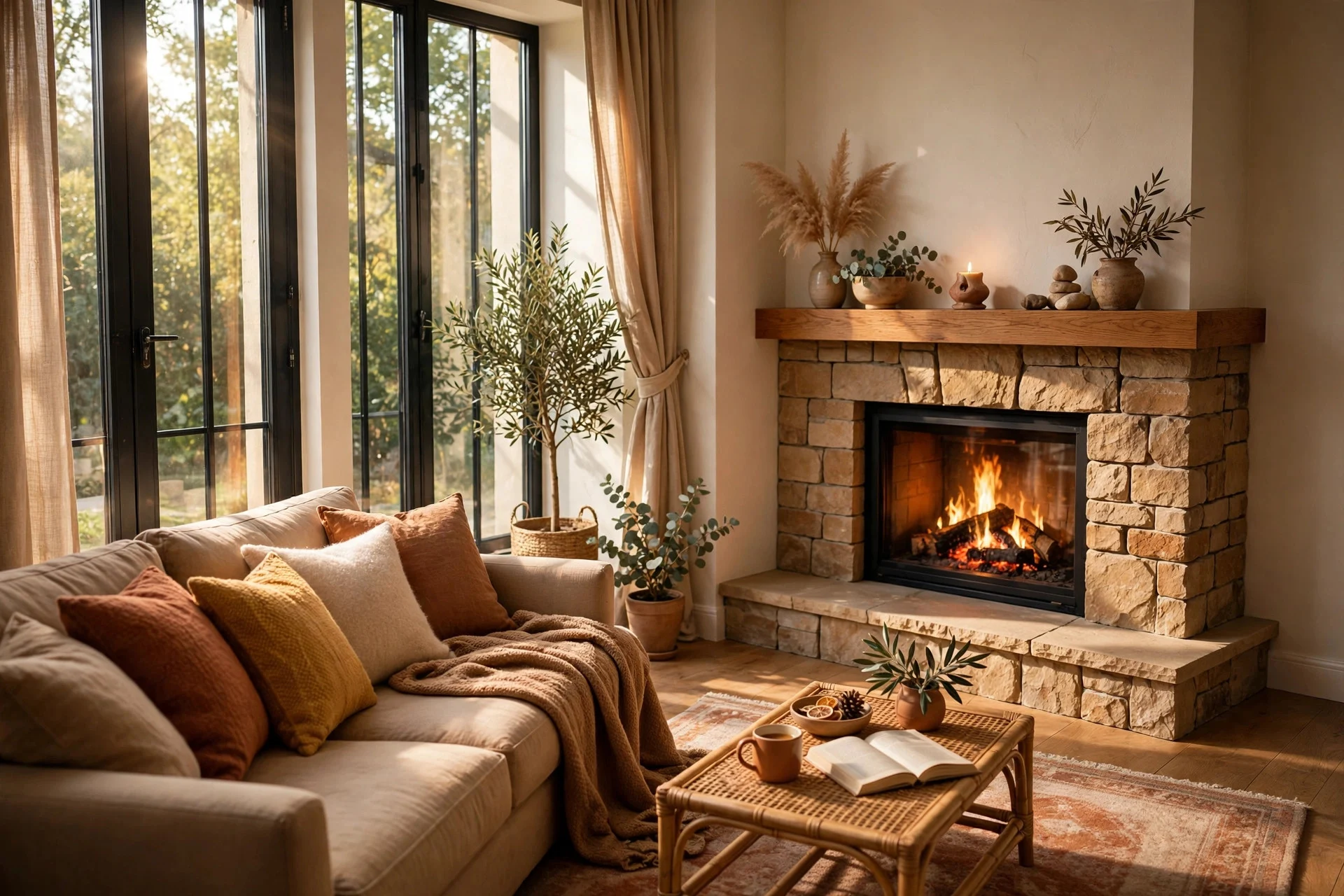
A corner fireplace stops wrecking your layout the moment you stop fighting the angle. Most rooms feel awkward because the sofa sits flat against the longest wall while the fire burns off to the side, ignored. Angle your main seating toward the corner instead, keep a clear walkway behind it, and that “problem” corner becomes the natural center of the room.
This is a walk-through, not a checklist. We’ll start right at the fireplace wall, move out to the seating wrapped around the angle, swing across to the opposite wall, visit the window side, and finish with the traffic flow that holds the whole plan together. Eleven ideas, one room, no wasted angle.
Flank the Corner With Floating Shelves
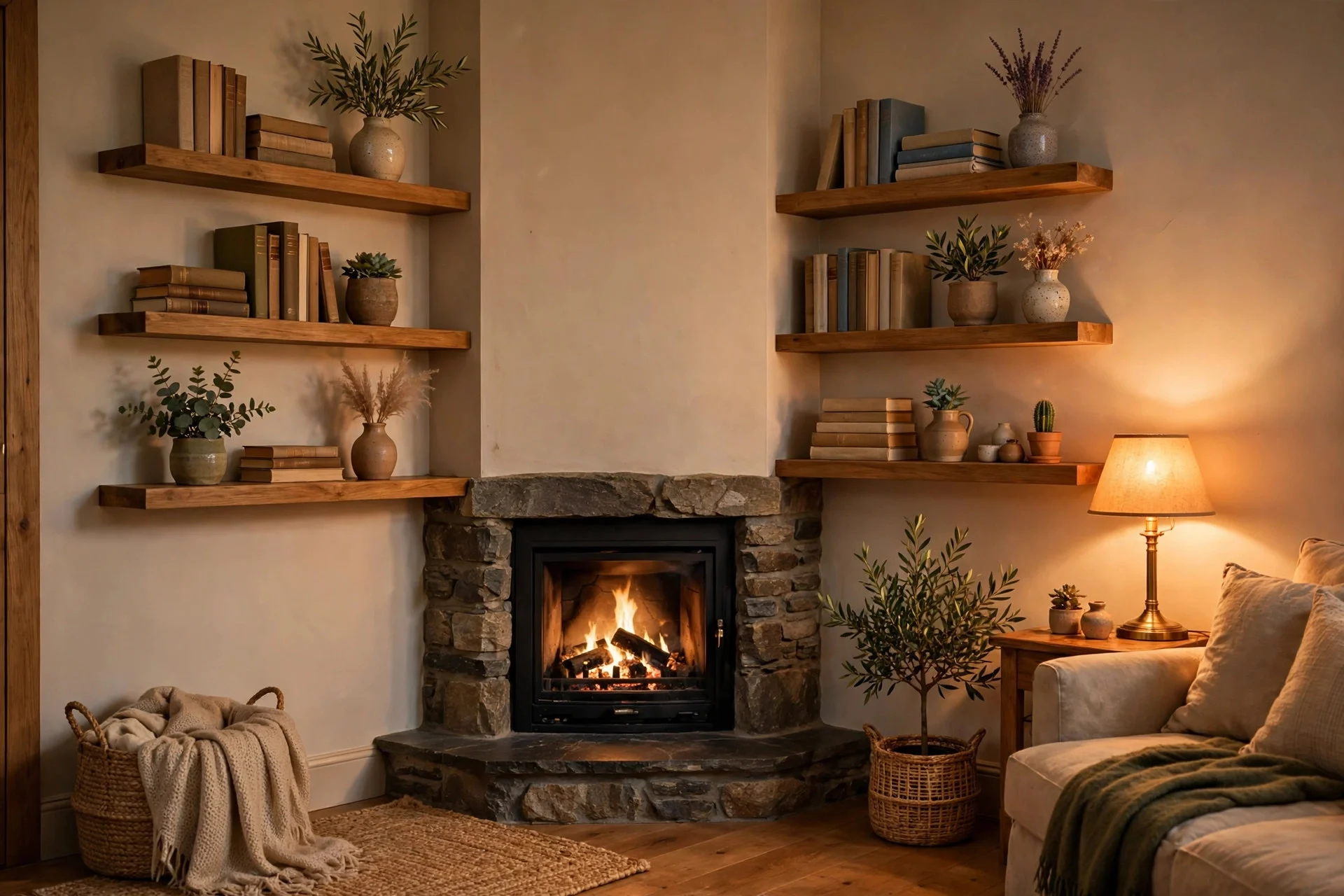
The two walls that meet at your fireplace are usually bare, which makes the corner look like an afterthought. Run two or three floating shelves along each wall and the angle suddenly reads as built on purpose: solid wood or thick-laminate boards, 8 to 10 inches deep, staggered at slightly different heights on both sides of the chimney. Shelves fill the dead vertical space beside an angled firebox and draw the eye along the corner instead of past it, which is exactly what a corner fireplace needs — visual weight on both sides so the angle feels anchored.
Expect to spend $60 to $300 on shelf boards and brackets if you do it yourself, or $300 to $800 for a carpenter to install a full bank. Difficulty is easy to moderate: a free afternoon with a stud finder and a level. One hands-on tip — stain or paint the shelves to match your mantel rather than the wall, so the whole corner reads as one connected unit. The watch-out is heat: keep the lowest shelf at least a foot above the mantel and check your fireplace manual for clearance specs, because gas and wood units have different rules.
Add a Hearth Bench for Extra Seats
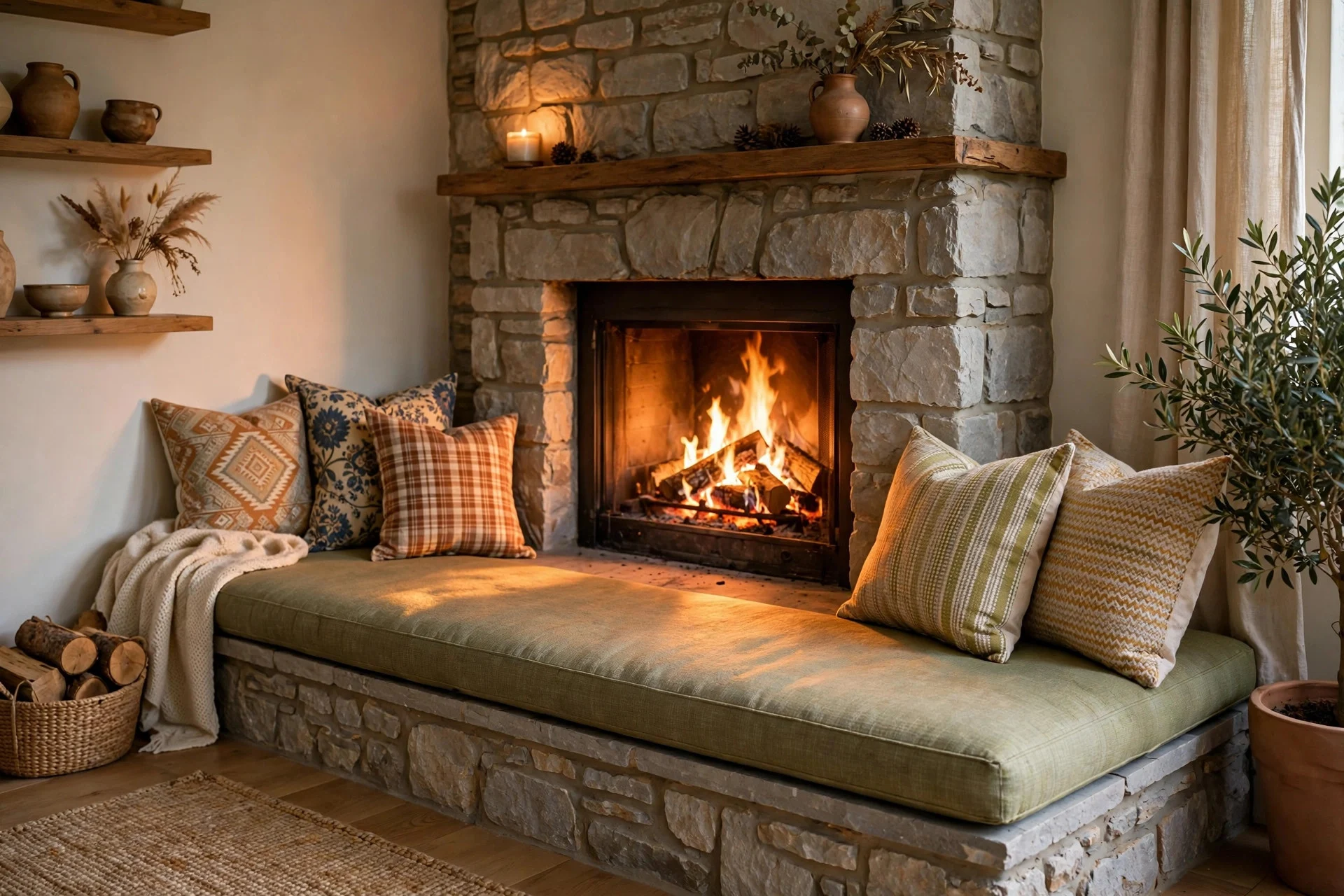
A low cushioned bench running along the hearth base — the ledge in front of the firebox — turns the least-used strip of the room into its most flexible seat. Kids perch there, guests set drinks there, and you get a spot to stretch your feet toward the fire on cold evenings. It works for a corner fireplace because the hearth juts into the room at an angle most furniture can’t use, so the bench claims space that would otherwise sit empty.
Two or three firm outdoor-grade cushions run $50 to $150, while a carpenter-built bench with hidden storage lands between $400 and $1,200. Difficulty runs from easy (buy cushions, done) to moderate (a weekend build). The hands-on tip: choose cushions with removable, washable covers, because hearths collect fine ash dust no matter how clean your burn is. Watch out for clearance — keep the bench front at least 36 inches from the firebox opening, and skip this idea if your hearth stone gets hot to the touch after a fire.
Angle Two Sofas Into a Diagonal Conversation Zone
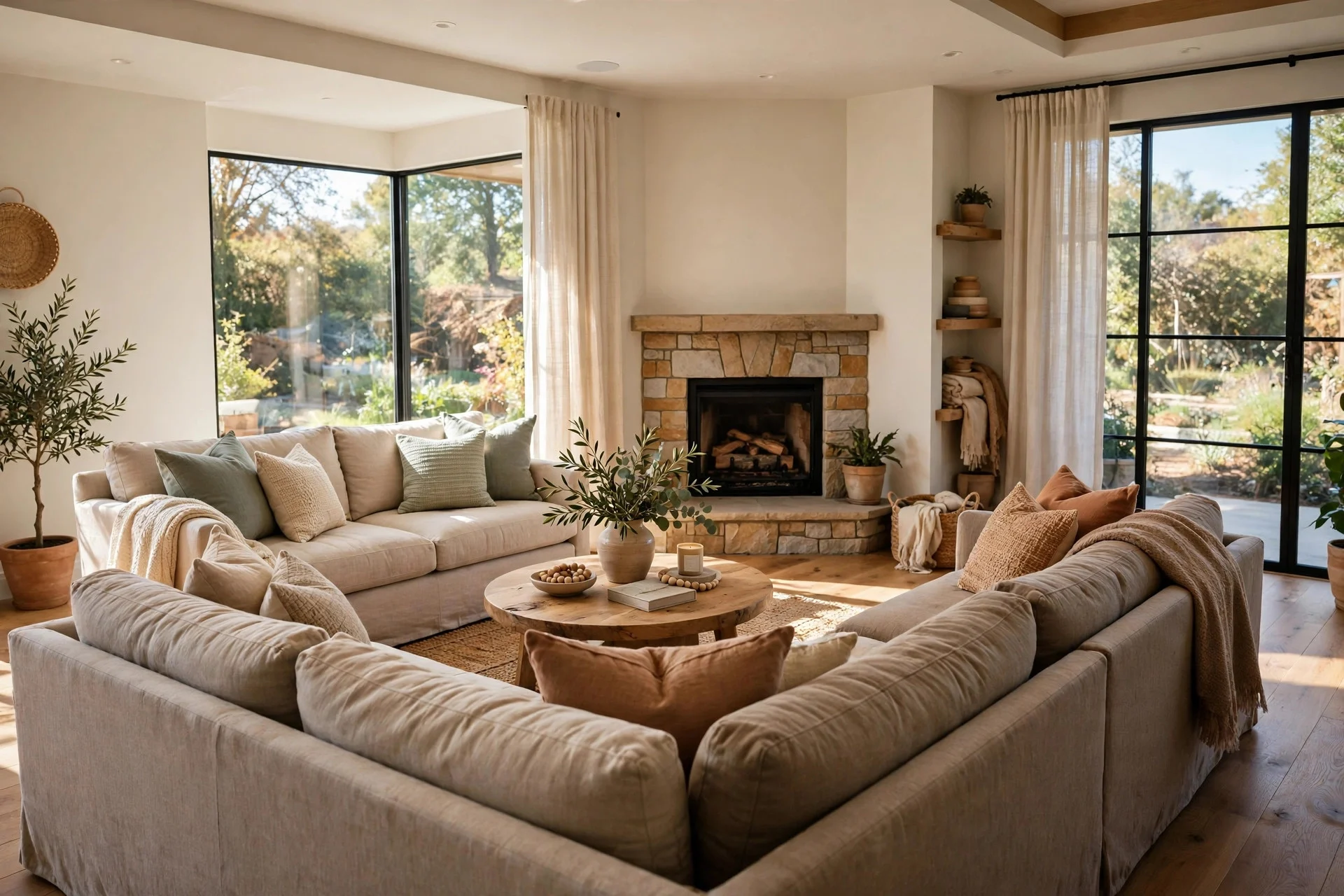
Place two sofas — or a sofa plus a loveseat — in an open L aimed straight at the corner, and the seating mirrors the fireplace’s 45-degree line. Nobody cranes a neck, nobody sits sideways to the fire, and conversation flows because everyone can see both the flames and each other. Most people find this the single biggest fix for a corner-fireplace room, because it stops treating the fireplace as an obstacle and starts treating it as the room’s compass point.
The rearrange costs nothing if you work with what you own; new pieces run $800 to $3,000 and up. Difficulty is easy — an afternoon of shifting furniture. Before you lift a single sofa, lay out the new positions with painter’s tape on the floor, because the diagonal feels strange until you can see it taped out. The watch-out: angling creates triangular dead space behind the sofas, so back a slim console table or a tall plant into each gap and they read as styled corners instead of holes.
- Keep 7 to 8 feet between the firebox and the front of the main sofa.
- Leave 14 to 18 inches from seat front to coffee table edge.
- Hold 30 inches or more clear for any walkway.
Soften the Angle With a Round Coffee Table
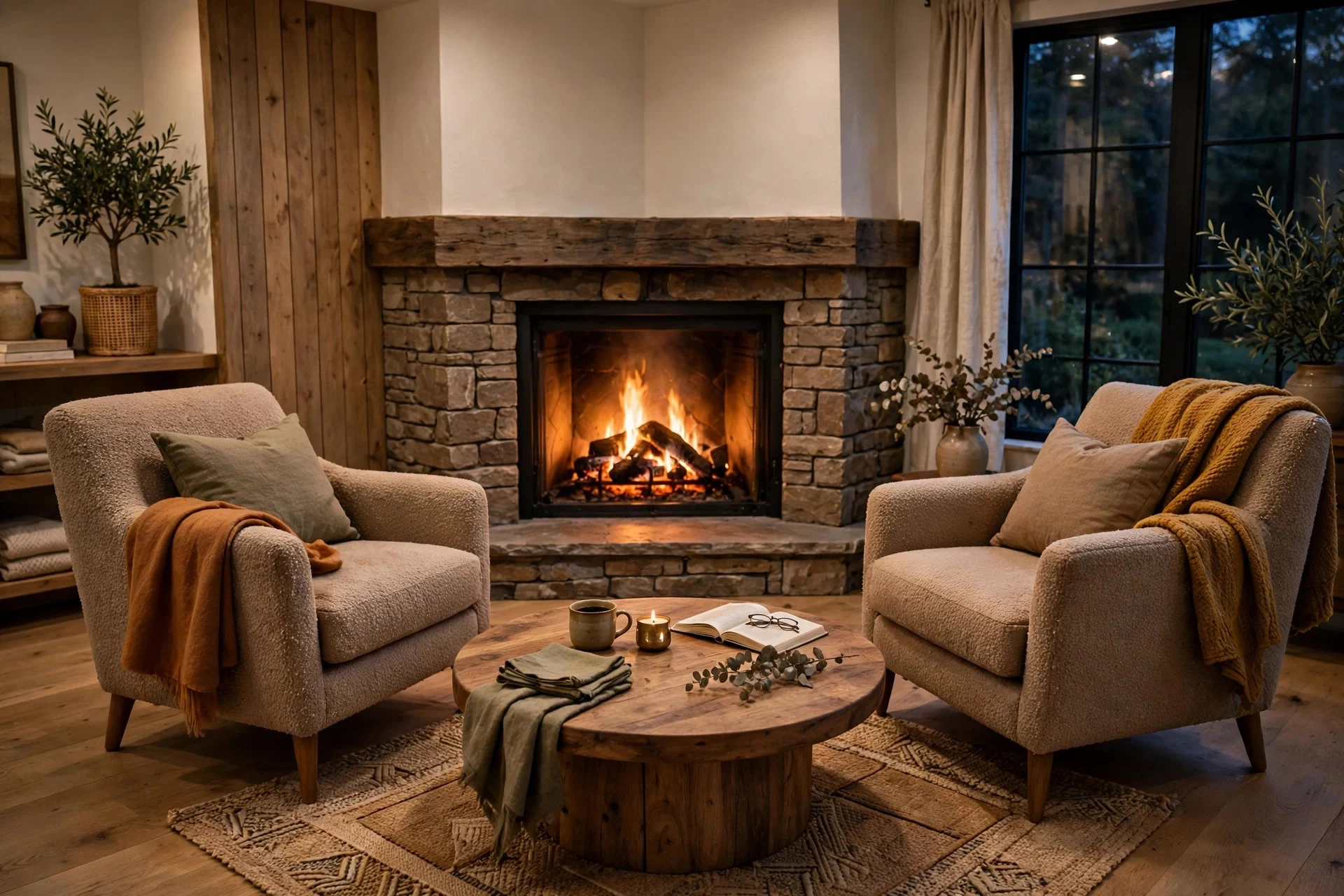
Park a round coffee table on the fireplace’s diagonal axis and the room’s harshest geometry melts. A corner-fireplace room is full of sharp 45-degree lines — the angled firebox, the diagonal seating — and a circle breaks them up while giving every seat equal reach to drinks and books. It’s a small change with an outsized calming effect.
Round tables run $80 to $500 depending on material, and the difficulty is as easy as it gets — it’s a swap, not a project. The hands-on tip: pick a table with a lower shelf so remotes, coasters, and the TV guide disappear underneath instead of cluttering the top. One watch-out: rectangular and oval tables fight the diagonal because they always point the wrong way no matter how you turn them, so stick with round or go without.
Tuck a Reading Chair Into the Side Angle
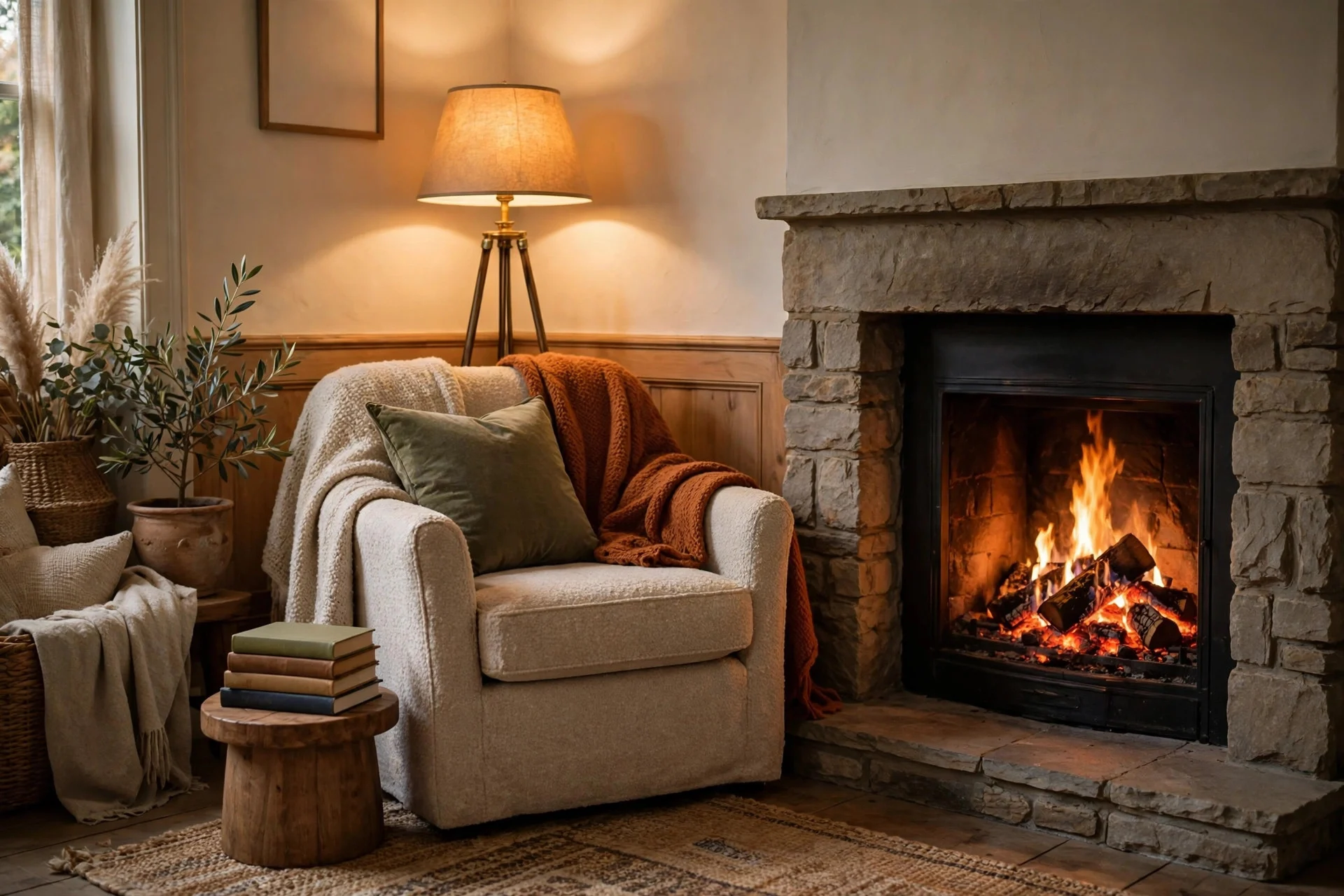
The strip of wall beside a corner fireplace is too tight for a sofa and too visible to leave empty, which makes it the perfect home for a single reading chair. Angle one comfortable armchair into that side space with a small side table and a lamp, and you’ve created a second destination in the room — a quiet seat that catches firelight without competing with the main conversation zone.
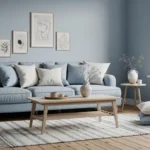
A good chair costs $150 to $800, plus $40 to $150 for a floor or table lamp; difficulty is easy. The hands-on tip: slide a small 3×5 rug under the chair to mark the nook as its own zone without building any walls. Watch out for function first — leave the fireplace doors, tools, and any vents fully clear, and measure the swing of everything before you commit the chair to its spot. If your main piece is already a grey couch in the living room, pull it into the diagonal plan instead of replacing it: angle it toward the fire and let a warmer-toned chair take this side nook.
Mount the TV Above the Mantel (With a Tilt Mount)
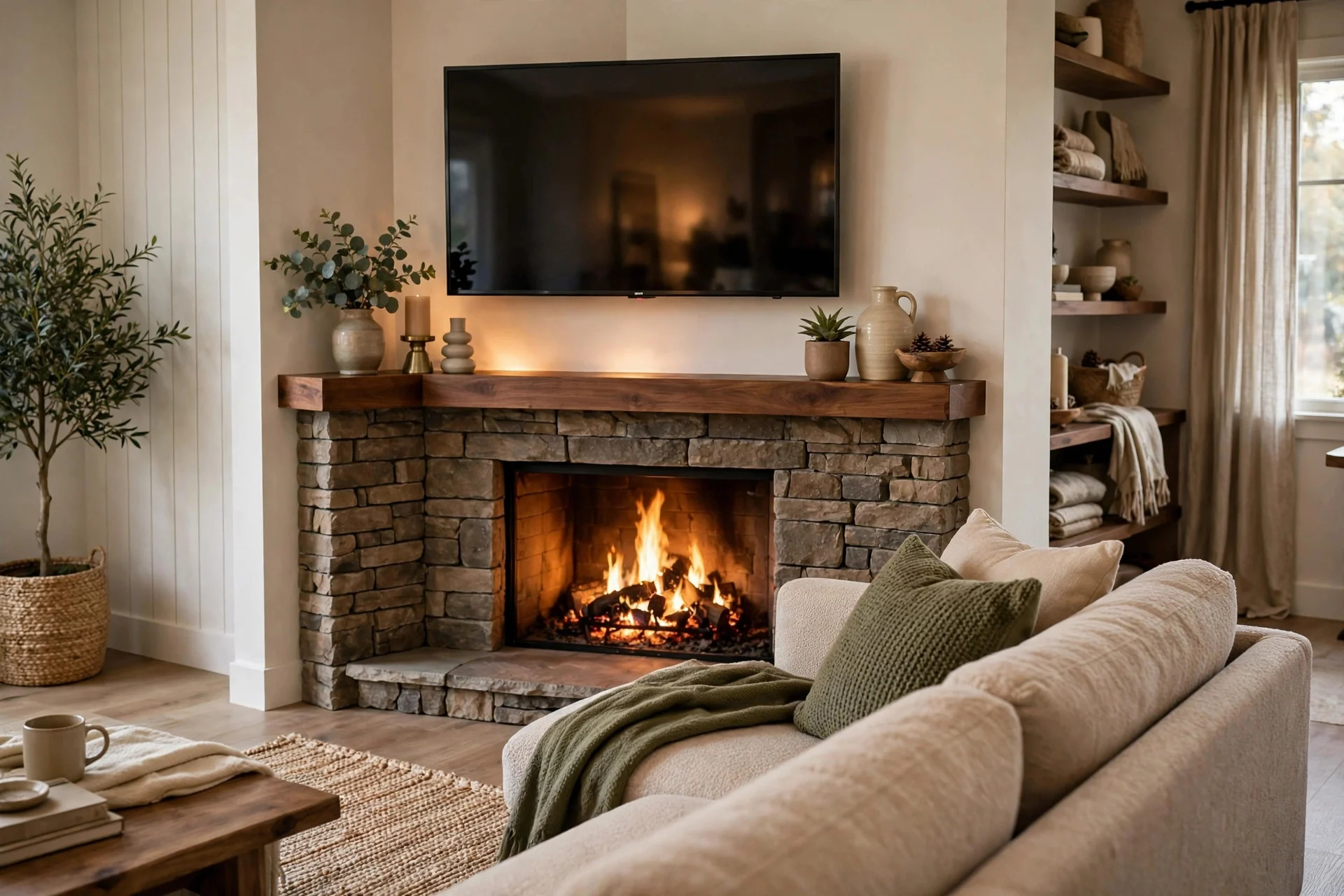
With a corner fireplace, the mantel wall is the only wall everyone already faces — so mounting the TV there ends the TV-versus-fireplace tug of war and gives you one focal wall instead of two competing ones. Center the screen over the mantel on a tilting wall mount, and the corner finally has a single job: be the place everyone looks.
A quality tilt mount runs $40 to $150, with professional installation adding $100 to $300; difficulty is moderate, about two to three hours with a second pair of hands. The hands-on tip: tilt the screen down 5 to 10 degrees toward the seating, which noticeably cuts the neck-strain angle from a low sofa. The watch-outs matter here — heat first: the mantel should project at least 6 inches to deflect rising heat, and your fireplace manual’s clearance spec wins over any blog advice. Then height: mount as low as the mantel allows and sit farther back, roughly 1.5 to 2.5 times the screen’s diagonal. Then glare: windows opposite the corner throw reflections onto an angled screen, so test with a hand mirror held at screen height before you drill.
Put the TV on the Opposite Wall Instead
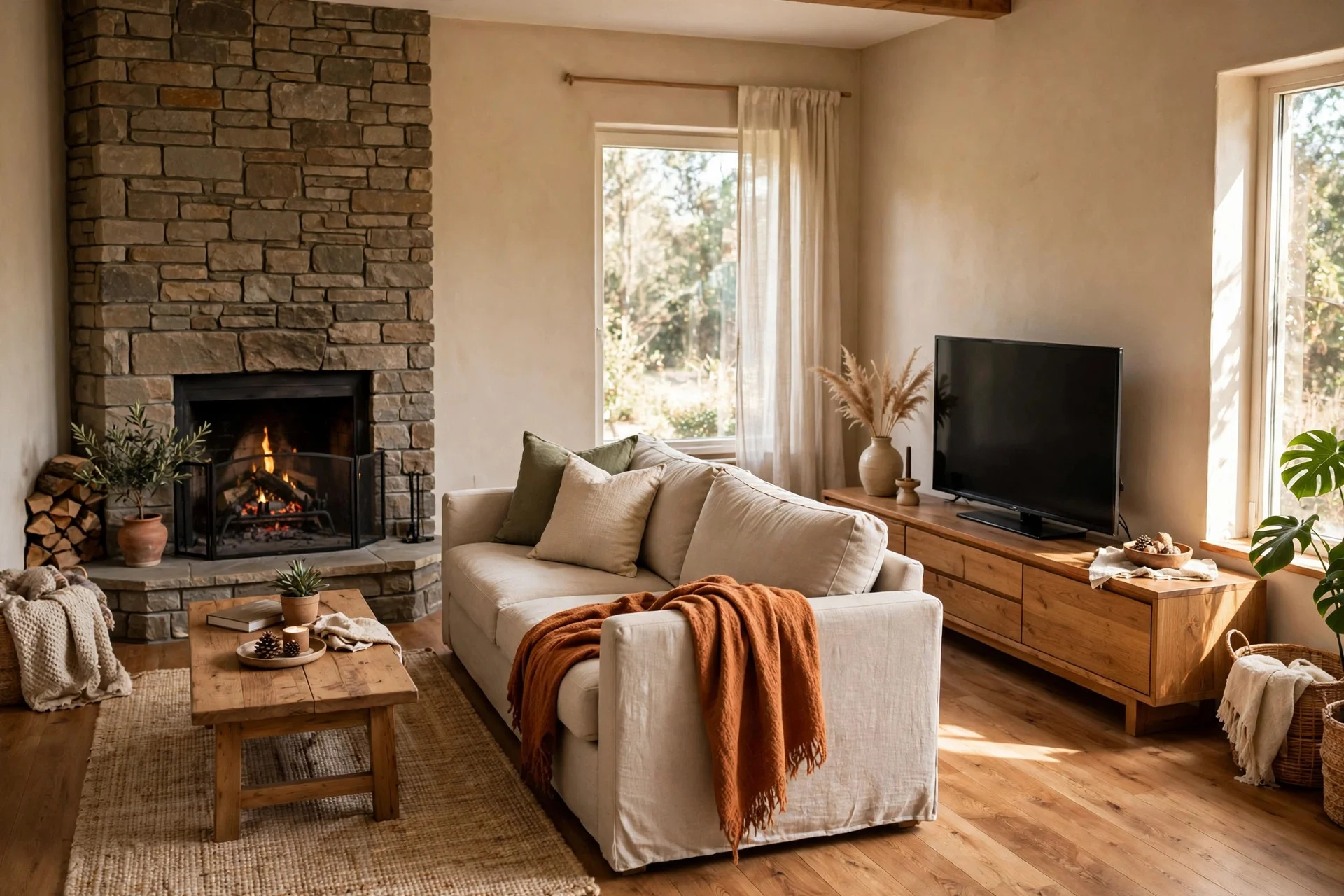
If the above-mantel height bothers your neck, put the TV and its console on the wall facing the corner and let the seating float between the two. The screen sits at true eye level, movie nights feel right, and the fireplace keeps its role as the room’s visual star instead of becoming a TV stand. This is the layout designers often recommend when the household watches a lot of films or sports.
A solid console runs $150 to $600; difficulty is easy to moderate depending on whether you wall-mount. The hands-on tip: keep the TV wall quiet — simple console, minimal decor — so the eye still travels past the screen to the fire. The watch-out: your chairs now sit between two focal points, so angle them a few degrees toward the fireplace and route cables tight along the baseboard so nobody trips mid-movie.
Steal the Window Side for a Bench
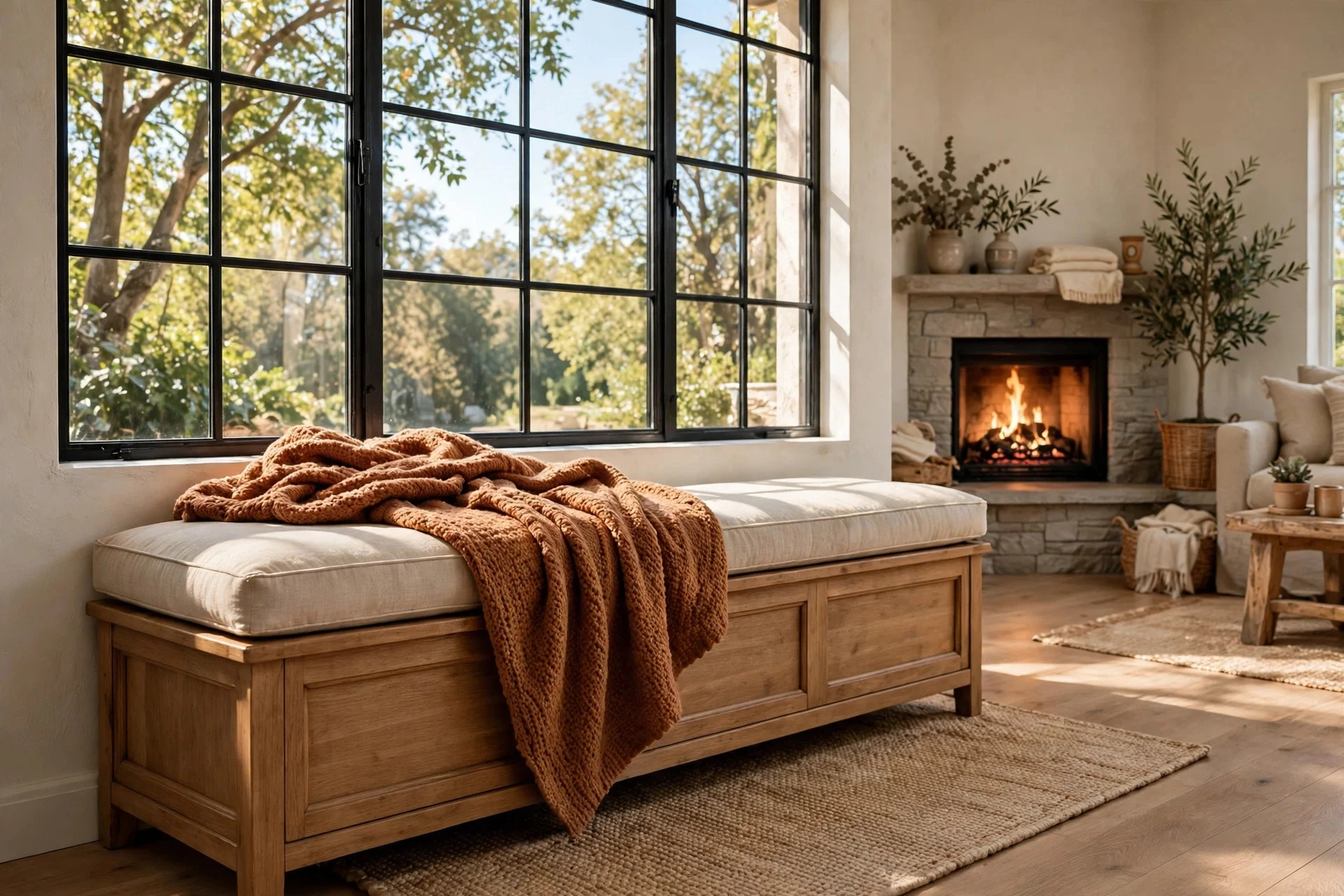
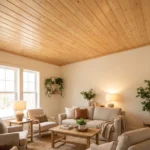
Every corner-fireplace room has a window side that ends up as leftover space, so claim it with a storage bench or narrow daybed under the best window. You gain a daylight seat that doesn’t compete with the fire, and the storage inside swallows the throws, pillows, and board games that usually clutter a fireplace room. It balances the layout: fire on one side, daylight on the other.
Benches run $100 to $400, with a fitted cushion adding $40 to $120; assembly takes about an hour, so difficulty is easy. The hands-on tip: match the bench height to 17 to 19 inches so it clears most window sills and doubles as genuine extra seating when guests arrive. Watch out for the practical stuff — don’t block heating vents or radiators under the window, and check that curtains can still close fully. If that side of the room still feels dim after the bench goes in, these ideas for making a dark living room look brighter work without touching a single wall.
Layer Light Around the Fireplace Corner
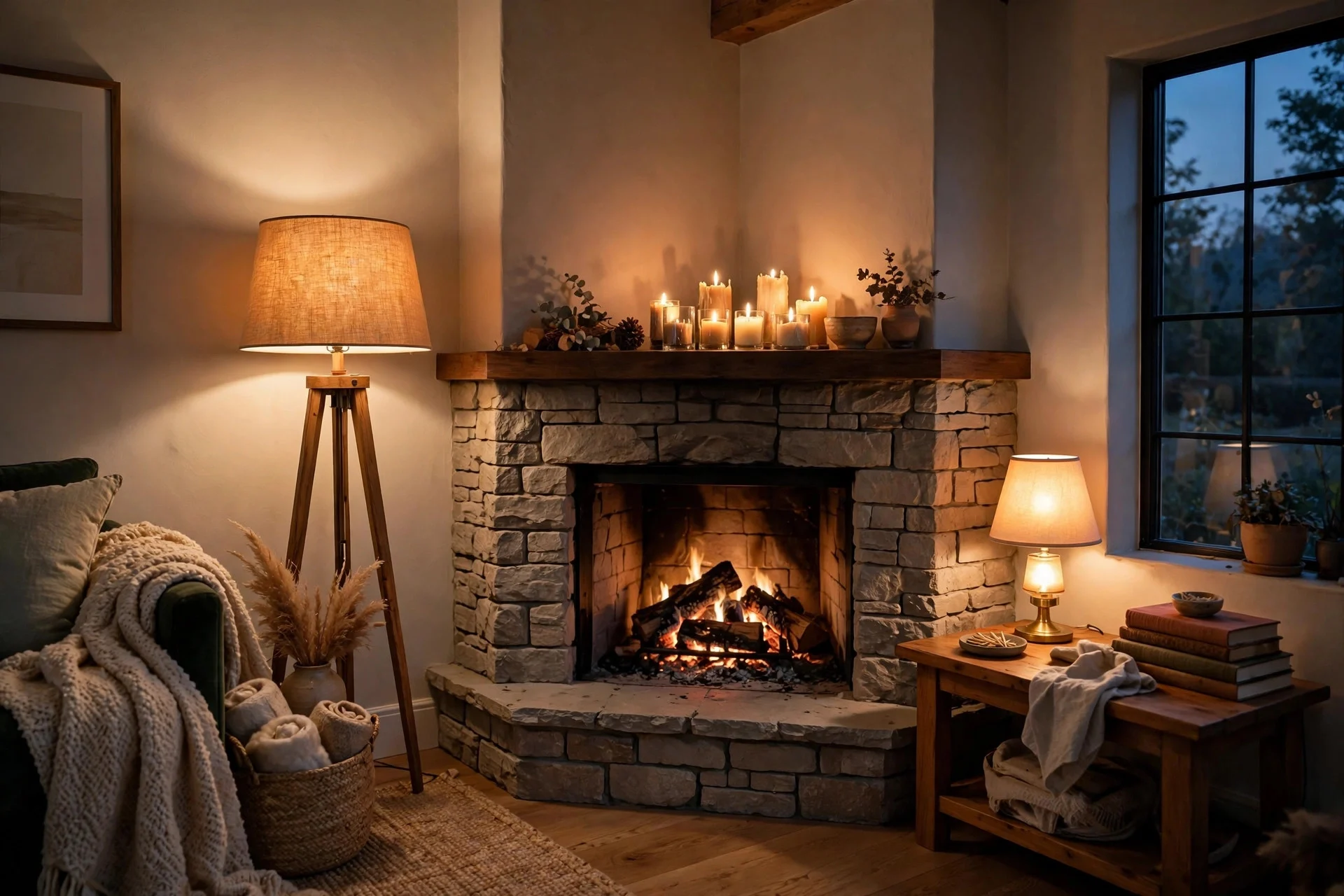
Corners naturally read darker than the middle of a room, so give your fireplace corner three light sources at three heights: a floor lamp with a warm shade, a small table lamp on a side table, and candles or a picture light on the mantel. Layered warm light makes the fire glow feel like part of a deliberate plan instead of the room’s only light source, and the corner stops feeling like a cave after sunset.
The full layer costs $80 to $350, and placing it all takes about an hour — easy. The hands-on tip: run the numbers through our lighting calculator before you shop, so you buy the right brightness for the corner instead of guessing at the store. The watch-out is safety: route every cord along the baseboard and behind furniture, because cords near a hearth are both a trip hazard and a heat risk.
Anchor Everything With One Big Rug
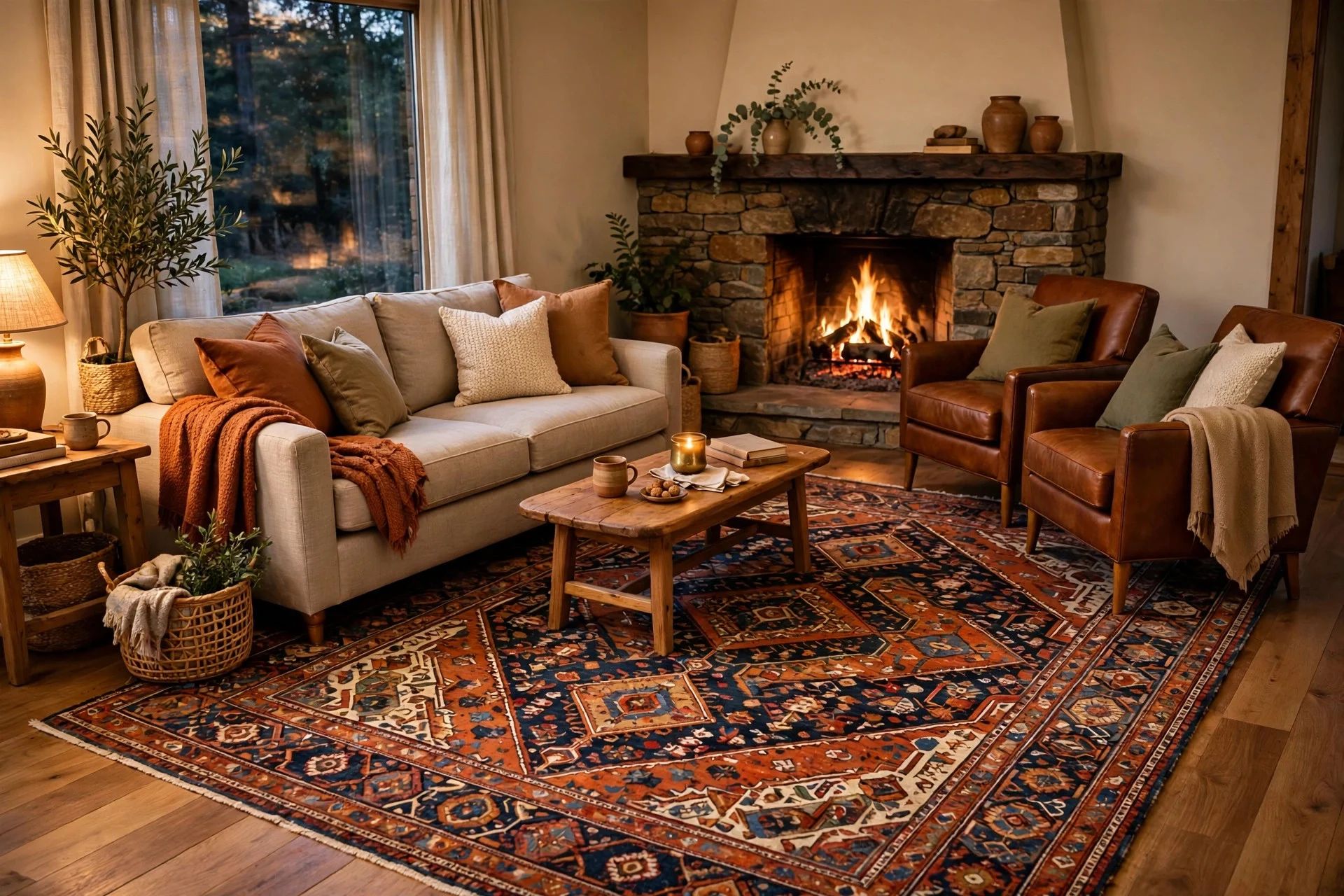
A diagonal furniture plan can look like it’s floating, so pin it down with one large rug — 8×10 or 9×12 in most rooms — with the front legs of every seat resting on it. A single rug defines the conversation zone in one move and tells the eye that the angled arrangement is intentional, which is half the battle in a corner-fireplace room.
A quality low-pile rug runs $150 to $600, and rolling it out is the easiest project on this list. The hands-on tip: the rug’s edge should run at least 6 inches past the outermost chair leg on every side, so measure your taped furniture outline before you order. The watch-out: a too-small rug chops the room into islands and undoes all your angling work — when you’re between sizes, size up. A flat-weave natural-fiber rug in a calm neutral keeps the diagonal feeling settled; the Japandi-style living room playbook of quiet, honest materials works beautifully here.
Run Traffic Behind the Seating, Not Through It
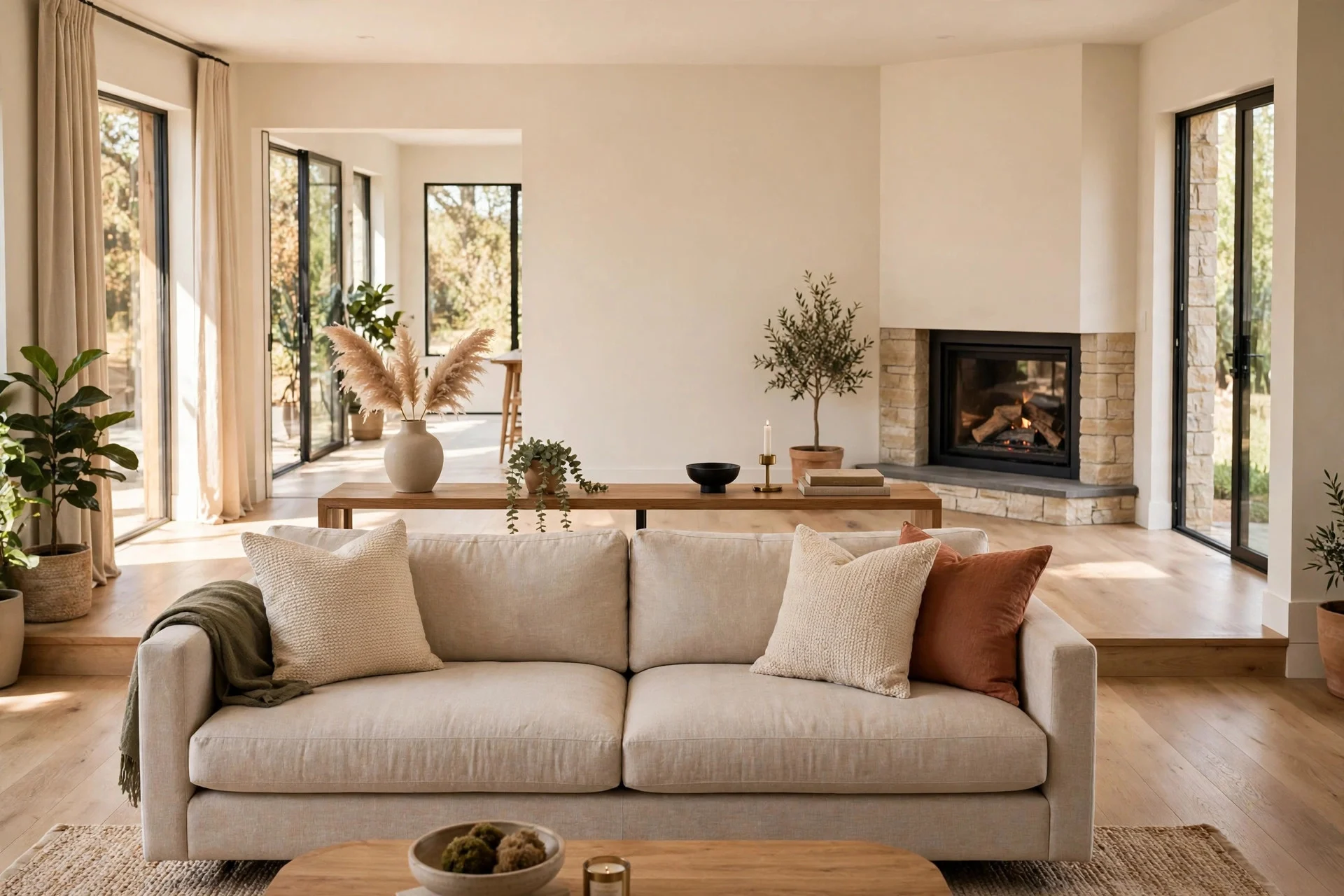
In corner-fireplace rooms, guests instinctively cut between the fire and the seats, stepping through the conversation every time they cross the room. Fix it with a defined 30 to 36 inch walkway behind the main sofa, marked by a slim console table that makes the lane visible. People reroute themselves without a single awkward request, and the seating zone finally feels settled.
This costs nothing if you only shift furniture, or $80 to $200 for a narrow console; difficulty is easy. The hands-on tip: watch how people actually walk through the room for a day before you lock the layout — real foot traffic beats any floor plan you draw. The watch-out: check door swings and hallway entries so your new lane doesn’t dead-end into a door that opens into it.
Corner fireplace questions, answered
Where should the TV go with a corner fireplace?
Above the mantel if you want one focal wall and don’t mind a tilt mount and a slightly high screen; on the opposite wall if you want true eye-level viewing. Match the choice to how you watch — movie nights favor the opposite wall, background viewing favors the mantel.
How far should seating sit from a corner fireplace?
Aim for 7 to 8 feet from the firebox to the front of the main sofa — close enough to feel the warmth, far enough for comfortable viewing and conversation. Keep at least 36 inches of clear space directly in front of the firebox opening.
Can a corner fireplace work in a small living room?
Yes, and it can actually help, because the fireplace occupies a corner that furniture rarely uses well. Keep the seating tight — a loveseat plus one chair instead of two sofas — choose a round coffee table, and let the window side carry storage so the room breathes.
Will a corner fireplace heat the room evenly?
It heats the seating zone well since the chairs gather around it, though the far side of a large room can stay cooler. A small fan on low, placed across the room, nudges warm air around without much noise.
Walk it once, then move one thing
You don’t need all eleven ideas. Walk your room in the order above — corner, seating, opposite wall, window side, traffic — and fix the one zone that bothers you most. Most people find the diagonal seating shift alone changes how the whole room feels. Do that this weekend, live with it for a week, and let the next zone earn its turn.