A small kitchen can test your patience faster than a burnt toast alarm at 7 a.m. One minute you are trying to chop vegetables, and the next minute you are moving the coffee maker just to find space for a cutting board. Tiny kitchens often feel messy not because people are disorganized, but because the space simply was not designed for modern daily use.
The truth is, most small kitchens do not actually need more square footage. They need smarter systems. A lot of people waste valuable space by focusing only on cabinets while ignoring walls, vertical storage, awkward corners, or even the sides of appliances. When counter space disappears, every inch matters more than ever.
The good news is that organizing a small kitchen is less about expensive renovations and more about practical habits and clever placement. Small kitchens can actually become more efficient than large ones because everything stays within reach when arranged properly.
In this guide, you will learn practical, realistic ways to organize a small kitchen with little or no counter space. These ideas are designed for apartments, tiny homes, rental kitchens, studio spaces, and older homes with limited layouts. You will find storage tricks, space-saving solutions, styling advice, and smart organization methods that genuinely improve everyday cooking without making your kitchen feel crowded or chaotic.
1. Use Vertical Wall Space Like an Extra Cabinet
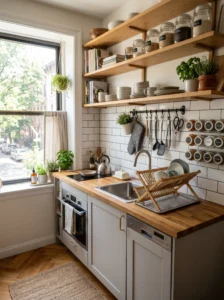
Most people stare at their tiny counters and forget the walls are completely empty. In a small kitchen, vertical space is often more valuable than floor space because it keeps items accessible without cluttering work areas.
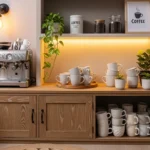
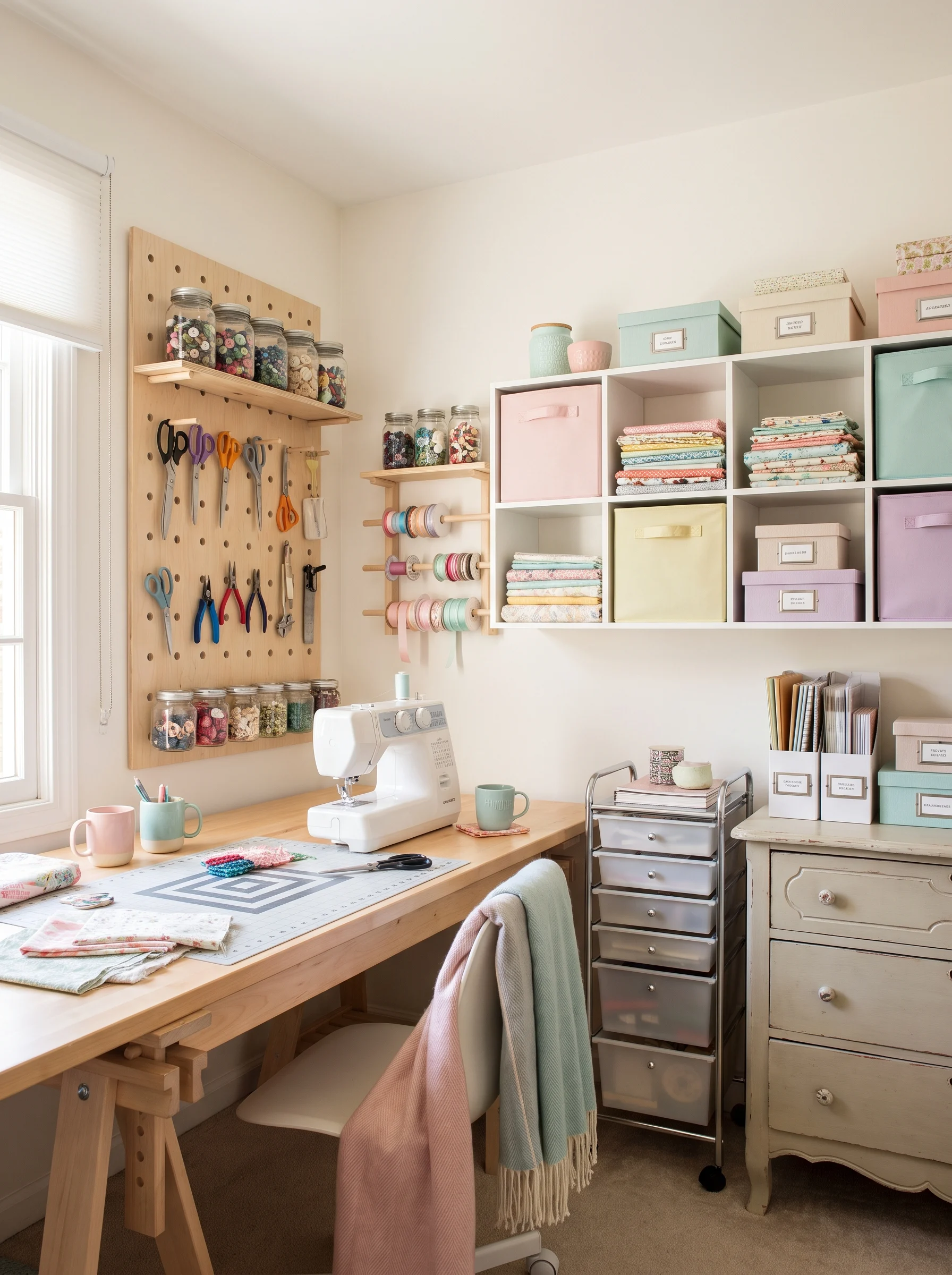
Wall-mounted shelves work especially well above coffee stations, beside windows, or near the stove. Open shelves can hold plates, spices, glass jars, or mugs while keeping counters clear. Pegboards are another smart option because they allow flexible storage for utensils, pans, and even small baskets.
The reason this works so well is simple: you move frequently used items upward instead of outward. That instantly creates breathing room in the kitchen.
Stick to lightweight materials and avoid overly deep shelves in narrow kitchens. White, light wood, or matte black shelving usually blends easily without overwhelming the room visually. Try not to overload shelves with decorative items. Small kitchens rarely benefit from excessive styling clutter.
A practical bonus is that wall storage can make cooking easier. Imagine reaching for a spatula directly beside the stove instead of digging through a drawer packed with random tools. It saves time and reduces frustration during busy cooking moments.
2. Add Magnetic Storage to Your Fridge Sides
The side of the refrigerator is one of the most ignored storage areas in small kitchens. That blank metal surface can become a surprisingly useful organization zone.
Magnetic spice racks are especially effective because spices normally take up valuable cabinet or counter space. You can also use magnetic paper towel holders, small baskets, or hooks for kitchen scissors and measuring spoons.
This idea works best in narrow kitchens where every cabinet already feels overloaded. By relocating small daily-use items to the fridge side, you free up both drawer and counter space instantly.
Choose matching containers or organizers so the setup feels intentional rather than chaotic. Clear spice jars with simple labels usually look cleaner than colorful mismatched packaging.
One common mistake is placing too many heavy items on the fridge side. Keep storage lightweight and focused on essentials only. Otherwise, the area starts looking messy instead of organized.
In real life, this setup is incredibly practical during cooking. You stop opening five cabinets while searching for garlic powder or paprika. Everything stays visible and easy to grab, which makes small kitchens feel far more functional.
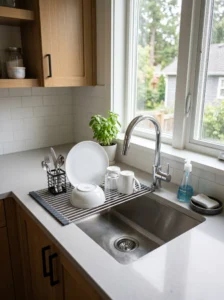
3. Replace Bulky Dish Racks With Roll-Up Drying Mats
Traditional dish racks consume shocking amounts of counter space. In tiny kitchens, they often become permanent clutter instead of temporary tools.
A roll-up drying rack placed over the sink is a much smarter alternative. These racks sit directly above the sink, allowing water to drip down without taking over workspace. When finished, you simply roll them up and store them away.
This solution works especially well in apartment kitchens with single-bowl sinks or limited prep areas. Stainless steel versions tend to last longer and resist rust better than cheaper plastic alternatives.
Another advantage is flexibility. You can use the rack for drying dishes, rinsing produce, or even cooling hot pans. That multifunctionality matters in small kitchens where every item should ideally serve more than one purpose.
Avoid oversized versions that completely cover the sink. You still want partial access to water while cooking.
Daily kitchen cleanup feels much less stressful when the counter remains open instead of buried under wet plates. Even visually, the kitchen immediately appears cleaner and calmer.
4. Store Appliances Based on Actual Usage
Many people sacrifice precious counter space for appliances they barely use. If your blender comes out twice a month, it does not deserve permanent front-row placement.
The best approach is to divide appliances into three groups: daily use, weekly use, and occasional use. Coffee makers or toasters may stay accessible, while slow cookers, waffle makers, or food processors can move into higher cabinets or storage bins.
This method works because it aligns storage with real habits instead of idealized cooking fantasies. Small kitchens demand honesty about what actually gets used.
Use cabinet risers or pull-out bins to organize less-used appliances efficiently. Heavy appliances should stay at waist level to avoid awkward lifting.
One mistake people make is stacking appliances randomly, which creates frustration later. Group similar items together and label bins if needed.
The kitchen instantly feels more open when unnecessary appliances disappear from the counter. It also makes cleaning easier because you are not constantly wiping around bulky machines every day.
5. Install Hooks Under Cabinets
Under-cabinet hooks are small additions that create surprisingly useful storage opportunities. They work particularly well for mugs, utensils, or lightweight tools.
This idea is effective because it uses hidden space that normally serves no purpose. In compact kitchens, hidden storage zones can dramatically reduce visible clutter.
Hooks are ideal beneath upper cabinets near coffee stations or prep areas. Mug hooks free cabinet shelves while adding a cozy café-style look. Small adhesive hooks can also hold measuring cups or kitchen towels.
Choose sturdy metal hooks rather than weak plastic versions that loosen over time. Matte finishes usually look cleaner and more modern.
Avoid overcrowding the hooks. A few neatly arranged items look intentional, while too many create visual chaos.
From a daily-use perspective, hooks improve convenience significantly. Grabbing your favorite mug directly under the cabinet feels easier than digging through stacked shelves every morning.
6. Use Stackable Storage Containers Inside Cabinets
Cabinets often look full simply because the space inside is poorly organized. Stackable storage containers can double usable storage without adding extra furniture.
Clear containers work best for dry goods like pasta, rice, flour, snacks, or baking ingredients. They create cleaner lines and make it easier to see inventory quickly.
This system works especially well in deep cabinets where items usually disappear into the back and get forgotten. Stackable designs maximize vertical cabinet height efficiently.
Square or rectangular containers are smarter than round ones because they waste less space. Airtight lids also help keep food fresh longer.
One major mistake is buying containers before measuring shelves. Always check cabinet dimensions first to avoid awkward fits.
Realistically, organized cabinets reduce daily kitchen stress. You stop knocking over cereal boxes every morning just trying to find oatmeal. The kitchen feels calmer because everything has a proper place.
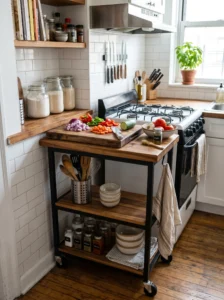
7. Create a Portable Prep Station
Sometimes the smartest solution is adding temporary workspace instead of permanent counters. A rolling cart or slim utility trolley can function as a mobile prep station.
This works particularly well in studio apartments or galley kitchens where counter space disappears instantly during cooking. The cart can hold cutting boards, mixing bowls, or frequently used ingredients.
Choose narrow carts with locking wheels so they stay stable during food prep. Wood tops add warmth, while metal carts create a more industrial look.
The beauty of portable stations is flexibility. You can move them beside the stove while cooking and tuck them away afterward.
Avoid oversized carts that block walking paths. In small kitchens, flow matters just as much as storage.
Daily cooking becomes easier when you have even a small dedicated prep zone. Suddenly chopping vegetables feels manageable instead of like a balancing act beside the sink.
8. Use Cabinet Doors for Hidden Storage
The inside of cabinet doors is valuable real estate that most kitchens completely ignore. Small mounted organizers can store cleaning supplies, foil, plastic wrap, or spice packets.
This idea works because it adds storage without visually crowding the kitchen. Hidden storage keeps counters cleaner and cabinets more functional.
Shallow wire racks or adhesive organizers work best because they do not interfere with cabinet closing. Pantry doors are especially useful for slim storage solutions.
Keep heavier items off cabinet doors to avoid strain on hinges over time.
One practical benefit is easier access. Instead of digging behind pots for aluminum foil, you can grab it instantly from the door organizer.
Small kitchens feel dramatically more organized when frequently used items stop getting buried inside overloaded cabinets.
9. Choose Multi-Functional Kitchen Tools
Tiny kitchens simply cannot support single-purpose gadgets forever. Multi-functional tools save both storage space and mental clutter.
A colander that folds flat, mixing bowls with lids, or cutting boards that fit over sinks are all smarter choices for compact kitchens.
The reason this works is efficiency. Every item earns its place by performing multiple tasks instead of occupying space for one occasional use.
This approach is especially important in rental apartments or dorm-style kitchens with minimal cabinetry.
Stick with durable materials like stainless steel or silicone for longer-lasting performance. Cheap foldable tools often wear out quickly.
Avoid impulse gadget purchases. Most trendy kitchen tools end up forgotten after a few weeks anyway.
A streamlined kitchen feels easier to maintain because fewer items compete for limited space. Cooking becomes simpler when drawers are not packed with unnecessary gadgets.
10. Add Shelf Risers for Double Storage
Shelf risers are one of the cheapest ways to instantly improve kitchen organization. They essentially create a second level inside cabinets or pantry shelves.
This works beautifully for plates, bowls, mugs, or canned goods. Without risers, vertical cabinet height often goes completely wasted.
Metal risers tend to support heavier dishes better than plastic versions. White or neutral finishes usually blend naturally with most kitchen styles.
This solution works best in standard upper cabinets where stacking dishes too high becomes unstable or inconvenient.
Avoid overcrowding the shelves after adding risers. Leave enough breathing room to access items comfortably.
The daily improvement is noticeable. Instead of carefully unstacking bowls every time you need one plate, items become easier to grab and return.
11. Use Clear Labels to Reduce Clutter
Labels may sound overly organized, but they genuinely help small kitchens stay functional. When everything has a designated place, counters stay cleaner because items return where they belong.
Clear labels work especially well for pantry containers, spice jars, storage bins, and freezer items. Consistency matters more than decorative perfection.
This system works because it removes guesswork. Family members or roommates can maintain organization without asking where things go.
Simple black-and-white labels usually look timeless and clean. Waterproof labels last longer in kitchen environments.
One common mistake is over-labeling every tiny thing. Focus on categories that genuinely improve usability.
In everyday life, labeled storage reduces frustration. You spend less time searching for ingredients and more time actually cooking.
12. Store Cutting Boards Vertically
Stacked cutting boards often create awkward cabinet clutter. Vertical storage solves this problem while improving accessibility.
Slim dividers or vertical racks keep boards separated and easy to grab. This setup works particularly well beside the stove, fridge, or under-sink cabinets.
The reason it works is simple ergonomics. Vertical storage prevents heavy stacking and wasted horizontal space.
Wood cutting boards add warmth visually, while plastic boards offer easier maintenance for busy kitchens. Many people benefit from using both.
Avoid placing wet boards into tight storage immediately. Proper drying prevents odor and warping issues.
This small change genuinely improves cooking flow. Pulling out one board smoothly feels far easier than lifting an unstable pile every time you cook.
13. Keep Daily Essentials in One Small Zone
A scattered kitchen creates unnecessary movement and clutter. Creating one dedicated “daily essentials” zone makes small kitchens more efficient.
This area can include cooking oil, salt, pepper, utensils, and frequently used tools. Keeping them together reduces constant cabinet opening during meal prep.
This method works best near the stove or prep area where items are naturally needed most often.
Use trays or small organizers to keep the zone visually tidy. Wood or matte black trays usually look polished without feeling bulky.
Avoid turning the zone into a dumping ground for random kitchen items. Keep it limited to true essentials only.
Cooking feels noticeably smoother when everything needed for everyday meals stays within arm’s reach instead of scattered across the kitchen.
14. Declutter Ruthlessly Every Few Months
No organization system survives long-term clutter accumulation. Small kitchens especially require regular editing because space disappears quickly.
Many people keep duplicate utensils, expired pantry items, or unused gadgets simply out of habit. Periodic decluttering keeps storage functional instead of overwhelming.
This process works because organization is less about buying containers and more about controlling volume.
A good rule is simple: if you have not used it in a year, question whether it deserves kitchen space.
Be realistic about duplicates. Most small households do not need six spatulas or twelve coffee mugs.
The emotional effect is surprisingly important too. Clean, uncluttered kitchens feel calmer and easier to maintain daily. Even cooking becomes less stressful when cabinets stop overflowing every time you open them.
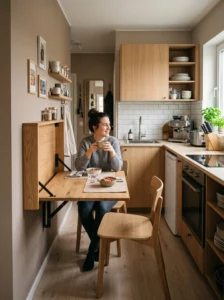
15. Add Fold-Down or Expandable Surfaces
Some kitchens genuinely lack prep space no matter how organized they become. In those situations, fold-down surfaces can completely change functionality.
Wall-mounted drop-leaf tables or expandable counters provide temporary workspace without permanently occupying room.
This works especially well in studio apartments, rental kitchens, or narrow galley layouts where space flexibility matters.
Choose durable wood or laminate finishes that handle moisture and heat well. Lightweight models often feel unstable during food prep.
Placement matters carefully here. Install fold-down surfaces where they will not block appliances or cabinet access when open.
Daily kitchen tasks become much easier when you gain even a small extra prep surface. Suddenly making dinner no longer feels like solving a puzzle with nowhere to put ingredients.