Most garages don’t become messy overnight. It usually starts with one shelf full of paint cans, a few tools tossed in the corner, maybe a holiday decoration box that never made it back into the attic. Then suddenly, the garage becomes the place where everything goes — except the car.
The frustrating part is that many people assume garage organization requires expensive cabinets, custom storage systems, or a full weekend renovation. In reality, most garages suffer from one simple problem: wasted vertical space and poor zoning. The floor becomes a dumping ground because the walls and ceiling aren’t doing any work.
A small garage can actually feel surprisingly functional when storage is planned around how people really use the space. Gardening tools should be easy to grab. Sports gear shouldn’t fall over every time the door opens. Seasonal bins shouldn’t block the path to the freezer. Good organization is less about perfection and more about making daily life smoother.
The good news is that you don’t need a huge budget to fix it. Some of the most effective garage upgrades cost less than a dinner out and can be installed in an afternoon.
In this guide, you’ll find practical, affordable garage organization ideas that genuinely save space fast. These aren’t complicated DIY projects that require a workshop full of tools. They’re realistic solutions for busy households, renters, homeowners, and anyone tired of stepping around clutter just to reach the lawn mower.
1. Install Pegboards for Everyday Tools
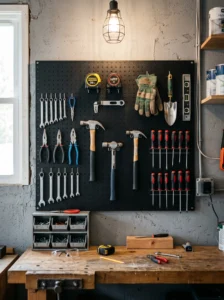
A pegboard is one of those classic garage solutions that still works because it solves a very real problem: tools disappear when they don’t have a visible home.
Instead of digging through drawers or buckets every time you need a screwdriver, a pegboard keeps everything in plain sight and easy to grab. It also frees up valuable drawer and shelf space, which matters in smaller garages where storage disappears quickly.
Pegboards work especially well above workbenches, beside tool chests, or near entry doors where frequently used items tend to pile up. Even a narrow wall section can hold hammers, pliers, tape measures, gardening gloves, and extension cords.
Metal pegboards tend to last longer in humid garages, but standard hardboard versions are cheaper and perfectly fine for lighter tools. Using matching hooks and simple labeled sections makes the setup feel cleaner instead of chaotic.
One mistake people make is overcrowding the board. Leaving a little breathing room actually makes tools easier to spot. Another smart move is outlining tool shapes with marker lines so everyone in the house knows where items belong.
In daily use, pegboards save more time than people expect. There’s something oddly satisfying about grabbing a tool in seconds instead of searching through three random boxes first.
2. Use Ceiling Storage Racks for Seasonal Items
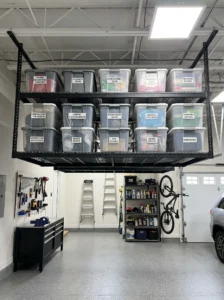
The ceiling is usually the most ignored storage area in a garage, which is surprising because it’s perfect for things you only use a few times a year.
Overhead racks are ideal for holiday decorations, camping gear, plastic bins, and seasonal sports equipment. These are the kinds of items that take up huge amounts of floor space while sitting untouched for months.
Ceiling racks work best in garages with decent height clearance. Position them above garage doors or over areas where people don’t walk often. Keeping them away from daily pathways prevents the space from feeling cramped.
Metal ceiling systems are the most durable option, especially for heavier storage bins. Clear plastic containers are worth using because you can identify contents without climbing up every time. Labeling the bins on multiple sides also helps when visibility is limited.
A common mistake is overloading racks beyond their weight rating. It’s better to spread storage across two smaller systems than push one rack too far.
What makes ceiling storage so effective is how quickly it opens up the garage floor. Even moving four or five bulky bins overhead can suddenly create room for bikes, shelving, or simply enough space to park comfortably again.
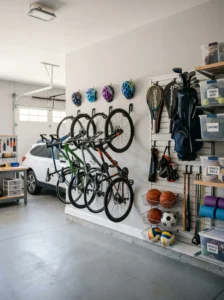
3. Add Wall-Mounted Bike Hooks
Bikes are notorious space stealers. They lean against walls, fall over constantly, and somehow always block exactly what you need to reach.
Wall-mounted bike hooks solve that issue almost instantly by using vertical storage instead of floor space. Even in compact garages, hanging bikes can free up several feet of usable room.
Vertical hooks work well for standard bikes, while horizontal wall mounts are better for heavier mountain bikes or families with kids who can’t lift bikes overhead easily. The best placement is usually along a side wall near the garage entrance.
Heavy-duty steel hooks are inexpensive and surprisingly durable. Installing them directly into wall studs matters more than buying expensive hardware. Rubber-coated hooks also help prevent scratches on bike frames.
Spacing is important. Bikes hung too close together become frustrating to remove, especially during busy mornings or weekend outings. Leaving enough room between handlebars makes daily use much easier.
This setup also changes the feel of the garage visually. Instead of random bikes taking over the floor, the space starts looking intentional and organized. Families especially notice the difference because kids can actually learn where bikes belong instead of dropping them wherever there’s empty space.
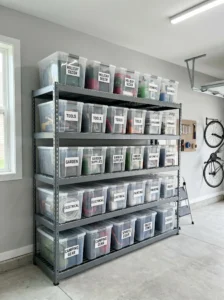
4. Use Clear Plastic Storage Bins Instead of Cardboard Boxes
Cardboard boxes seem practical at first until they get damp, collapse, or become mystery containers nobody wants to open.
Clear plastic bins are one of the simplest garage upgrades because they improve both storage and visibility at the same time. You can instantly see what’s inside without digging through stacks of old boxes.
These bins work well for holiday decorations, automotive supplies, sports gear, kids’ toys, and backup household items. Stackable versions are especially useful in narrow garages where vertical storage matters.
Transparent containers with locking lids help protect against dust, moisture, and pests. Choosing matching sizes also makes shelves look cleaner and more stable. Mixed container sizes usually waste more space than people realize.
One practical tip is using color-coded labels for categories like tools, winter items, or gardening supplies. It makes retrieval faster, especially in busy households.
People often underestimate how much calmer a garage feels when storage becomes visually consistent. Instead of staring at collapsing boxes and loose bags, the room starts feeling manageable. It’s a surprisingly affordable change that instantly creates a cleaner, less stressful environment.
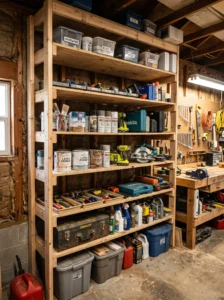
5. Build Simple DIY Wooden Shelves
Basic wooden shelving doesn’t need to look fancy to be incredibly useful.
Many garages waste huge amounts of wall space simply because there’s nowhere sturdy to place larger items. Simple DIY shelves create structured storage without the cost of custom cabinetry.
Plywood and inexpensive 2×4 lumber are usually enough for durable shelving. Open shelves work particularly well in garages because visibility matters more than decorative appearance.
These shelves are perfect for storage bins, paint cans, cleaning supplies, small appliances, and backup pantry overflow. Taller shelves fit larger garages, while slim shelving units work better in tighter spaces.
One smart strategy is keeping heavier items lower and lighter seasonal items higher up. Adjustable shelf heights also help as storage needs change over time.
Painting the shelves white or light gray can brighten dark garages significantly. Raw wood works too, but sealed surfaces resist moisture better in humid climates.
What makes garage shelving so effective is how quickly clutter disappears once items have designated zones. The garage stops functioning like a random holding area and starts operating more like an extension of the home.
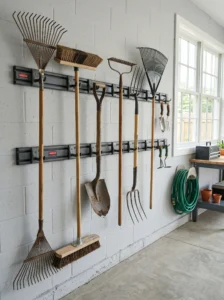
6. Hang Garden Tools on Wall Rails
Long-handled tools create clutter faster than almost anything else in a garage.
Rakes, shovels, brooms, and trimmers often end up piled in corners where they constantly fall over. Wall-mounted rail systems fix this by turning awkward tools into organized vertical storage.
These rails work best along narrow side walls or near garage doors for quick outdoor access. Adjustable hook systems are especially useful because they can adapt as tool collections change.
Metal rails tend to hold more weight and last longer than plastic versions. Rubber grip hooks also prevent tools from sliding out unexpectedly.
One mistake people make is hanging tools too high. Daily-use items should stay easy to reach without stretching awkwardly. Frequently used tools near the center and seasonal tools higher up usually works best.
Organized garden tools also make outdoor chores feel less annoying. When tools are visible and accessible, people are more likely to maintain the yard regularly instead of procrastinating because the garage feels overwhelming.
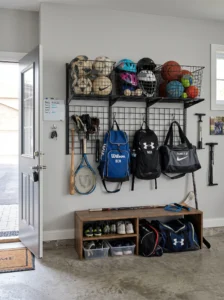
7. Create a Small Sports Equipment Zone
Sports equipment has a way of spreading across the entire garage if there’s no dedicated system.
Balls roll everywhere, helmets disappear, and random gear bags pile up near the door. Creating one organized sports zone keeps everything contained and easier to manage.
Wire baskets, rolling bins, and wall hooks are affordable ways to organize sports gear without complicated systems. Mesh bins work especially well because they allow airflow and visibility at the same time.
This setup works best near the garage entrance where kids naturally drop equipment after practice. Smaller garages benefit from vertical storage combinations instead of bulky floor baskets.
Labeling sections by activity — soccer, basketball, biking, or swimming — can make cleanup faster for families. Open storage tends to work better than closed bins because kids actually use it consistently.
The biggest improvement is convenience. Early morning practices become less chaotic when everyone knows exactly where gear belongs. It also prevents expensive equipment from getting damaged under piles of unrelated clutter.
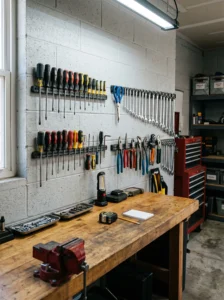
8. Use Magnetic Strips for Small Metal Tools
Small metal tools are surprisingly difficult to organize neatly. Screwdrivers, drill bits, scissors, and wrenches tend to disappear into drawers where they become impossible to find quickly.
Magnetic strips offer a cheap but effective solution by keeping frequently used tools visible and accessible. They’re especially useful near workbenches or tool stations.
Heavy-duty magnetic bars are stronger than basic kitchen knife strips and better suited for garages. Mounting them at eye level improves visibility and prevents tools from becoming buried under other items.
This system works particularly well for DIY enthusiasts or homeowners who constantly reach for basic tools during quick repairs. Keeping tools displayed also reduces duplicate purchases because people can actually see what they already own.
One practical tip is leaving small gaps between tools instead of clustering everything tightly together. It keeps the setup cleaner and easier to use.
There’s also something visually satisfying about magnetic organization. Even inexpensive garages feel more functional when tools are displayed neatly instead of scattered randomly across shelves or drawers.
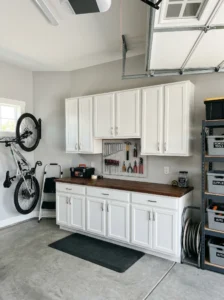
9. Repurpose Old Cabinets for Hidden Storage
Garage storage doesn’t always need to be open and visible. Sometimes hidden storage makes the space feel calmer and less cluttered.
Old kitchen cabinets are excellent for garage organization because they provide enclosed storage at little or no cost. Many people give away used cabinets during renovations, making them one of the cheapest upgrades available.
Cabinets work best for chemicals, automotive supplies, paint, cleaning products, and items that look messy on open shelves. Wall-mounted cabinets save additional floor space in smaller garages.
Neutral paint colors like white, charcoal, or soft gray help older cabinets look more intentional instead of leftover. Adding simple handles can modernize them surprisingly well.
One important consideration is moisture resistance. Sealing older wood cabinets helps them last longer in garages with temperature fluctuations.
Closed storage changes the overall feel of a garage dramatically. Instead of visual clutter everywhere, the room starts looking cleaner and more controlled, even if the storage inside isn’t perfectly organized.
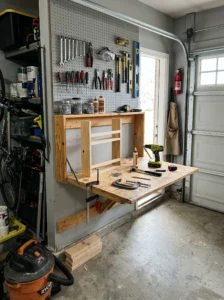
10. Add Folding Workbenches for Small Garages
A permanent workbench sounds useful until it permanently steals half the garage.
Folding workbenches solve that issue by providing workspace only when needed. They’re especially valuable in compact garages where flexibility matters more than large furniture.
Wall-mounted folding benches work well for small DIY projects, gardening prep, or tool repairs. When folded flat, they barely take up any room at all.
Plywood tops with heavy-duty hinges are affordable and sturdy enough for most household tasks. Installing the bench near pegboards or tool storage also improves workflow.
One mistake people make is building benches too deep. Narrower surfaces often work better because they preserve walking space even when open.
In real life, folding benches encourage people to actually use the garage productively. Instead of balancing projects on random boxes or cluttered shelves, there’s a proper workspace that disappears afterward.
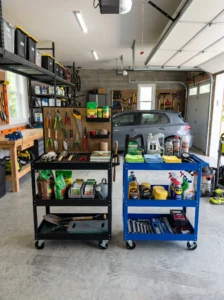
11. Use Rolling Utility Carts for Flexible Storage
Not every garage storage solution needs to stay fixed in one place.
Rolling utility carts are useful because they move wherever the work happens. They’re ideal for tools, cleaning supplies, gardening materials, or automotive products that get used in different parts of the garage.
Metal carts are generally more durable, while plastic options are cheaper and lighter. Multi-tier carts maximize vertical storage without taking up much floor space.
These carts work especially well in garages that double as workshops, laundry areas, or hobby spaces. Locking wheels prevent unwanted movement once positioned.
One smart strategy is assigning each cart a category instead of mixing everything together. Dedicated cleaning carts or gardening carts make supplies easier to manage.
Mobility is what makes these carts so practical. Instead of constantly carrying items back and forth, the entire workstation moves with you. That small convenience adds up quickly during everyday tasks.
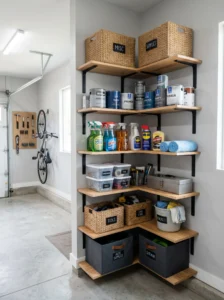
12. Install Simple Corner Shelving
Garage corners often become dead zones filled with random clutter because standard shelves don’t fit properly.
Corner shelving turns awkward unused space into functional storage without affecting walkways. It’s one of the easiest ways to add extra capacity in smaller garages.
Triangular or curved corner shelves work well for paint cans, cleaning supplies, gardening products, or smaller storage bins. Tall vertical corner units maximize space even further.
Metal shelves tend to handle garage humidity better, though sealed wood can work nicely too. Keeping heavier items lower improves stability and safety.
One common mistake is overcrowding corner shelves with bulky containers. Smaller organized groupings usually work better visually and functionally.
Once corners become organized, garages immediately feel less chaotic because clutter no longer accumulates in forgotten spaces. It’s a simple improvement, but it often makes the whole room easier to navigate.