
Creating a bedroom that actually feels calm is harder than it sounds. You declutter, buy neutral bedding, maybe even add a plant—but somehow it still feels… off. If you’ve ever wanted a space that instantly relaxes you the moment you walk in, Japandi style might be exactly what you’re missing.
Japandi blends Japanese minimalism with Scandinavian warmth, and the result is effortlessly peaceful, functional, and beautiful. In this post, you’ll find 17 Japandi bedroom ideas that don’t just look good on Pinterest—they actually work in real life. Think soft textures, intentional design, and spaces that feel like a quiet exhale.
1. Low Platform Bed for a Grounded Feel
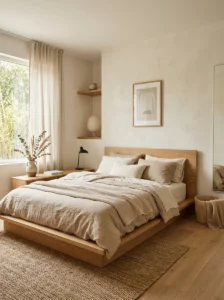
A low platform bed instantly sets the tone for a Japandi bedroom. It creates a sense of grounding and openness, making your space feel less cluttered and more intentional. The lower height draws your eyes across the room instead of stacking visual weight upward, which naturally feels calmer. Pair it with neutral bedding—think soft beige, warm white, or muted gray—and keep the frame simple, preferably wood. You might notice how much bigger your room feels once the bulky bed frame is gone.
2. Neutral Color Palette with Warm Undertones

Japandi style isn’t just about neutral colors—it’s about the right neutrals. Cool grays can feel a bit sterile, so lean toward warmer tones like sand, taupe, cream, and soft browns. These shades create a cozy yet minimal atmosphere that doesn’t feel empty. Layering similar tones adds depth without cluttering the space. If your room feels flat, try mixing textures instead of adding new colors—it makes a huge difference.
3. Minimal Wooden Furniture
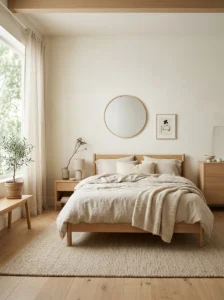
Wood is at the heart of Japandi interiors. Opt for simple, clean-lined furniture made from light or medium-toned wood like oak, ash, or walnut. Avoid anything overly ornate—this style thrives on subtle beauty. A small wooden nightstand or bench at the foot of the bed can add function without overwhelming the space. Here’s the thing: fewer pieces, but better quality, always wins in this design style.
4. Soft Linen Bedding for Texture

Linen bedding brings that relaxed, slightly imperfect look Japandi is known for. It’s breathable, soft, and naturally textured, which means your bed looks styled without trying too hard. Stick to earthy tones or muted shades to keep things cohesive. The slight wrinkles? That’s part of the charm—no need to stress about perfectly smooth sheets here.
5. Decluttered Nightstands
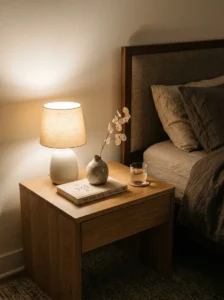
A Japandi bedroom doesn’t leave room for clutter—especially on nightstands. Keep only the essentials: a lamp, maybe a book, and one small decorative piece like a ceramic vase. This creates a clean, peaceful surface that’s actually functional. If your nightstand tends to collect random items, try limiting yourself to three objects max—it’s surprisingly effective.
6. Paper or Fabric Pendant Lighting
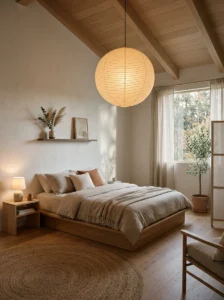
Lighting plays a big role in setting the mood. Soft, diffused lighting—like paper lanterns or fabric pendant lights—adds warmth without harshness. These fixtures double as decor, bringing a sculptural element to the room. Instead of overhead brightness, aim for a gentle glow that feels relaxing at night. You’ll probably find yourself winding down faster in this kind of lighting.
7. Simple Wall Art with Meaning
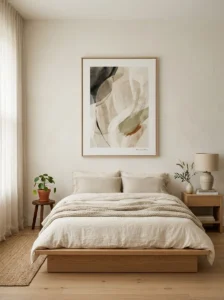
Japandi wall decor is minimal but intentional. Choose one or two pieces of art that feel calm—abstract prints, nature-inspired sketches, or black-and-white photography work well. Avoid gallery walls or overly busy arrangements. The goal is to create a focal point without overwhelming the room. Ask yourself: does this piece make the space feel quieter or louder?
8. Indoor Plants for a Natural Touch
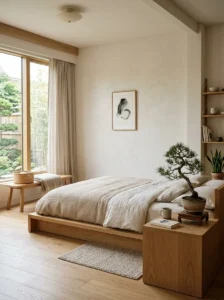
A touch of greenery brings life into a Japandi bedroom without disrupting its simplicity. Think small potted plants like a bonsai, snake plant, or fiddle leaf fig. Keep the planters neutral—ceramic, clay, or stone works best. Even one plant can shift the whole energy of the room. If you’re not great with plants, start with something low-maintenance and build from there.
9. Layered Textures Instead of Patterns

Instead of bold prints, Japandi style relies on texture to add interest. Mix materials like linen, cotton, wool, and wood to create depth. A woven throw, a soft rug, or textured cushions can make the room feel cozy without adding visual noise. It’s subtle, but it works. You might not notice it immediately—but you’ll definitely feel it.
10. Sliding Doors or Minimal Curtains
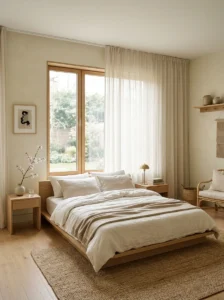
If possible, incorporate sliding doors or keep window treatments light and simple. Sheer curtains or neutral drapes allow natural light to filter through softly, which enhances the calm atmosphere. Heavy, dark curtains can feel a bit too intense for this style. Letting in natural light makes the room feel more open and connected to nature
11. Functional Storage Solutions
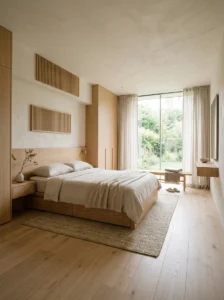
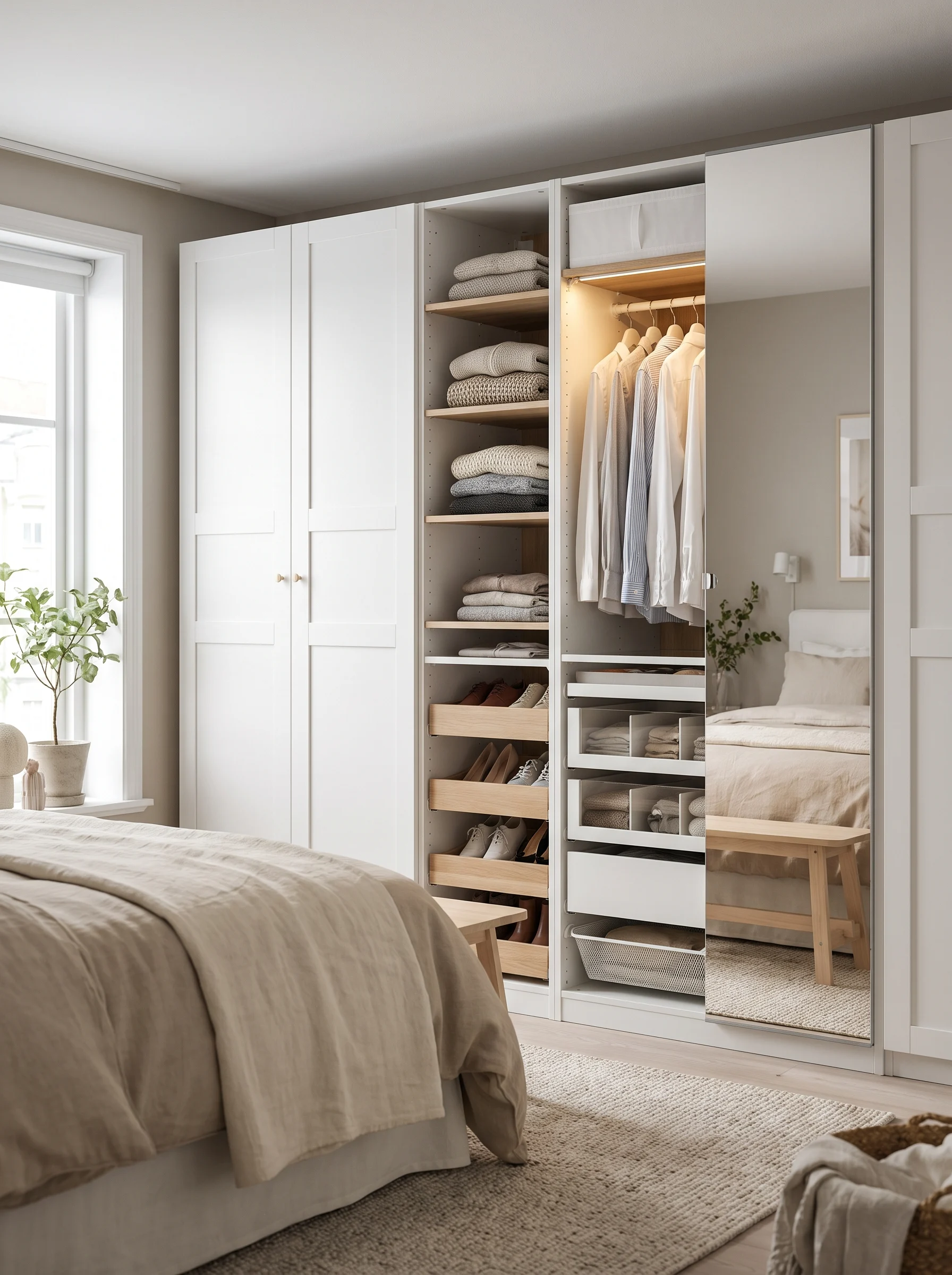
Japandi design is deeply practical. Hidden storage—like under-bed drawers or sleek cabinets—keeps clutter out of sight while maintaining a clean look. The idea is to make everything have a place, without making it obvious. If your room feels chaotic, better storage might be the real solution, not more decor.
12. Neutral Area Rugs for Warmth
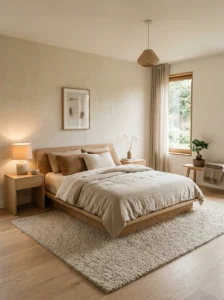
A soft, neutral rug adds warmth and comfort underfoot without stealing attention. Look for natural materials like wool or jute in simple patterns or solid tones. It helps anchor the room while keeping the aesthetic calm. If your floor feels too bare, this is an easy upgrade that makes a big impact.
13. Handmade or Organic Decor Pieces

Japandi style celebrates craftsmanship. Handmade ceramics, woven baskets, or slightly imperfect decor pieces add character while staying minimal. These items feel more personal and less mass-produced, which makes the space more meaningful. You don’t need many—just one or two thoughtful pieces can elevate the entire room.
14. Open Space and Breathing Room
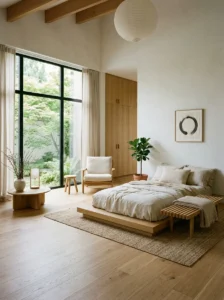
One of the key elements of Japandi design is negative space. Not every corner needs to be filled. Leaving areas empty actually makes the room feel more peaceful and intentional. It might feel strange at first, but once you get used to it, you’ll appreciate how calming it is. Sometimes less really is more.
15. Soft, Muted Accent Colors
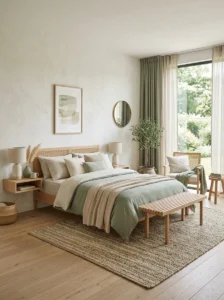
While neutrals dominate, subtle accent colors like sage green, dusty blue, or muted terracotta can add warmth without overpowering the space. Use them sparingly—maybe in a pillow, throw, or small decor item. It’s just enough to keep things interesting without breaking the calm vibe.
16. Natural Light as a Design Element
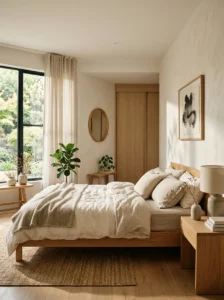
Japandi bedrooms make the most of natural light. Keep windows unobstructed and let sunlight become part of the design. The way light moves through the room throughout the day adds a quiet, dynamic element. You might notice your space feels different—and better—at different times of the day.
17. A Calm, Intentional Layout
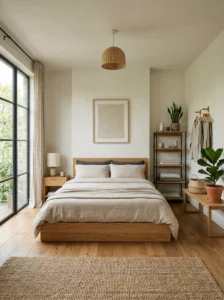
Finally, the layout itself matters. Arrange furniture in a way that feels open and easy to move through. Avoid overcrowding and think about how you use the space daily. Japandi design isn’t just about how things look—it’s about how they feel and function. Try shifting things around—you might be surprised how much calmer your room feels with a simple change.
A Japandi bedroom isn’t about perfection—it’s about creating a space that feels calm, simple, and lived-in. Start small, trust your instincts, and let your space evolve naturally.