Open-concept spaces sound amazing in theory… until you’re standing there wondering why your kitchen and living room feel disconnected or cluttered. Ever walked into a space that should feel airy but somehow just doesn’t?
That’s usually not about size—it’s about flow. The way furniture, lighting, and design elements connect (or don’t) makes all the difference. A well-designed open kitchen and living room can feel effortless, cozy, and functional all at once.
In this guide, you’ll find ideas that don’t just look good on Pinterest—they actually work in real homes. Whether your space is small or spacious, these tips will help you create a layout that feels natural, inviting, and easy to live in.
1. Use a Large Area Rug to Anchor the Living Space
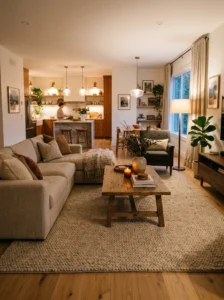
A large area rug can visually separate your living room from the kitchen without putting up walls. It gives the seating area a defined “zone,” which instantly makes everything feel more organized. Go for a rug that’s big enough to fit at least the front legs of your sofa and chairs—this helps everything feel connected rather than floating. You might notice how it subtly tells your brain, “this is where we relax.”
Tip: Try a textured or patterned rug if your furniture is neutral—it adds depth without overwhelming the space.
2. Add a Kitchen Island as a Natural Divider
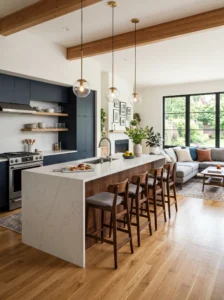
A kitchen island is one of the easiest ways to create flow while maintaining separation. It acts like a soft boundary between cooking and lounging areas, and honestly, it’s super practical too. You can use it for prepping meals, casual dining, or even as a workspace.
If your space allows, choose an island with seating on one side facing the living room—it keeps conversations going while you cook.
Suggestion: Pendant lights above the island can enhance that “defined but open” feel.
3. Stick to a Cohesive Color Palette
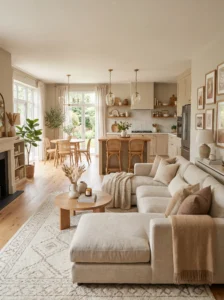
When colors clash between the kitchen and living room, the space feels disconnected. Keeping a consistent palette helps everything flow visually. That doesn’t mean everything has to match perfectly—just stay within a similar tone range.
For example, if your kitchen has warm beige cabinets, carry that warmth into your living room with cushions, throws, or decor. It creates a subtle harmony you might not even consciously notice—but it works.
Question: Are your current colors working together or competing for attention?
4. Use Lighting to Define Zones
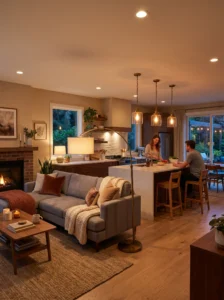
Lighting can completely change how a space feels. Instead of relying on one overhead light, layer different types—pendants in the kitchen, a floor lamp in the living room, maybe even wall sconces.
This creates separate “moods” for each area while still keeping everything visually connected. The kitchen can feel bright and functional, while the living room feels warm and cozy.
Tip: Try warm bulbs in the living area and slightly brighter ones in the kitchen for a natural transition.
5. Choose Low-Profile Furniture for Better Sightlines
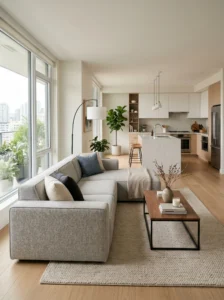
Bulky furniture can block the flow and make an open space feel smaller than it is. Low-profile sofas and chairs keep sightlines open, making the room feel airy and continuous.
This works especially well in smaller homes where every inch matters. Plus, it gives your space that modern, uncluttered look people love.
Suggestion: Look for furniture with exposed legs—it visually lightens the space.
6. Create a Focal Point That Connects Both Areas
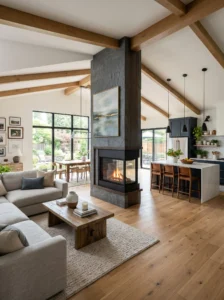
A shared focal point—like a fireplace, large artwork, or statement wall—can tie the kitchen and living room together. It gives both spaces something to “look toward,” creating a sense of unity.
Instead of having separate focal points that compete, one central feature makes everything feel intentional.
Tip: Keep decor around the focal point simple so it doesn’t feel overwhelming.
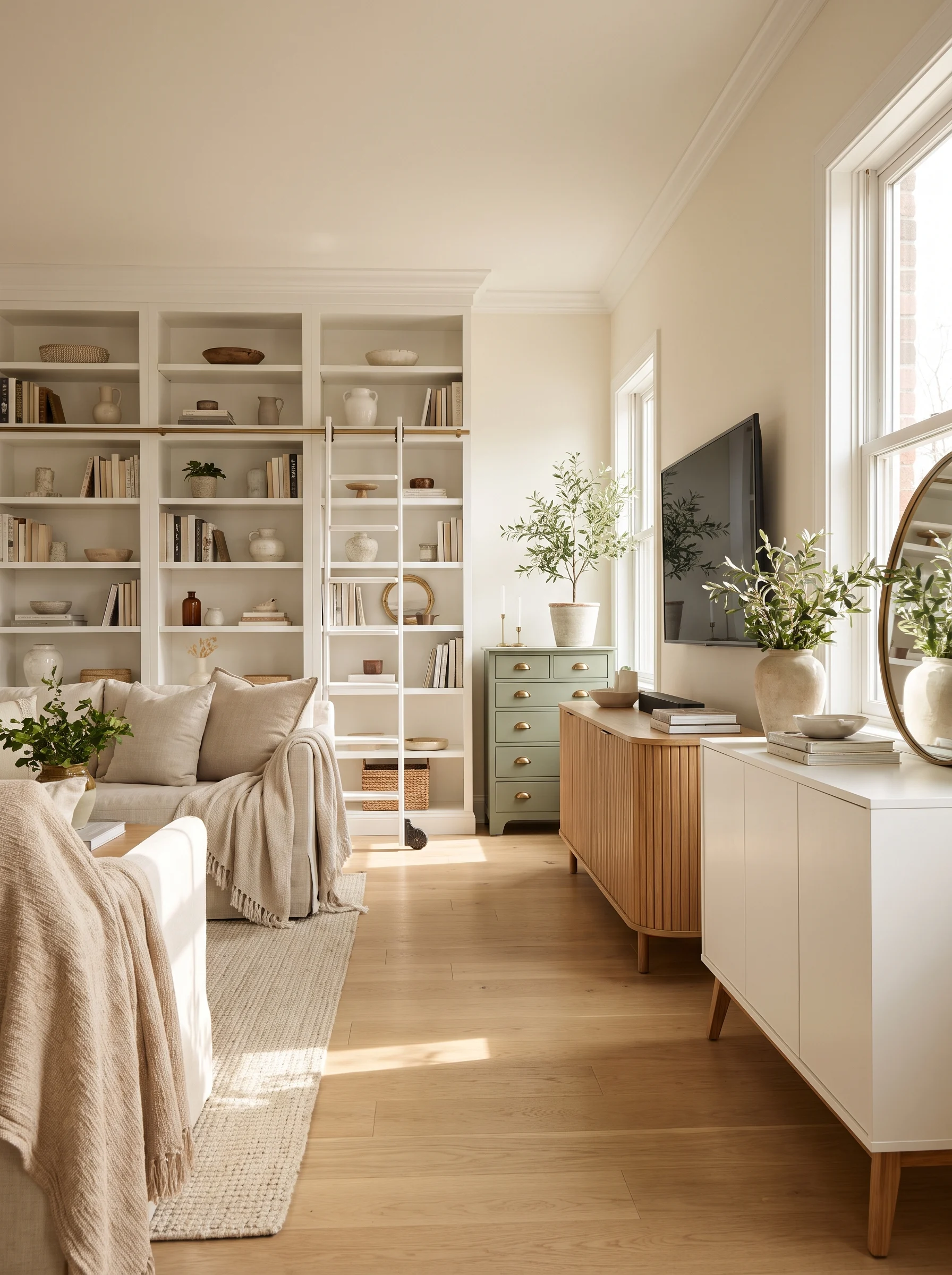
7. Use Open Shelving to Blend Spaces
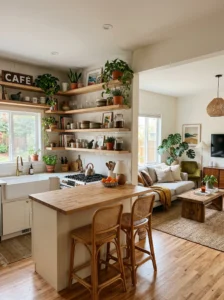
Open shelving in the kitchen can act as a bridge between the two areas. Displaying items like plants, ceramics, or books softens the transition and makes the kitchen feel less “closed off.”
It also adds personality, which helps the kitchen feel more like part of the living space rather than a separate zone.
Suggestion: Mix functional items with decorative ones for a balanced look.
8. Align Furniture with the Layout Flow
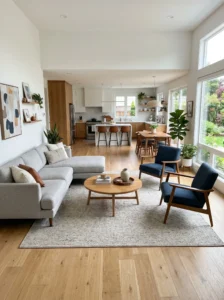
Instead of placing furniture randomly, think about how people naturally move through the space. Your sofa, chairs, and tables should guide that flow—not block it.
For example, placing your sofa facing the kitchen can create a natural connection between both areas.
Tip: Leave clear walking paths—this small detail makes a big difference in how open the space feels.
9. Add a Consistent Flooring Material
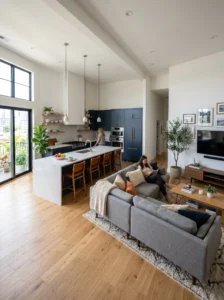
Using the same flooring throughout the kitchen and living room instantly creates a seamless look. It removes visual breaks, making the space feel larger and more cohesive.
Hardwood, tile, or even polished concrete can work beautifully in open layouts.
Question: Do your current floors break the flow or enhance it?
10. Incorporate Natural Elements
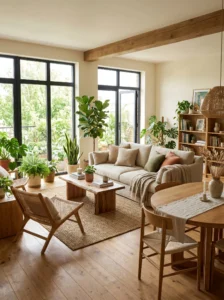
Plants, wood textures, and natural fabrics help soften the transition between spaces. They bring warmth and make everything feel more inviting.
A few well-placed plants can even act as subtle dividers without closing off the space.
Tip: Try a tall plant near the boundary between the kitchen and living room.
11. Use a Statement Sofa Placement
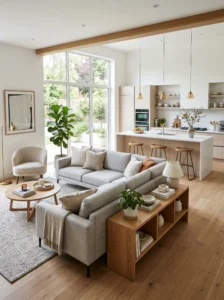
Your sofa can act as a divider without needing walls. Placing it with the back facing the kitchen creates a clear boundary while still keeping the space open.
It’s simple but surprisingly effective.
Suggestion: Add a console table behind the sofa for extra function and style.
12. Keep Countertops Clutter-Free
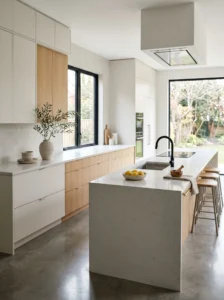
A cluttered kitchen spills visual chaos into the living room. Keeping countertops clean helps maintain that open, airy feel.
You don’t need to hide everything—just be selective about what stays out.
Tip: Use trays or containers to group items neatly.
13. Add a Dining Table Between Spaces
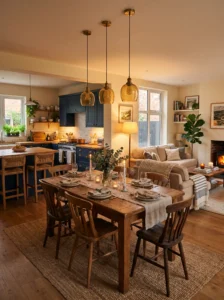
A dining table can act as a natural transition between the kitchen and living room. It creates a middle zone that connects both areas.
This setup feels especially cozy for family homes.
Question: Could your layout benefit from a “middle space”?
14. Use Glass or Light Materials
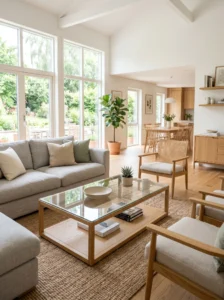
Glass tables, acrylic chairs, or light wood pieces keep the space feeling open. Heavy materials can make everything feel boxed in.
These lighter elements reflect light and maintain that airy vibe.
Tip: Even swapping one bulky piece for a lighter one can change the whole feel.
15. Add Subtle Decorative Links
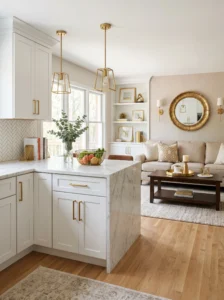
Repeating small design elements—like similar cushions, metals, or textures—creates a visual connection between spaces.
It’s not about matching everything, just creating little “echoes” throughout the room.
Suggestion: If your kitchen has gold hardware, try adding gold accents in the living room too.
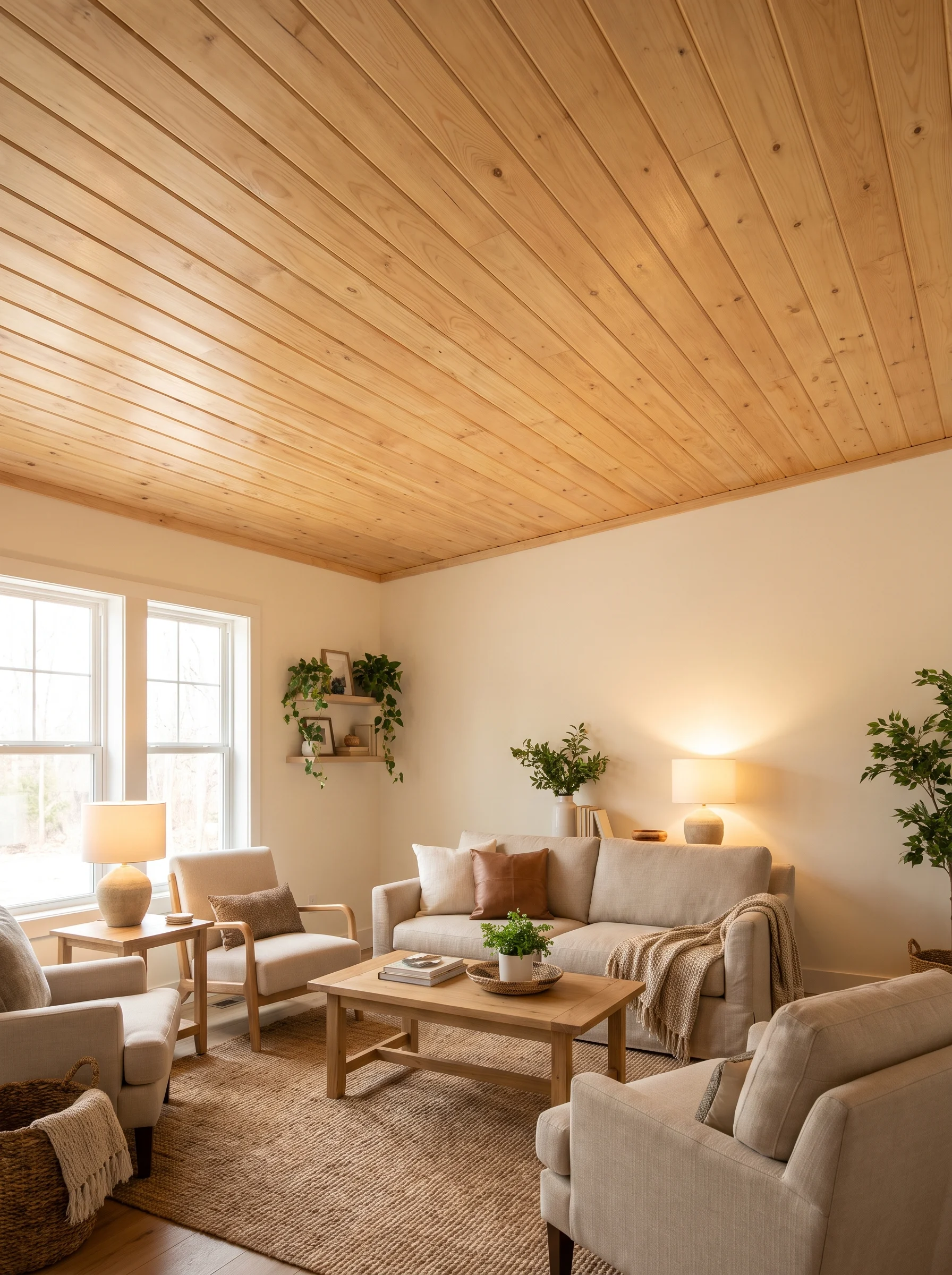
16. Keep Ceiling Design Consistent
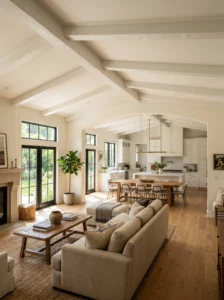
Different ceiling styles can break the flow visually. Keeping them consistent helps the space feel unified.
Even simple details like matching paint color or trim can make a difference.
Tip: If you add beams or details, carry them across both areas.
17. Let Natural Light Flow Freely
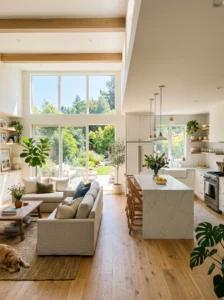
Natural light is one of the biggest advantages of open spaces—don’t block it. Avoid heavy curtains or tall furniture near windows.
The more light flows through both areas, the more connected and inviting the space feels.
Question: Are you making the most of your natural light?
A well-designed open kitchen and living room isn’t just about aesthetics—it’s about how the space feels to live in. Small changes can completely transform the flow, making your home feel more relaxed, connected, and effortless.