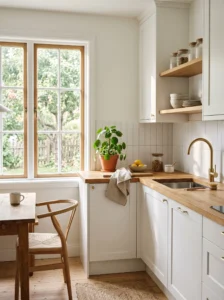
Ever walk into a kitchen and instantly feel calm, like everything just makes sense? That’s the quiet magic of Scandinavian design. It’s not about having more—it’s about making the most of what you already have, in a way that feels light, airy, and intentional.
If your kitchen feels cluttered, dark, or just a little chaotic, you’re not alone. The good news? You don’t need a full renovation to get that clean, minimalist look. In this post, you’ll find simple, realistic Scandinavian kitchen ideas that blend beauty with function—so your space feels as good as it looks.
1. Stick to a Soft Neutral Color Palette
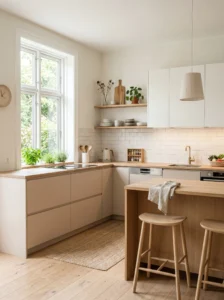
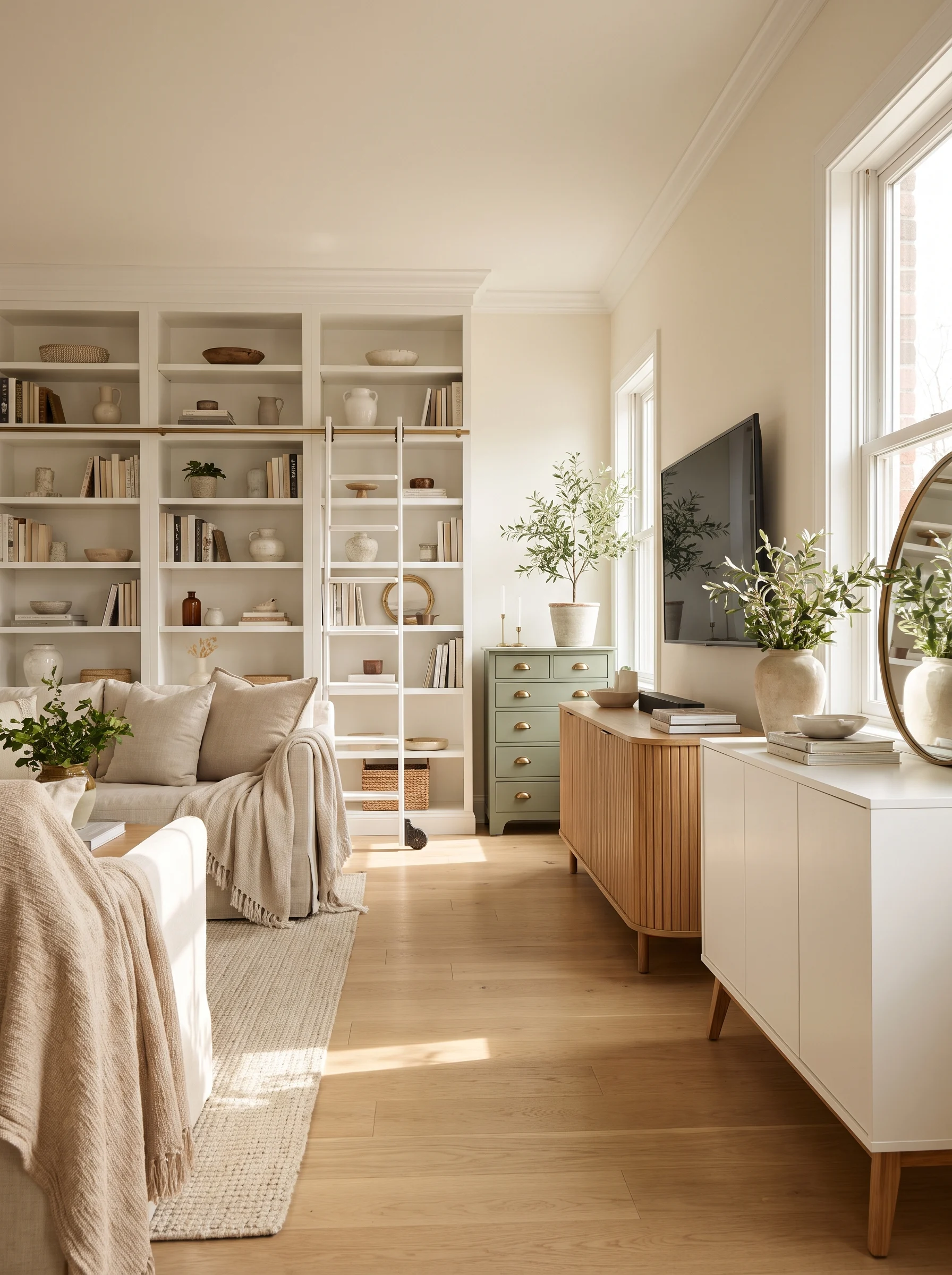
A Scandinavian kitchen almost always begins with a calm, neutral base—think whites, soft greys, muted beiges, and pale wood tones. These shades reflect light beautifully, making even small kitchens feel open and breathable.
What’s nice is how forgiving this palette is. You don’t have to match everything perfectly. A slightly off-white cabinet next to a warm wood countertop? It still works. Try layering tones rather than sticking to one flat color.
A small tip: if your kitchen gets good sunlight, lean into warmer neutrals—they feel especially cozy during mornings.
2. Use Natural Wood for Warmth
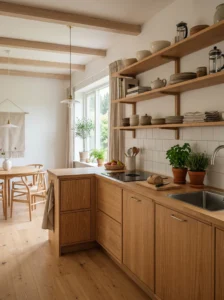
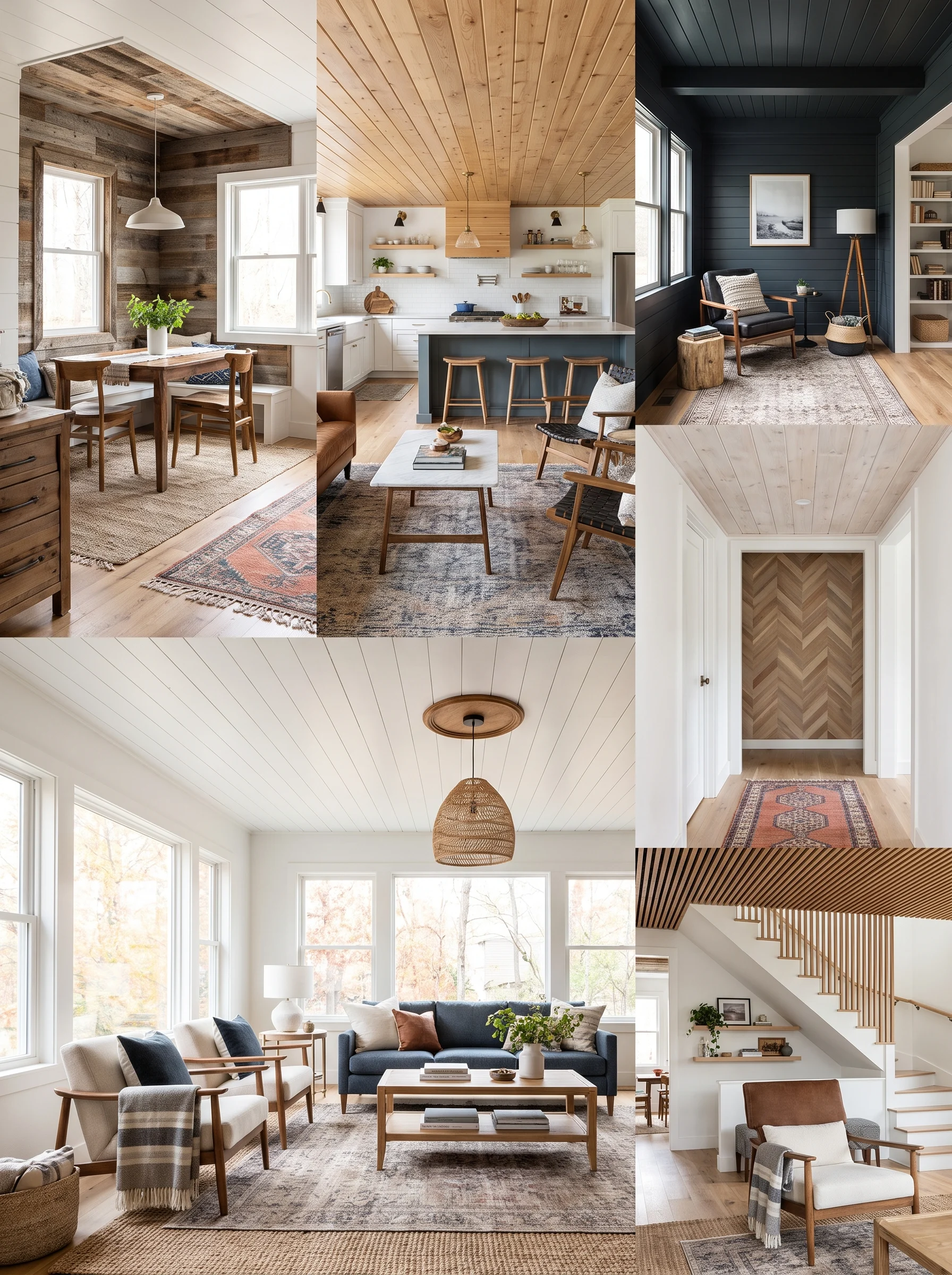
Scandinavian kitchens balance minimalism with warmth, and wood plays a huge role in that. Light oak, birch, or pine cabinets and shelves instantly soften the space without overwhelming it.
You don’t need full wooden cabinetry either. Even a wooden countertop, bar stool, or open shelf can make a difference. It adds texture while still keeping things simple.
Here’s the thing—natural wood ages beautifully. So instead of worrying about perfection, embrace the slight imperfections over time. That’s part of the charm.
3. Embrace Open Shelving
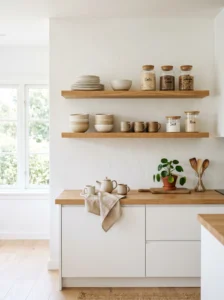
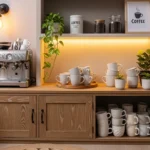
Open shelving is both practical and aesthetic in Scandinavian kitchens. It encourages you to keep only what you truly use—and display it beautifully.
Stack simple ceramic plates, glass jars, and neutral mugs. The goal isn’t to fill every inch but to let items breathe. Empty space is part of the design.
If you’re unsure, start small. Replace just one upper cabinet with a shelf and see how it feels. You might notice your kitchen instantly feels lighter.
4. Keep Countertops Clutter-Free
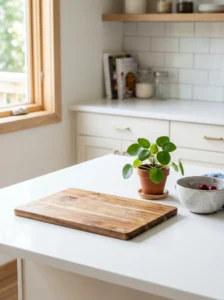
Minimalism shines brightest on your countertops. Scandinavian kitchens rarely have unnecessary items sitting out. Instead, everything has a place.
That doesn’t mean your counters have to feel empty or cold. A wooden cutting board, a ceramic bowl, or a small plant can add just enough personality.
Try this: remove everything, then add back only what you use daily. You’ll be surprised how much calmer your space feels.
5. Let in as Much Natural Light as Possible
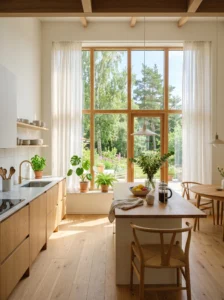
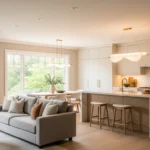
Light is everything in Scandinavian design. Large windows, sheer curtains, or even no curtains at all help maximize natural brightness.
If your kitchen doesn’t get much sunlight, don’t worry—use mirrors or glossy surfaces to reflect light around the room.
A simple trick? Keep window areas clear. Avoid placing bulky items near them so light can flow freely.
6. Add Simple Pendant Lighting
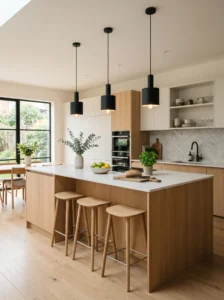
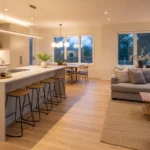
Lighting in a Scandinavian kitchen is functional but stylish. Clean, simple pendant lights over an island or dining area create a soft focal point.
Look for designs in matte black, white, or metal finishes. Avoid anything overly ornate.
You might notice that one well-placed light fixture can completely elevate the space. Sometimes less really is more.
7. Choose Sleek, Minimal Cabinets
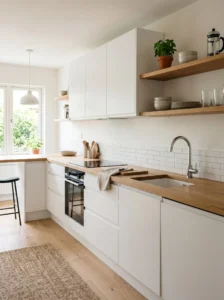
Flat-front cabinets are a staple in Scandinavian kitchens. They create a clean, uninterrupted look that feels modern and uncluttered.
Handles are often minimal—or even hidden entirely. Push-to-open systems are popular for that seamless effect.
If a full cabinet upgrade isn’t possible, swapping out bulky handles for simpler ones can still make a noticeable difference.
8. Incorporate Black Accents for Contrast
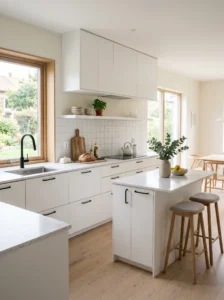
While Scandinavian design leans light, a touch of black adds depth and balance. Think cabinet handles, light fixtures, or even a faucet.
The contrast keeps the kitchen from feeling too soft or washed out. It grounds the space in a subtle, modern way.
A little goes a long way here—try adding just one or two black elements first.
9. Use White Subway Tiles
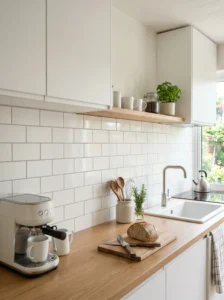
White subway tiles are timeless and perfectly aligned with Scandinavian simplicity. They reflect light and keep walls feeling fresh and clean.
You can lay them in a classic brick pattern or switch things up with vertical stacking or herringbone for a modern twist.
If you want a softer look, consider light grey grout instead of stark white. It adds a bit of definition without being harsh.
10. Add Greenery for Life
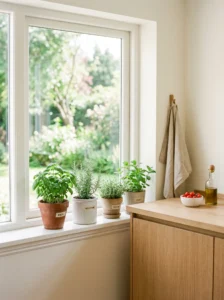
Plants bring warmth and life into a minimalist kitchen. Even one or two small plants can make a big difference.
Herbs like basil or rosemary are perfect—they’re useful and beautiful. Place them on a windowsill or open shelf.
Not great with plants? No problem. Go for low-maintenance options like snake plants or even a simple vase with fresh branches.
11. Opt for Integrated Appliances
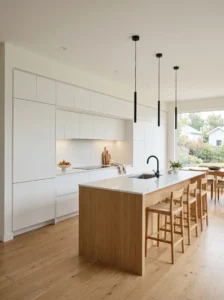
Scandinavian kitchens often hide appliances behind cabinetry for a seamless look. This keeps the design clean and uninterrupted.
If full integration isn’t possible, choose appliances in neutral tones that blend in rather than stand out.
It’s all about reducing visual noise. The fewer distractions, the more calming the space feels.
12. Use Light Flooring
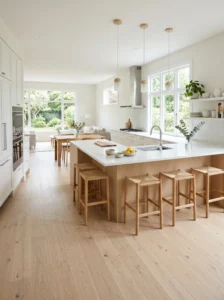
Light wood or pale tile flooring helps reflect light and keeps the kitchen feeling open. It’s a subtle detail, but it makes a big impact.
Avoid overly dark floors unless you’re balancing them with plenty of light elsewhere.
You might find that lighter floors also make the space feel more inviting and less heavy overall.
13. Keep Decor Minimal but Meaningful
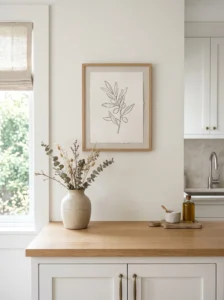
Scandinavian style isn’t about having no decor—it’s about choosing the right pieces. A single framed print, a ceramic vase, or a textured cloth can add personality.
The key is intention. Each item should feel like it belongs.
Before adding something new, ask yourself: does this serve a purpose or bring joy? If not, it might not be needed.
14. Add Texture Through Textiles
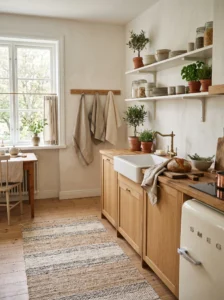
Soft textiles like linen towels, woven rugs, or simple curtains bring warmth into the kitchen.
Stick to neutral tones and natural materials to keep the look cohesive.
It’s a small detail, but it makes the space feel lived-in rather than sterile. Even a simple dish towel can add charm.
15. Create a Cozy Dining Nook
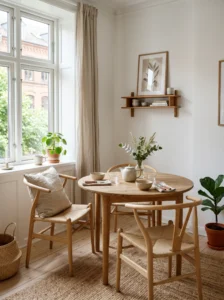
If space allows, a small dining corner with a wooden table and simple chairs adds a cozy touch.
Add a cushion or soft throw to make it inviting. It becomes more than just a place to eat—it’s where you slow down.
Even in smaller kitchens, a compact setup can work beautifully. Just keep it simple and uncluttered.
16. Use Glass and Ceramics for Display
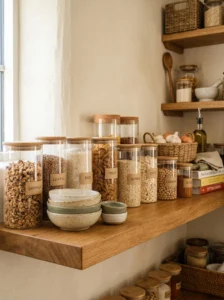
Scandinavian kitchens often showcase simple glass jars and ceramic dishes. They’re practical but also visually pleasing.
Store pantry items like pasta, grains, or coffee in clear jars for a clean look.
It’s functional decor at its best. Plus, it makes everyday items feel a little more special.
17. Add Subtle Metallic Touches
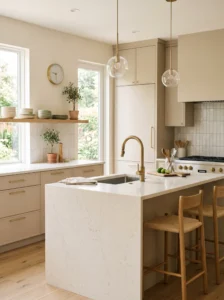
A hint of metal—like brushed brass or stainless steel—can elevate the space without overpowering it.
Think faucets, cabinet handles, or light fixtures. Keep it subtle and cohesive.
Too many finishes can feel messy, so try sticking to one metal tone throughout.
18. Focus on Functionality First
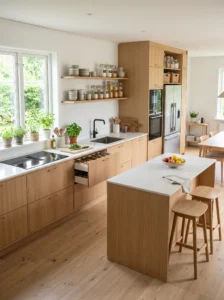
Scandinavian design is deeply practical. Every element should serve a purpose.
Before adding anything, think about how you use your kitchen daily. Organize accordingly.
You might realize that simplifying your layout makes cooking and cleaning feel much easier—and more enjoyable.
19. Keep It Simple and Personal
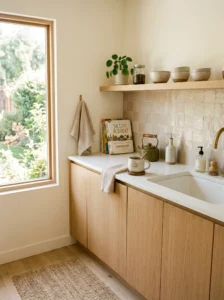
At the end of the day, Scandinavian style isn’t about strict rules. It’s about creating a space that feels calm, functional, and you.
Add small personal touches—maybe a favorite mug, a cookbook, or a meaningful object.
The beauty of this style is how adaptable it is. Keep it simple, but don’t strip away what makes your kitchen feel like home.
A clean and simple kitchen doesn’t have to feel cold or empty. With the right balance, it can feel calm, warm, and effortlessly beautiful. Start small, trust your instincts, and let your space evolve naturally.