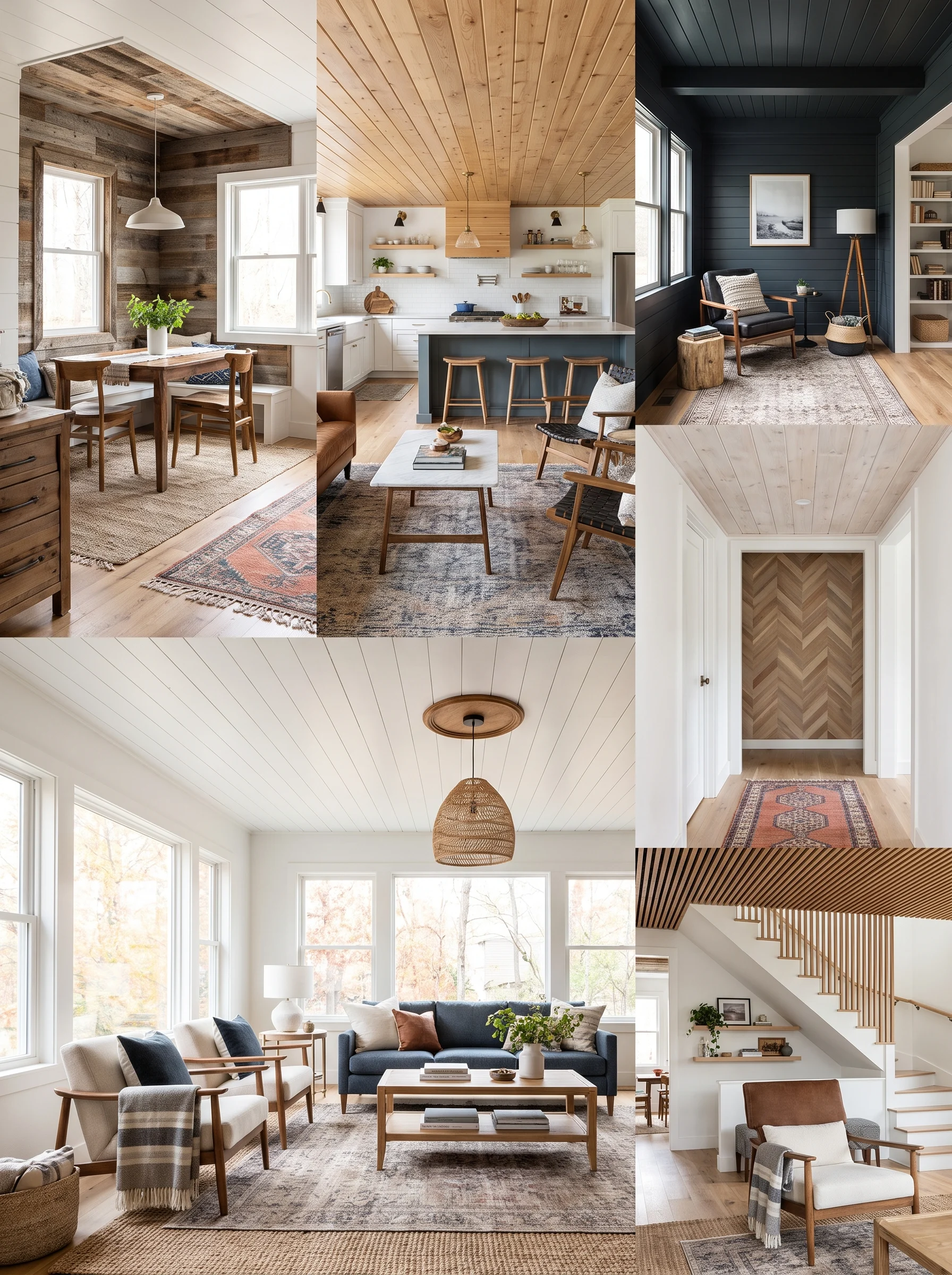
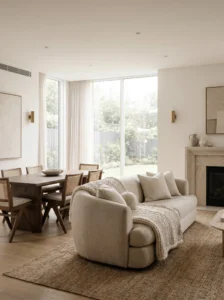
Trying to make your living room and dining room share the same space without it feeling cramped or awkward? Yeah, that’s a challenge a lot of people run into—especially in apartments or smaller homes where every square foot matters.
The good news is, a combo space doesn’t have to feel like a compromise. With the right layout, styling tricks, and a little creativity, you can create a space that feels intentional, stylish, and actually more functional.
Below are 18 living room dining room combo ideas that not only look good—but genuinely work in real life.
1. Define Zones with Rugs
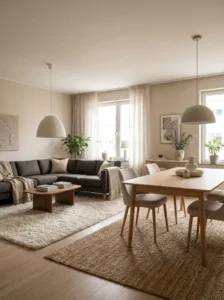
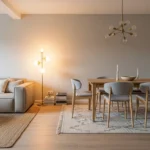
One of the easiest ways to visually separate your living and dining areas is by using rugs. Place a cozy rug under your sofa and coffee table, and another under your dining table. It instantly creates two distinct zones without adding walls or barriers.
This works especially well in open-plan spaces where everything can blur together. You might notice how grounding each area makes the room feel more organized and less chaotic.
Tip: Try using rugs in similar tones but different textures to keep things cohesive.
2. Use a Sofa as a Divider
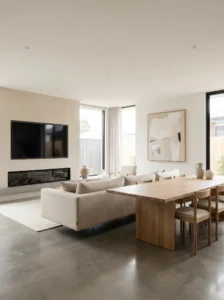
Instead of pushing your sofa against the wall, try floating it in the middle of the room. This simple move can act as a natural divider between your living and dining spaces.
It creates a subtle boundary while still keeping everything open and airy. Plus, it makes the layout feel more intentional rather than just “everything placed around the edges.”
You could even add a console table behind the sofa for extra style and storage.
3. Keep a Consistent Color Palette
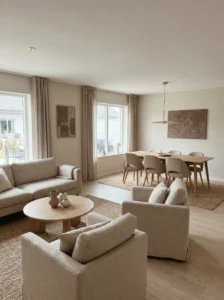
When two areas share the same room, consistency is key. Using a unified color palette helps everything feel connected rather than mismatched.
This doesn’t mean everything has to be identical—just cohesive. Think warm neutrals, soft grays, or even a muted color theme carried across both spaces.
Here’s the thing: when colors flow naturally, your eyes don’t feel overwhelmed, and the space feels bigger.
Suggestion: Pick 2–3 main colors and repeat them subtly.
4. Add a Statement Light Over the Dining Area
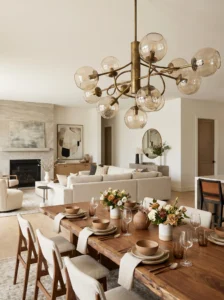
Lighting can do more than just brighten a space—it can define it. Hanging a bold pendant or chandelier over your dining table instantly anchors that area.
It draws attention and separates the dining space from the living room without needing physical dividers.
You might be surprised how much this small change transforms the feel of the room.
Tip: Choose something slightly dramatic—it’s okay for it to stand out.
5. Use Open Shelving as a Divider
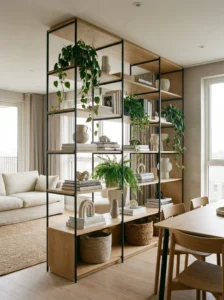
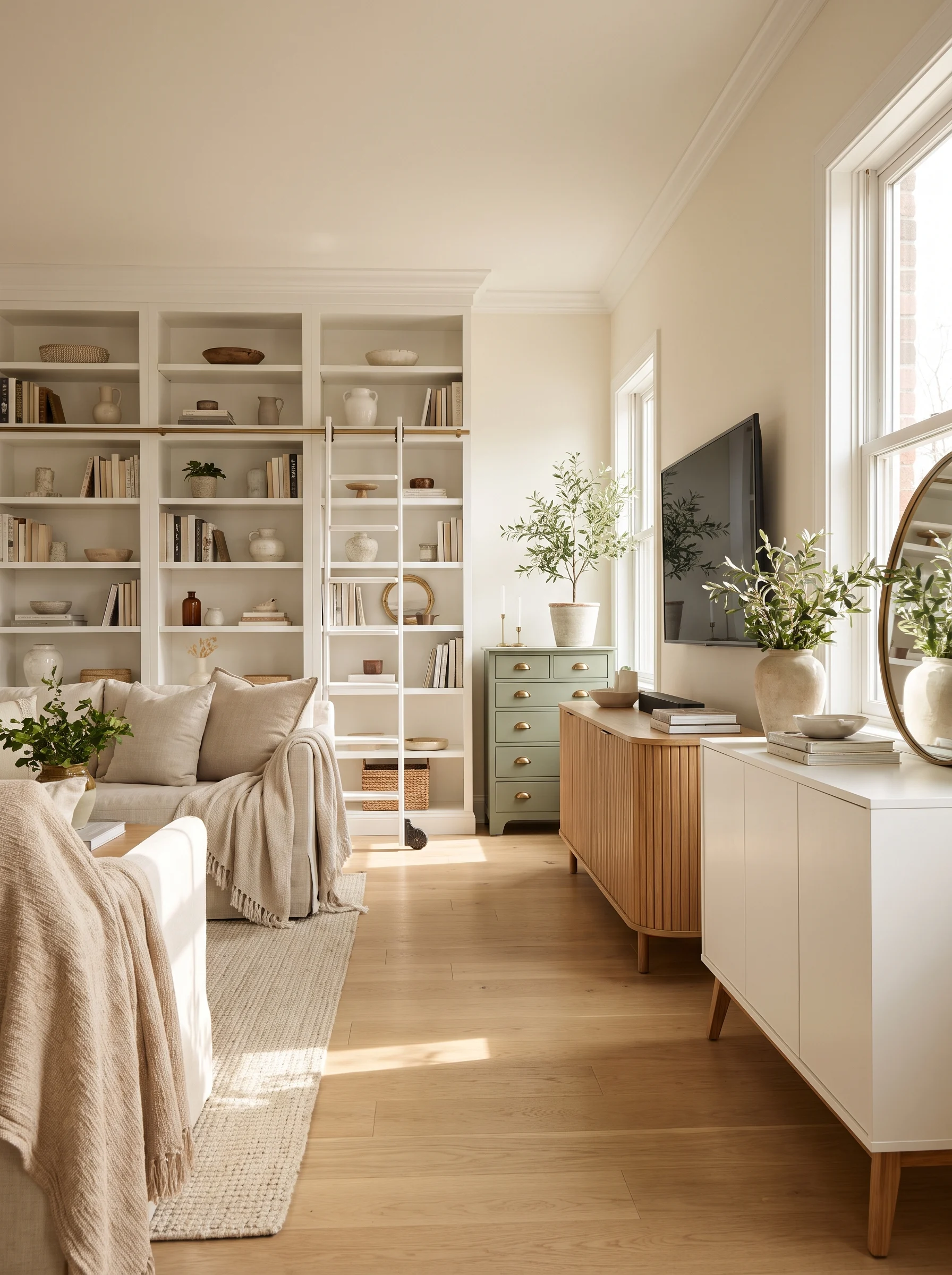
If you want separation without blocking light, open shelving is a great option. It creates a visual boundary while still keeping the space breathable.
You can style it with books, plants, or decor pieces that tie into both areas. It’s functional and decorative, which is always a win.
Question: Would you rather keep it minimal or fill it with personality?
6. Choose Multi-Functional Furniture
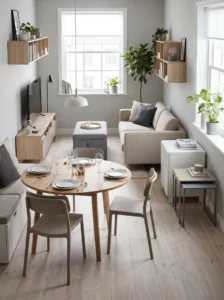
In a combo space, every piece should work a little harder. Think extendable dining tables, storage ottomans, or benches that can double as seating in both areas.
This helps maximize space without overcrowding it.
Honestly, once you start using multi-purpose pieces, it’s hard to go back.
Tip: Look for furniture that blends into both zones seamlessly.
7. Create a Visual Pathway
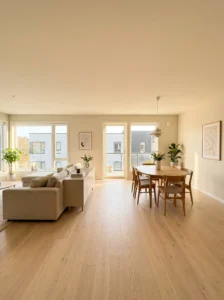
A clear walkway between your living and dining areas makes everything feel more comfortable and functional.
Avoid blocking paths with furniture, and leave enough space for easy movement. It keeps the room from feeling cluttered or awkward.
You might not think about this at first, but it makes a huge difference in daily use.
Suggestion: Aim for at least a couple of feet of walking space.
8. Mix Textures for Depth
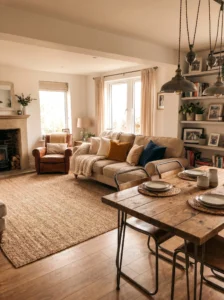
When both areas share one space, adding different textures helps create subtle distinction without breaking the flow.
Think soft throws in the living area and sleek finishes in the dining space. Or maybe wood tones paired with metal accents.
It adds interest without making things feel busy.
Tip: Try layering textures instead of colors if you prefer a minimal look.
9. Use Matching Materials
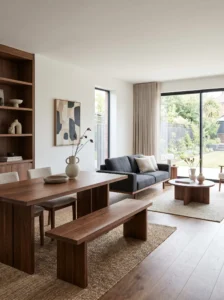
On the flip side, using similar materials—like wood finishes or metal tones—can tie both spaces together beautifully.
For example, a dining table and coffee table in the same wood tone creates harmony without being too matchy.
It’s one of those details people don’t always notice right away, but it makes everything feel intentional.
Suggestion: Repeat at least one material across both zones.
10. Add a Feature Wall
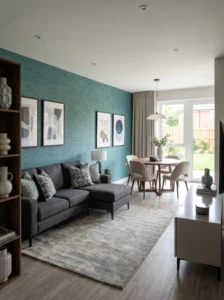
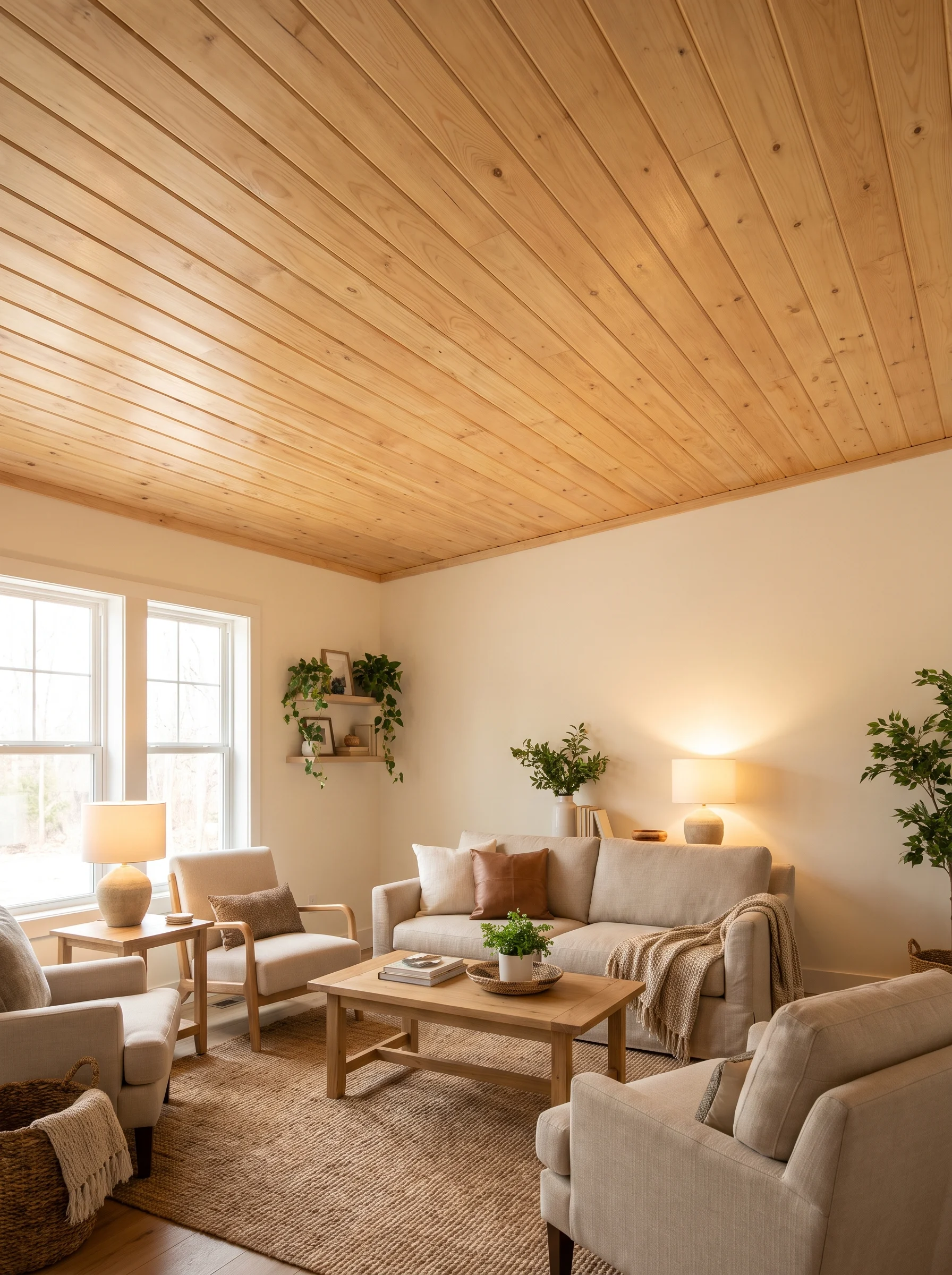
A feature wall can anchor one side of the room and give it identity. Whether it’s a bold paint color, wallpaper, or textured paneling, it adds character.
You could use it behind your dining table or your sofa, depending on where you want the focus.
Here’s the thing—it helps break up the space visually without adding clutter.
Tip: Keep the rest of the room more neutral to balance it out.
11. Keep Furniture Proportional
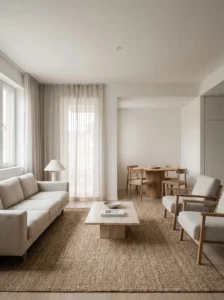
In a shared space, oversized furniture can quickly overwhelm everything. Choosing pieces that fit the scale of the room is crucial.
A bulky sofa next to a small dining table can feel off-balance. Instead, aim for harmony in size and proportion.
You might want to measure things out before buying—it saves a lot of frustration later.
Suggestion: Think “balanced,” not “big.”
12. Use Mirrors to Expand the Space
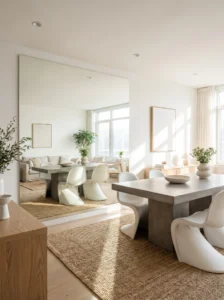
Mirrors are a classic trick, but they work especially well in combo rooms. They reflect light and make the space feel larger and brighter.
Placing one near the dining area or opposite a window can instantly open things up.
It’s a small change with a big impact.
Tip: Go for a large mirror rather than several small ones.
13. Add Plants for a Natural Divider
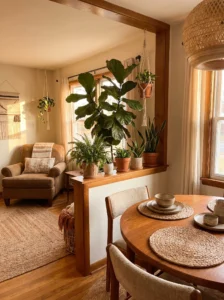
Plants can subtly separate spaces while adding life and freshness. A tall plant between the living and dining areas creates a soft boundary.
Plus, it makes the whole room feel more inviting.
You don’t need a jungle—just one or two well-placed plants can do the trick.
Question: Real plants or faux? Both work, honestly.
14. Keep the Layout Symmetrical
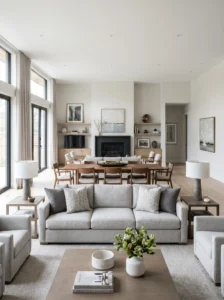
Symmetry can make a shared space feel calm and organized. Align furniture in a way that feels balanced on both sides.
For example, center your dining table under a light fixture and align your sofa with a focal point.
It creates a sense of order, even in a multi-purpose room.
Tip: Step back and look at the room from different angles—it helps.
15. Use a Bench Instead of Chairs
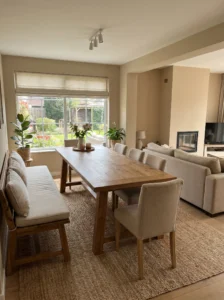
Swapping dining chairs for a bench on one side can save space and make the area feel less crowded.
It also adds a more relaxed, modern vibe that blends well with a living room setup.
You might notice it makes the transition between zones feel smoother.
Suggestion: Pair the bench with a couple of chairs for balance.
16. Layer Lighting
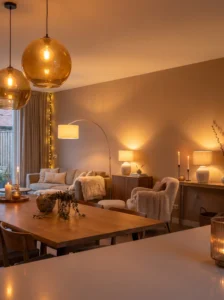
Don’t rely on just one overhead light. Use a mix of floor lamps, table lamps, and pendant lights to create depth.
This allows each area to have its own mood while still feeling connected.
It’s one of those details that really elevates the space.
Tip: Warm lighting usually feels cozier in combo rooms.
17. Keep Decor Minimal but Intentional
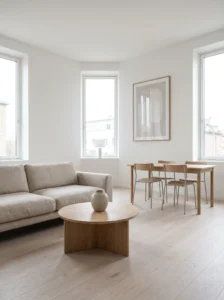
Too many decor pieces can make a shared space feel cluttered fast. Instead, choose a few meaningful or stylish items and let them stand out.
This keeps things visually clean while still adding personality.
You don’t need to fill every surface.
Suggestion: Rotate decor seasonally to keep things fresh.
18. Anchor Each Area with a Focal Point
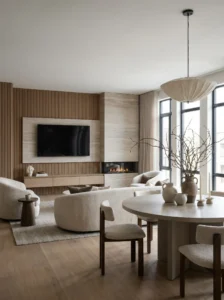
Give both your living and dining areas something to center around—a TV unit, artwork, or a statement table.
This helps each zone feel complete on its own while still being part of a whole.
It’s kind of like giving each space its own identity within the same room.
Tip: Make sure the focal points don’t compete too much—balance is key.
Designing a living room dining room combo doesn’t have to feel limiting. With a few smart choices, it can actually become one of the most stylish and functional spaces in your home.