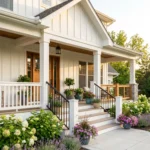
The front porch is the handshake of your house. Before anyone sees your living room, they’ve already decided how your home feels — and that decision happens in about ten seconds on the porch. I’ve walked up to hundreds of front doors over the years, and the warm ones all share something: they look lived in. Not staged, not perfect — lived in. A chair that someone actually sits in. A plant that’s thriving because somebody waters it.
The good news is that warmth is mostly about small, deliberate choices rather than big spending. A layered doormat, light at the right height, something green by the door — these are ten-minute changes that shift the whole feeling. This list walks through twenty-one of them, from furniture to lighting to the tiny details that make a porch feel like an invitation instead of a threshold. Pick the ones that fit your porch’s size and your life, and give the old girl a little love.
1. Layer a Rug Under Your Doormat
One doormat is functional. A doormat layered over a larger outdoor rug is a design statement. The rug — flat-weave, patterned, a foot or two wider than the mat on each side — frames the entrance and makes even a tiny concrete stoop feel like a proper entry. It also catches more dirt, which is the actual job.
Choose a rug with some pattern; it hides the dust and wear that a solid color shows immediately. Natural-looking textures — jute-look polypropylene, subtle stripes — work with almost any house style. Make sure both layers lie flat and don’t create a trip hazard, especially if you have older visitors. And anchor the rug if your porch is exposed to wind; outdoor rug tape on the corners keeps it from migrating across the yard every time a storm rolls through.
Budget: $ ($30–$80 for both). Difficulty: Easy — ten minutes.
2. Put Out Rocking Chairs
Nothing says “sit a while” like a rocking chair. It’s the single piece of furniture most associated with a welcoming porch, and it earns it: the gentle motion is relaxing, the form is familiar, and a pair of them facing the street turns the porch into a front-row seat to the neighborhood.
Comfort matters more than looks here. Test the rock — it should glide smoothly without tipping back too far — and add a cushion if the seat is hard. Wooden rockers weather beautifully but need oiling yearly; polywood or resin versions survive anything with zero maintenance. Place them at a slight angle toward each other rather than in a rigid line; angled chairs invite conversation, lined-up chairs feel like a waiting room. A small table between them for coffee completes the setup.
Budget: $$ ($100–$400 for a pair). Difficulty: Easy.
3. Hang a Wreath That Isn’t Just for Christmas
A wreath on the door is the fastest signal that someone cares about this house. The mistake is treating it as a December-only item. A simple green wreath works spring through fall; swap in dried grasses for autumn, eucalyptus for a modern look, or a boxwood wreath that looks good year-round with zero maintenance.
Scale it to your door — a skimpy wreath on a big double door looks lost, so go generous. Hang it with a proper wreath hanger or a ribbon from the top of the door rather than a nail through your door’s finish. And keep it fresh-looking: a dusty, sun-bleached wreath sends the opposite signal. Faux wreaths have gotten remarkably good; a quality one lasts years and you just fluff it each season. This is a five-minute change that visitors notice immediately.
Budget: $ ($25–$70). Difficulty: Easy.
4. Flank the Door with Potted Plants
Symmetry at the entrance is one of the oldest design tricks because it works: matching planters on either side of the door create a sense of order and intention before anyone steps inside. The planters themselves should be substantial — at least 16 inches tall — because small pots look fussy and dry out in a day.
What goes in them depends on your light and your commitment level. Boxwood or small evergreens give year-round structure with almost no care. For seasonal color, swap in ferns for shade or colorful annuals for sun. The thriller-filler-spiller formula (one tall plant, mounding fillers, trailing edges) makes any pot look professionally arranged. Self-watering planters are worth it if you travel; they buy you a week of forgiveness. And raise the pots on feet or a stand so water drains and doesn’t stain the porch floor.
Budget: $$ ($60–$200 for a pair, planted). Difficulty: Easy.
5. Hang a Porch Swing
If rocking chairs are the handshake, a porch swing is the hug. There’s something about a swing that makes a porch feel like a destination — kids fight over it, adults end up having long conversations on it, and the gentle motion makes even a quick sit-down feel like a break. I’ve never seen a porch swing go unused.
Installation is the part to take seriously. A swing with two adults is a few hundred pounds of dynamic load — it must hang from structural ceiling joists, not from trim or a single beam, using heavy-duty eye bolts or swing hangers. If your porch ceiling can’t take it, a freestanding A-frame swing gives you the same experience with no structural worries. Hang it at a height where feet touch the ground easily, add outdoor cushions and a throw, and position it to face the best view — the street, the garden, the sunset.
Budget: $$–$$$ ($150–$600). Difficulty: Medium (installation matters).
6. Light It with Lanterns and String Lights
Porch lighting is usually one harsh overhead fixture that makes everyone look like they’re being interrogated. Warmth comes from multiple low light sources instead: a couple of lanterns with LED candles on a table, string lights along the railing or ceiling, maybe a small lamp if you have an outlet. The layered glow is what makes a porch feel inviting after dark.
Solar lanterns have gotten good enough to rely on — look for ones with warm-white LEDs and a dusk-to-dawn sensor. For string lights, keep them to the porch itself rather than draping the whole facade; restraint reads as cozy, excess reads as a beer garden. Put everything on a timer so the porch lights itself at dusk. That automatic glow is the difference between a porch that looks welcoming from the street and one that goes dark and forgotten.
Budget: $–$$ ($40–$150). Difficulty: Easy.
7. Keep Throw Blankets Within Reach
A basket of throw blankets on the porch is a small thing that communicates a lot: stay longer, get comfortable, we’re in no hurry. On cool evenings it’s also purely practical — the difference between retreating inside at 8 p.m. and lingering until 10.
Use blankets in outdoor-friendly fabrics or just inexpensive ones you don’t mind weathering; they’ll get damp and dusty no matter what. A lidded basket or a small storage bench keeps them clean and dry between uses while doubling as a side table. Drape one over the arm of a chair even when it’s warm — the visual softness alone makes the seating look more inviting. Wash them monthly in season; porch textiles collect pollen and dust fast. This is hospitality you can buy for twenty dollars.
Budget: $ ($20–$60). Difficulty: Easy.
8. Ground the Seating with an Outdoor Rug
Bare porch floors — concrete, wood, composite — can feel hard and unfinished no matter how nice the furniture is. An outdoor rug under the seating area warms it up instantly, adds color and pattern, and makes the furniture grouping feel deliberate rather than scattered. It’s the same zoning trick that works indoors, and it works even harder outside.
Size it to fit the conversation area with furniture legs on it, not floating around it. Polypropylene rugs hose clean and resist mildew; avoid natural jute or sisal outdoors unless the porch is fully covered and dry, because they rot. If your porch gets driving rain, choose a rug with an open weave that drains, and store it in winter. Pattern-wise, this is where you can have fun — stripes, geometrics, or a faded vintage look all bring personality to what is otherwise a hard, flat surface.
Budget: $–$$ ($50–$150). Difficulty: Easy.
9. Add a Bench with Cushions
Not every porch fits a full seating set, and that’s where a simple bench earns its place. Against the wall or under a window, a bench with a thick cushion gives you seating for two or three without eating the floor space that chairs demand. It also doubles as a surface — set down groceries, bags, or a tray of drinks.
Build or buy one with storage inside and you’ve solved two problems at once; porch clutter (shoes, sports gear, delivery boxes) disappears into it. The cushion should be at least three inches thick with outdoor foam that drains — thin cushions go flat and soggy within a season. A washable cover in a stripe or solid that picks up your door color ties the whole entrance together. If the bench faces the street, add a small pillow or two; if it faces the door, keep it minimal so the entry stays clean.
Budget: $$ ($120–$350). Difficulty: Easy.
10. Paint the Front Door a Warm Color
The front door is the focal point of the entire porch, and its color sets the emotional temperature. Warm tones — deep red, warm navy, rich green, even a confident mustard — read as welcoming in a way that a faded white or builder-grade brown never will. It’s the highest-impact single change you can make to a porch.
Preparation is everything: clean, sand, and prime before painting, and use an exterior paint formulated for doors (it needs to handle sun and constant handling). Remove the hardware or tape it meticulously — painted-over hinges are the telltale sign of a rushed job. Two thin coats beat one thick one. And consider the finish: satin or semi-gloss looks rich and wipes clean, while flat shows every fingerprint. Stand across the street when you’re done; the door should be the thing your eye lands on.
Budget: $ ($40–$80 in paint and supplies). Difficulty: Easy–Medium.
11. Hang Planters from the Ceiling or Railings
Floor space on a porch is precious, so go vertical. Hanging planters from the ceiling or railing-mounted boxes add greenery at eye level, where it actually registers, without sacrificing a square foot of floor. A row of ferns in hanging baskets is the classic for a reason — it’s lush, forgiving, and instantly makes a porch feel established.
Match the plants to your exposure: ferns and begonias for shade, petunias and trailing verbena for sun. Watering is the catch — hanging baskets dry out fast, sometimes daily in summer heat. Self-watering inserts or drip irrigation on a timer solve it; otherwise, commit to the routine or choose drought-tolerant trailing succulents. Hang baskets at staggered heights rather than in a rigid row for a more natural look, and use sturdy hooks rated for the wet weight — a soaked hanging basket is surprisingly heavy.
Budget: $–$$ ($40–$150). Difficulty: Easy.
12. Cluster Candles for Evening Glow
There’s no cheaper way to make a porch feel magical than a cluster of candles. Group pillar candles of different heights on a tray or in hurricane lanterns, and the flickering light does something no electric fixture can quite replicate. It’s the difference between “lit” and “glowing.”
Safety first, always: use real flames only in sturdy glass hurricanes, never leave them unattended, and keep them away from cushions, throws, and curious pets. Honestly, good LED pillar candles with a flicker effect are 90% of the atmosphere with none of the risk — many have timers and remotes. Cluster in odd numbers (three or five) at varying heights for a natural look, and place the group where it’s visible from the street; that warm glow in the window of the evening is what makes passersby think “what a lovely house.”
Budget: $ ($20–$60). Difficulty: Easy.
13. Set Out a Small Side Table
Every seat on a porch needs a landing spot within arm’s reach — for coffee, a book, a glass of wine. Without it, people hold things awkwardly and leave sooner. A small side table between chairs, or a tiny bistro table with one chair in a tight corner, completes the seating the way a period completes a sentence.
It doesn’t need to match the furniture; a weathered wood stool, a ceramic garden stool, or a small metal table all work. What matters is stability on your porch floor and a surface that handles weather. Keep it mostly clear — a small plant or a candle is enough. Cluttered side tables make the whole porch feel cluttered. If space is truly tight, a wall-mounted folding table gives you the surface only when you need it.
Budget: $–$$ ($30–$120). Difficulty: Easy.
14. Upgrade to Warm Wall Sconces
That single overhead porch light flatters no one. Flanking the door with a pair of wall sconces — or even one good sconce beside a single door — puts light at face height where it’s warm and welcoming instead of interrogation-style from above. It’s also genuinely better for security: lit faces at the door are visible and identifiable.
Choose fixtures rated for wet or damp locations depending on your porch’s exposure, and always go warm white (2700K). The style should echo your home’s architecture — lantern-style for traditional homes, clean-lined for modern ones. If wiring new sconces is too much, there are excellent battery and solar options now that look like the real thing. Put them on a dusk-to-dawn sensor so the entrance is always lit when it matters; a dark front door at night feels abandoned no matter how pretty it is by day.
Budget: $$ ($80–$300 for a pair). Difficulty: Easy–Medium.
15. Stash a Storage Trunk by the Door
Porches accumulate stuff — shoes, umbrellas, dog leashes, the packages you’re hiding from the rain. A weatherproof storage trunk by the door swallows it all and gives you a surface on top for a planter or lantern. It’s the piece that keeps the porch looking intentional instead of lived-in in the bad way.
Look for a trunk or deck box with a real weather seal and a lid that stays open on its own while you load it. Cedar chests look beautiful but need a covered porch; resin deck boxes survive anything. Size it to your actual clutter — measure the shoes and gear, don’t guess. Vent it with a couple of small holes under the lid rim so moisture doesn’t get trapped. And lock it if it’s visible from the street; an unlocked box of stuff on an open porch is an invitation.
Budget: $$ ($80–$250). Difficulty: Easy.
16. Rotate Seasonal Decor (Simply)
A porch that changes with the seasons feels alive; a porch with the same dusty decor year-round feels forgotten. The key word is simply — you don’t need a full redecoration four times a year. Swap the wreath, change the doormat, and switch the planter inserts. Three changes, twenty minutes, completely fresh porch.
Keep a small storage bin of seasonal basics: a fall wreath, a spring mat, some fairy lights for winter. Buy things you genuinely like rather than holiday kitsch; a bowl of pinecones in November beats inflatable anything. The planters are the workhorse — mums in fall, pansies in spring, evergreens in winter — and they do most of the seasonal signaling. Resist the urge to add more each year; edit ruthlessly. A porch with three good seasonal touches beats one buried in decorations.
Budget: $ ($30–$100 per season). Difficulty: Easy.
17. Hang Outdoor Curtains for Softness
Fabric on a porch sounds impractical until you see it done. Outdoor curtains on a covered porch add softness, privacy, and a resort-like feeling that hard surfaces can’t provide. They filter harsh afternoon sun, block the neighbor’s view just enough, and move gently in the breeze — which is half the charm.
Use curtains made for outdoors (solution-dyed acrylic or polyester); indoor curtains will mildew and fade within weeks. Hang them on a sturdy rod or wire cable that spans the open sides, and weight the hems or tie them back on windy days. White or natural linen-look curtains suit almost every house and maximize the light filtering through. In winter, take them down and store them — they’ll last years instead of one season. This is one of those ideas that sounds fussy and ends up being the thing guests comment on.
Budget: $$ ($60–$200). Difficulty: Easy.
18. Make a Cozy Corner for Pets
If your dog greets visitors at the door, give them a proper spot — a washable pet bed in a sheltered corner of the porch, maybe a water bowl on a mat. It keeps pets off the furniture, gives them a defined place, and honestly, a dog snoozing on the porch is one of the most welcoming sights there is.
Choose a bed with a removable, washable cover in a dark color or pattern that hides dirt; porch beds get grimy fast. Elevated cot-style beds stay cooler in summer and keep the dog off a hot porch floor. Keep the corner out of direct midday sun and driving rain. And train the “place” command for the bed so the dog actually uses it instead of sprawling across the doormat. Visitors with allergies will appreciate a pet zone that’s clearly separate from the human seating, too.
Budget: $ ($30–$80). Difficulty: Easy.
19. Hang a Bird Feeder with a View
A bird feeder visible from the porch gives you living entertainment and makes the porch feel connected to nature. Position it where you can see it from your favorite chair — about 10–15 feet away is ideal for watching without disturbing the birds — and near cover like a shrub or tree where birds can retreat.
Start with black-oil sunflower seed; it attracts the widest variety of birds. Keep the feeder clean — wash it monthly with a bleach solution, because dirty feeders spread disease — and rake up fallen seed to avoid rodents. A squirrel baffle on the pole saves endless frustration. It takes two to three weeks for birds to find a new feeder, so be patient. Once they do, you’ll have regulars, and there’s something deeply pleasant about drinking morning coffee while chickadees argue over sunflower seeds.
Budget: $ ($25–$70). Difficulty: Easy.
20. Stencil or Paint the Porch Floor
A plain concrete porch floor is a blank canvas begging for attention. Stenciling a pattern — a classic tile motif, a simple border, a bold geometric — transforms the floor into a design feature for the cost of paint and a weekend. I’ve seen this single change make people think a porch was professionally renovated.
Use porch and floor paint or concrete stain, not wall paint; it needs to handle foot traffic and weather. Clean and etch the concrete first so the paint bonds — this prep step is the difference between a finish that lasts years and one that peels by fall. Seal it with a clear concrete sealer when done. Keep the pattern simple and the palette to two colors; intricate multi-color stencils look great in photos and exhausting in person. A border pattern around the edge with a solid center is elegant and much easier to execute well.
Budget: $–$$ ($50–$150). Difficulty: Medium.
21. String Edison Bulbs Across the Porch
Edison-style bulbs — those warm, amber filaments — are the porch lighting equivalent of a fireplace: they make everything and everyone look better. A single strand across the porch ceiling or along the railing casts a golden glow that flat-white LEDs can’t touch. It’s the fastest way to make an evening porch feel like somewhere you want to be.
Use shatterproof LED Edison bulbs, not actual vintage filaments; the real ones burn hot, break easily, and eat electricity. The LED versions give you the look at a fraction of the operating cost. Hang the strand with a gentle sag and keep it above head height along walkways. Connect it to the same timer as your other porch lights so the whole entrance lights up together at dusk. One strand is usually enough — this is about glow, not illumination.
Budget: $–$$ ($30–$100). Difficulty: Easy.
Quick Comparison: Budget and Difficulty
| Idea | What It Adds | Budget | Difficulty |
|---|---|---|---|
| Layered rug + doormat | Entry framing | $ | Easy |
| Rocking chairs | Classic seating | $$ | Easy |
| Year-round wreath | Door dressing | $ | Easy |
| Flanking planters | Symmetry / green | $$ | Easy |
| Porch swing | Destination seating | $$–$$$ | Medium |
| Lanterns + string lights | Evening ambience | $–$$ | Easy |
| Throw blankets | Comfort / softness | $ | Easy |
| Outdoor rug | Zone definition | $–$$ | Easy |
| Bench with cushions | Compact seating | $$ | Easy |
| Warm door paint | Focal point | $ | Easy–Medium |
| Hanging planters | Vertical greenery | $–$$ | Easy |
| Candle cluster | Evening glow | $ | Easy |
| Side table | Function | $–$$ | Easy |
| Warm wall sconces | Face-height light | $$ | Easy–Medium |
| Storage trunk | Clutter control | $$ | Easy |
| Seasonal rotation | Freshness | $ | Easy |
| Outdoor curtains | Softness / privacy | $$ | Easy |
| Pet corner | Pet-friendly | $ | Easy |
| Bird feeder | Living interest | $ | Easy |
| Stenciled floor | Custom detail | $–$$ | Medium |
| Edison bulb strand | Golden light | $–$$ | Easy |
Budget key: $ = under $100 · $$ = $100–$300 · $$$ = $300+
Cost-Saving Tips: Warmth Without the Spending
Almost everything on this list has a budget version that looks just as good. Paint is the great equalizer — a $50 gallon of door paint or floor stencil paint transforms more than $500 of accessories. Shop secondhand for the big pieces: rocking chairs, benches, and storage trunks show up constantly at thrift stores and estate sales, and wood furniture just needs cleaning and oil to look new.
For plants, buy small and be patient — a $6 fern becomes a lush hanging basket in one season. Paint the door, hang the lights — then stop and live with it for a month before adding anything else. You’ll make better decisions, spend less, and end up with a porch that looks curated rather than accumulated.
Frequently Asked Questions
How can I make my front porch look welcoming on a budget? Start with the three cheapest high-impact changes: paint the front door a warm color, layer a rug under your doormat, and add warm lighting (a strand of Edison bulbs or lanterns). For under $150 total, your porch will look completely different. Add one living thing — a potted plant by the door — and you’re most of the way there.
What plants are best for a front porch? It depends on sun exposure. Shady porches: ferns, begonias, impatiens, hostas. Sunny porches: petunias, geraniums, lavender, succulents. For year-round structure with minimal care, boxwood, dwarf evergreens, or ornamental grasses in large planters work in most climates. Always check your USDA zone before buying perennials.
How do I keep my porch decor from looking cluttered? Follow the rule of odd numbers and give everything breathing room. Group items in clusters of three, leave empty space on surfaces, and stick to a tight color palette (two or three colors max). If you can’t walk the porch without sidestepping decor, remove a third of it. Edit twice, buy once.
What’s the best lighting for a front porch? Layered and warm: sconces at face height by the door for function, plus a low glow source like lanterns or string lights for atmosphere. Always 2700K warm white — cooler temperatures make a porch feel commercial. Put it all on a dusk-to-dawn timer so the porch is never dark at night.
How do I decorate a very small porch or stoop? Go vertical and keep the floor clear: a wreath on the door, one tall planter beside it, wall-mounted lanterns, and a layered doormat. That’s a complete look in four square feet. Avoid furniture that blocks the door swing, and use the wall and railing for everything else.
How often should I update porch decor? A light seasonal refresh — wreath, mat, planter inserts — three or four times a year keeps it feeling alive. Deep changes like paint, rugs, and furniture last years. If the porch starts feeling stale, it’s usually the textiles and plants that need attention, not the big pieces.
Is it safe to leave candles on the porch? Real flames only in enclosed glass hurricanes, never unattended, and away from anything flammable. For most people, quality LED candles are the better choice — they look remarkably real now, many have timers, and there’s zero fire risk. This matters doubly on a porch with cushions, throws, and curtains nearby.
Conclusion
A warm, inviting porch isn’t a style you buy — it’s a feeling you build, one small decision at a time. Paint the door. Hang the lights. Put out a chair someone will actually sit in. Keep it simple, keep it lit, keep something alive by the door, and your porch will do what porches are supposed to do: make people feel welcome before they’ve even knocked.