Most rental kitchens have the same problems: dull cabinets, bad lighting, cheap countertops, awkward layouts, and finishes that scream “temporary.” You move in hoping the space will feel warm and stylish, but instead it feels like a place you’re simply stuck using. And because it’s a rental, major renovations usually aren’t an option.
That’s where smart styling matters more than expensive remodeling.
The truth is, a kitchen does not need marble counters or custom cabinetry to look high-end. A lot of expensive-looking kitchens actually rely on simple visual tricks: better lighting, cleaner organization, layered textures, and thoughtful details. Small upgrades can completely change how a rental kitchen feels without risking your security deposit.
What makes the biggest difference is understanding what creates a “luxury” look in the first place. Expensive kitchens usually feel intentional, uncluttered, cohesive, and comfortable to use. That’s good news for renters because many of those things are achievable without construction.
In this guide, you’ll learn practical ways to make a rental kitchen feel more polished and elevated using renter-friendly ideas. These are realistic upgrades — the kind that improve the space visually while also making everyday cooking easier and more enjoyable. No dramatic renovations, no unrealistic budgets, and definitely no advice that only works in a Pinterest-perfect apartment.
1. Upgrade the Cabinet Hardware First
One of the fastest ways to make a rental kitchen feel expensive is replacing basic cabinet handles. Cheap hardware instantly gives away a builder-grade kitchen, even if everything else looks decent.
The reason this works is simple: hardware acts like jewelry for the kitchen. Sleek pulls or knobs create contrast, add texture, and make cabinets feel intentional instead of forgettable. Matte black, brushed brass, and stainless steel are especially good choices because they look clean and modern without trying too hard.
This upgrade works best in small apartments where cabinets take up most of the visual space. If your kitchen has flat cabinet fronts, longer pulls usually look more upscale than tiny knobs. In older kitchens with wood cabinets, brushed brass can warm up the room beautifully.
Be careful not to choose overly trendy shapes or cheap-looking shiny finishes. Measure the existing drill holes before buying anything. The easiest renter-friendly move is simply unscrewing the old hardware and storing it safely until move-out day.
You’ll notice the difference immediately every time you open a cabinet. The kitchen starts feeling customized instead of temporary, which surprisingly changes your entire mood while cooking or cleaning.
2. Use Peel-and-Stick Backsplash Tiles
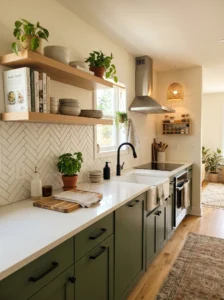
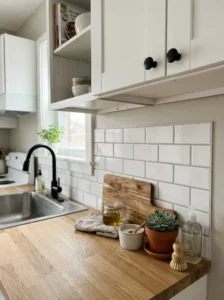
A blank or outdated backsplash can make even a clean kitchen feel unfinished. Peel-and-stick backsplash tiles are one of the smartest rental upgrades because they visually mimic expensive tile work without permanent installation.
The reason backsplashes matter so much is that they sit at eye level. They become part of the kitchen’s personality almost instantly. Subway tile designs, marble-look patterns, or soft textured finishes can create a much more polished appearance than painted drywall alone.
This idea works especially well in narrow galley kitchens or small apartment kitchens where there’s limited room for decor. Light-colored backsplash styles help brighten darker rentals, while warm stone-look finishes add depth to sterile white kitchens.
Avoid bold patterns that can overwhelm small spaces. Also, don’t place peel-and-stick tile directly over greasy or uneven surfaces without cleaning properly first. Bad installation makes even expensive designs look cheap.
A good backsplash also changes how the kitchen feels during daily use. Cooking becomes more enjoyable because the room feels styled and cared for instead of purely functional. It creates the impression that the entire kitchen was upgraded, even though the change itself is relatively small.
3. Add Better Lighting Instead of Relying on Ceiling Lights
Rental kitchens often have harsh overhead lighting that makes everything look flat and cold. Better lighting instantly creates warmth, depth, and a more expensive atmosphere.
Expensive kitchens usually layer lighting instead of depending on one bright ceiling fixture. Under-cabinet LED strips, rechargeable puck lights, or warm-toned lamps soften the room and create visual dimension. Even simple lighting changes can dramatically improve how countertops and cabinets look.
This works especially well in kitchens with limited natural light. If your apartment kitchen feels dark in the evenings, adding warm under-cabinet lighting makes the space feel calmer and more welcoming.
Stick with warm white bulbs instead of blue-toned daylight bulbs. Cooler lighting tends to highlight flaws and makes rentals feel more sterile. Battery-powered LED options are renter-friendly and easy to remove later.
One overlooked benefit is how much lighting changes your daily routines. Late-night cleaning feels less harsh, morning coffee feels cozier, and the kitchen becomes a space you actually enjoy spending time in rather than rushing out of.
4. Style the Countertops Like a Designer Would
An expensive-looking kitchen is rarely cluttered. Countertops packed with random appliances, plastic containers, and mail piles immediately make a kitchen feel smaller and cheaper.
The goal is not empty countertops — it’s intentional styling. Designers usually group functional items together neatly. A wooden cutting board, ceramic utensil holder, olive oil bottle, and small tray can make everyday items look curated instead of messy.
This works in every kitchen size, but especially in small rentals where visual clutter quickly overwhelms the room. If counter space is limited, prioritize only the items you genuinely use daily.
Choose materials that add warmth and texture. Wood, ceramic, glass, and matte metal almost always look more expensive than bright plastic. Matching storage containers also help create a cleaner appearance.
The biggest mistake renters make is treating countertops like storage space. Even expensive kitchens look chaotic when every appliance is visible. Try removing half the items currently sitting out. The kitchen will instantly breathe better.
A thoughtfully styled countertop also improves functionality because cooking becomes easier when surfaces stay clear and organized.
5. Bring in Natural Wood Accents
Rental kitchens often feel cold because they rely heavily on laminate, metal, and artificial finishes. Adding wood introduces warmth and balance, which naturally creates a more high-end feel.
Wood accents work because they soften hard surfaces and make the kitchen feel layered instead of flat. Even small additions like cutting boards, wooden stools, floating shelves, or wood-handled utensils can make a noticeable difference.
This idea works particularly well in white, gray, or black kitchens that feel overly modern or sterile. Lighter woods like oak or bamboo brighten darker spaces, while walnut tones add richness to neutral kitchens.
Avoid overcrowding the kitchen with too many wood tones at once. Sticking to one or two consistent finishes usually looks more intentional. Also, cheap orange-toned wood can make the space feel dated instead of elevated.
One practical advantage is that wood makes everyday kitchen items look decorative. A cutting board leaning against the backsplash suddenly feels styled instead of stored away. Small changes like this help rental kitchens feel lived-in and personal.
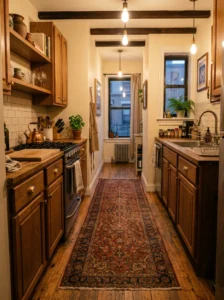
6. Replace Cheap Rugs With One Statement Runner
Many renters ignore the kitchen floor because it feels temporary, but flooring heavily affects how expensive a room looks. A well-chosen runner rug can completely shift the mood of the kitchen.
A patterned vintage-style runner adds softness, color, and texture while hiding unattractive flooring underneath. It visually stretches the room and makes narrow kitchens feel longer and more designed.
This works best in galley kitchens, apartment kitchens, or spaces with plain tile flooring. Washable runners are especially practical because kitchens naturally deal with spills and crumbs.
Avoid rugs that are too small. Tiny rugs tend to make kitchens feel awkward and unfinished. Also, avoid overly bright novelty patterns that can cheapen the room visually.
A good runner changes the experience of standing in the kitchen daily. Cooking feels cozier, the space absorbs sound better, and the room immediately feels more layered and intentional.
7. Use Matching Storage Containers
Nothing ruins a kitchen faster than mismatched packaging and random plastic containers covering shelves and counters. Uniform storage instantly creates a cleaner, calmer appearance.
The reason this works is psychological as much as visual. Organized spaces feel more expensive because they suggest control and simplicity. Glass jars, matching baskets, or coordinated pantry containers make even ordinary ingredients look elevated.
This is especially useful in open shelving kitchens or small apartments where storage stays visible. Clear containers also help you see what you already own, which reduces clutter over time.
Stick to simple shapes and neutral tones. Too many different labels or trendy fonts can look busy. If budget matters, start with the most visible areas first instead of replacing everything at once.
Daily kitchen use becomes smoother too. Finding ingredients gets easier, shelves look cleaner, and the kitchen feels less chaotic overall.
8. Add Temporary Wallpaper Carefully
Wallpaper can completely transform a bland rental kitchen when used strategically. The key word is strategically.
Instead of covering every wall, focus on smaller areas like the side of cabinets, a breakfast nook wall, or open shelf backing. Textured neutrals, soft patterns, or linen-look wallpapers often create the most expensive effect.
This works best in kitchens that feel visually flat or lack architectural interest. A subtle wallpaper can create depth without overwhelming the room.
Avoid loud trendy prints that may quickly feel dated. Also, always test removable wallpaper carefully before applying it widely. Some cheaper products damage paint during removal.
The right wallpaper creates personality without requiring renovation. It helps the kitchen feel styled specifically for you instead of looking identical to every other rental unit in the building.
9. Swap Out the Faucet if Allowed
A dated faucet can quietly age an entire kitchen. Replacing it with a sleek modern design instantly makes the sink area feel more luxurious.
Faucets matter because they’re one of the most frequently used visual focal points in the kitchen. A matte black pull-down faucet or brushed steel finish creates a more custom appearance immediately.
This upgrade works particularly well in older apartments where everything else feels relatively neutral. Even if the sink itself is basic, the faucet upgrade can distract from it visually.
Always check lease rules first and keep the original fixture stored safely. If replacement isn’t possible, even deep cleaning and polishing the existing faucet helps more than people realize.
A better faucet also improves functionality. Cooking, washing dishes, and cleaning become easier and more comfortable, which subtly improves daily kitchen life.
10. Decorate With Real Kitchen Items
One mistake renters make is adding fake decorative clutter that serves no purpose. Expensive kitchens usually display beautiful functional items instead.
Think ceramic bowls filled with fruit, elegant dish soap bottles, linen towels, wooden spoons, or attractive cookware left on the stove. These pieces feel authentic because they actually get used.
This approach works in kitchens of any size because it avoids unnecessary clutter while still adding personality. Neutral colors and natural materials tend to create the cleanest high-end look.
Avoid overcrowding every surface. One styled corner looks far more expensive than ten random decorative objects.
There’s also something comforting about using beautiful everyday items. Even simple routines like making tea or washing vegetables feel slightly nicer when the kitchen environment feels intentional.
11. Hide Visual Clutter Whenever Possible
Luxury kitchens rarely have cords, cleaning supplies, or overflowing dish racks visible everywhere. Hiding clutter is one of the biggest differences between average and expensive-looking spaces.
The reason is simple: visual calm makes a room feel larger and cleaner. Even small kitchens can appear elevated when unnecessary items disappear from sight.
Use baskets under the sink, cord organizers for appliances, and trays for grouped items. If possible, move bulky appliances off the counter when not in use.
This matters most in studio apartments or tiny kitchens where everything remains visible constantly. Even reducing visible clutter by 30 percent makes a major visual difference.
One common mistake is organizing without decluttering first. Storage solutions cannot fix having too much stuff.
A clutter-free kitchen also feels mentally lighter. Cooking becomes less stressful because you’re not constantly navigating visual chaos while preparing meals.
12. Add Curtains or Better Window Treatments
Bare rental blinds often make kitchens feel cold and unfinished. Soft window treatments instantly warm up the space and create a more polished atmosphere.
Cafe curtains, linen panels, or woven shades work particularly well because they soften harsh lines and bring texture into the room. Even inexpensive curtains can dramatically improve the overall look.
This works best in kitchens with natural light. Light-filtering fabrics allow sunlight in while still adding softness and privacy.
Avoid heavy dark curtains in small kitchens since they can shrink the room visually. Stick with breathable fabrics and neutral tones for a cleaner appearance.
Window treatments also make the kitchen feel more connected to the rest of the home instead of purely functional. The space becomes somewhere you want to sit and linger rather than just cook quickly and leave.
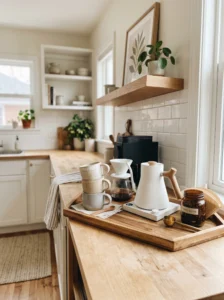
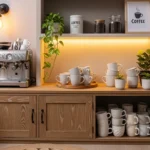
13. Create a Small Coffee or Beverage Station
A dedicated coffee station makes a kitchen feel organized and thoughtfully designed. It adds a boutique hotel vibe without requiring much space.
The reason this works is because zoning creates structure. When items have a designated place, the kitchen feels more intentional and less random.
Use a tray to group mugs, coffee beans, sweeteners, and small appliances together neatly. This works especially well in apartment kitchens with unused corners or awkward countertop gaps.
Stick with cohesive colors and materials so the station feels integrated into the kitchen rather than separate from it. Avoid overstuffing the area with too many gadgets.
Practically, this setup also improves your morning routine. Everything you need stays within reach, and the kitchen feels calmer because items are grouped logically instead of scattered around.
14. Use Larger Decor Pieces Instead of Tiny Ones
Small decor pieces often create visual clutter instead of style. One larger statement item usually looks more expensive than several tiny decorative objects.
A large cutting board, oversized vase, framed art print, or substantial bowl creates stronger visual impact and makes the kitchen feel more designed.
This is especially important in small rental kitchens where too many small items quickly make the room feel cramped.
Choose pieces with texture and simple shapes rather than trendy novelty decor. Neutral oversized items generally age better visually.
Larger pieces also simplify cleaning and organization. Instead of constantly rearranging small accessories, the kitchen maintains a cleaner and calmer appearance naturally.
15. Keep a Cohesive Color Palette
One reason expensive kitchens look polished is consistency. Too many competing colors make a kitchen feel chaotic very quickly.
Choose two or three main tones and repeat them throughout the space. For example, black, wood, and white create a modern balanced palette that works in almost any rental.
This works particularly well when dealing with ugly existing finishes because consistency distracts from them visually. Matching towels, containers, and accessories creates cohesion even if the cabinets themselves are outdated.
Avoid buying decor randomly without considering the overall palette. Small mismatched items accumulate fast and create visual noise.
A cohesive kitchen simply feels calmer to live in. The room photographs better, looks cleaner even when slightly messy, and creates a more relaxing daily environment.