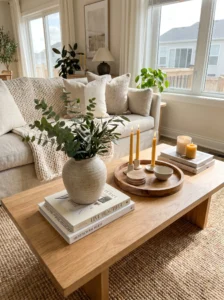
A coffee table sounds simple until you actually try to style one. Then suddenly you’re standing there holding a candle, two random books, and a plant that somehow looks awkward no matter where you place it. Most people either leave their coffee table completely empty or overcrowd it with décor that looks more like a store display than a real living room.
The tricky part is that a coffee table sits right in the center of the room. It quietly affects how the entire space feels. When it looks cluttered, the room feels messy. When it looks too bare, the space can feel unfinished or cold. And unlike shelves or consoles, coffee tables also need to stay functional. You still need somewhere to place drinks, remotes, snacks, or your feet after a long day.
The good news is that styling a coffee table is not about following strict design rules or buying expensive décor pieces. It is mostly about balance, proportion, layering, and understanding how people actually live in a room. A beautifully styled coffee table should feel natural, not staged.
In this guide, you’ll learn beginner-friendly coffee table styling ideas that genuinely work in real homes. We’ll cover layout tricks, décor combinations, material choices, color balance, and practical mistakes to avoid. Whether your style is modern, cozy, minimalist, rustic, or somewhere in between, these ideas will help you create a coffee table setup that feels polished without trying too hard.
1. Start With a Tray to Create Structure
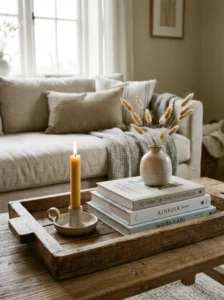
One of the easiest mistakes beginners make is placing random objects directly onto the coffee table without any visual organization. A tray instantly fixes that problem. It creates a designated zone that makes even simple décor look intentional.
Trays work because they visually group items together. Instead of seeing separate objects scattered around the table, your eye sees one organized arrangement. This is especially helpful in busy living rooms where coffee tables already collect everyday items like remotes or coasters.
A tray works best on medium to large coffee tables in family rooms, apartments, and open-concept spaces. Rectangular trays suit long tables, while round trays soften square or sharp-edged tables.
Try combining a candle, small plant, and decorative object inside the tray. Stick to odd numbers because arrangements often feel more balanced that way. Wood trays add warmth, while marble or metal trays feel more modern and polished.
Avoid choosing a tray that covers the entire table surface. You still need practical empty space for daily use. A crowded tray can make the room feel smaller and more stressful.
In real life, trays also make cleaning easier. Instead of moving six separate objects every time you wipe the table, you simply lift one tray and finish the job in seconds.
2. Use Books as the Foundation Layer
Coffee table books are popular for a reason. They add height, personality, and structure without making the table feel cluttered. More importantly, they help smaller decorative pieces feel grounded instead of floating awkwardly on the surface.
Books work particularly well in living rooms that feel visually flat or empty. A stack of two or three books instantly creates dimension. Large hardcover books are best because they look substantial and stylish without trying too hard.
Choose books connected to your interests rather than random luxury fashion books you never open. Travel, interiors, photography, architecture, cooking, or art books usually work beautifully. Guests naturally notice them, and they often become conversation starters.
For placement, stack books horizontally rather than vertically. You can then place a candle, small bowl, or decorative object on top. This layering technique creates height variation, which keeps the table visually interesting.
Color matters too. Neutral book covers feel calm and sophisticated, while colorful covers add personality to minimalist rooms. If your living room already has lots of patterns, simpler book colors usually work better.
One mistake beginners make is using too many books. You are styling a coffee table, not building a library. Two or three carefully chosen books are usually enough.
The best part is that books make the space feel lived-in. They add warmth and personality in a way that purely decorative objects sometimes cannot.
3. Add Natural Elements for Warmth
A coffee table without something natural often feels a little lifeless. Plants, flowers, branches, or natural textures bring movement and softness into the space.
Greenery works because it balances hard furniture lines. Sofas, tables, and televisions are mostly solid shapes, so adding something organic helps the room feel more relaxed and inviting.
Small potted plants are perfect for beginners because they are easy to style and maintain. Olive branches, eucalyptus stems, succulents, or simple greenery arrangements all work beautifully. Fresh flowers instantly brighten a room, but realistic faux stems are completely fine if maintenance is not your thing.
Natural elements work especially well in neutral or modern spaces that need warmth. They also soften industrial rooms filled with metal, concrete, or dark furniture.
Placement matters. Tall arrangements should not block conversation across the sofa. Low and wide arrangements usually feel more practical for everyday living.
You can also introduce natural textures through woven bowls, wooden beads, stone objects, or ceramic vases. Mixing materials prevents the table from feeling flat or overly coordinated.
A common mistake is choosing plants that are too small. Tiny plants can disappear visually on large coffee tables. Scale matters more than people realize.
Even one simple vase with greenery can completely change how welcoming a living room feels. It gives the room a little life without adding visual chaos.
4. Follow the Rule of Three
There is a reason designers often use groups of three. Odd-numbered arrangements naturally feel more balanced and visually pleasing than even-numbered ones.
For beginners, this rule makes coffee table styling much easier because it removes the guesswork. Instead of endlessly rearranging objects, you can focus on creating three distinct elements.
A simple formula might include:
- Something tall
- Something textured
- Something practical
For example, you could combine a vase, stack of books, and candle. Or a tray, plant, and decorative bowl.
This method works in almost every living room style, from minimalist apartments to cozy farmhouse homes. It is especially useful for small coffee tables because too many objects quickly feel crowded.
The key is varying height and shape. If every object is the same size, the arrangement looks stiff and boring. Contrast creates visual movement.
Avoid making the setup perfectly symmetrical unless your room already has a very formal style. Slight imbalance often feels more natural and relaxed.
In everyday life, the rule of three also helps maintain functionality. Your coffee table still feels styled, but there is room left for coffee mugs, laptops, or snack plates during movie nights.
5. Leave Empty Space on Purpose
One of the most underrated styling tricks is knowing when to stop. Empty space is not wasted space. It actually helps your décor stand out more.
Beginners often assume a styled coffee table needs to be completely filled, but overcrowding usually makes the room feel stressful rather than beautiful.
Negative space gives the eye somewhere to rest. It also keeps the table functional, which matters in real homes where people actually use their furniture daily.
This approach works especially well in smaller living rooms, apartments, and minimalist interiors. A little breathing room can make the entire room feel larger and calmer.
A good rule is to style roughly two-thirds of the table and leave the remaining space open. That open area becomes useful for drinks, food trays, laptops, or everyday living.
Glass coffee tables particularly benefit from lighter styling because clutter becomes visually amplified through transparent surfaces.
If your table still feels empty after reducing décor, focus on using fewer but larger items instead of adding many tiny accessories.
Realistically, the best coffee tables are not the ones packed with decorations. They are the ones that feel balanced, useful, and easy to live with every day.
6. Mix Different Heights and Shapes
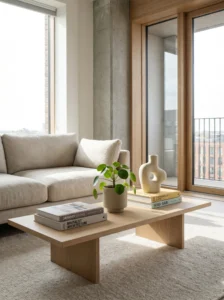
A flat arrangement is one of the fastest ways to make a coffee table look unfinished. When every object sits at the same height, the entire setup feels visually dull.
Mixing heights creates movement and depth. It guides the eye around the table instead of making everything blend together.
This works in almost every decorating style. Modern rooms often use clean height contrasts, while cozy or eclectic rooms may layer objects more casually.
Try combining:
- A tall vase or branches
- Medium-height candles
- Low bowls or books
Round objects also balance square furniture nicely. If your coffee table has sharp edges, softer shapes can make the room feel more comfortable and inviting.
Material contrast matters too. Pairing glass with wood, metal with fabric, or ceramic with woven textures adds richness without requiring lots of color.
Avoid extreme height differences that feel awkward or unstable. Very tall objects can block sightlines across the room, especially in smaller spaces.
In daily life, layered arrangements simply make the room feel more thoughtfully designed. Even inexpensive décor looks elevated when heights and shapes vary naturally.
7. Use Candles to Create Instant Coziness
Candles are one of the simplest ways to make a coffee table feel warm and inviting. Even when unlit, they add softness and texture to the room.
Candles work because they introduce a relaxed atmosphere. Living rooms can sometimes feel dominated by electronics and large furniture, so candles help create balance.
They fit beautifully in modern, traditional, rustic, and minimalist spaces alike. The trick is choosing styles that match the overall room aesthetic.
Large pillar candles create a calm, timeless look. Sculptural candles feel trendier and more artistic. Scented candles can also subtly improve the room experience without overwhelming the space.
Placement is important. Candles usually look best grouped together or layered with books and trays. One tiny candle floating alone often feels accidental rather than intentional.
Stick to neutral candle colors if your room already contains strong patterns or colorful furniture. In quieter spaces, darker candles can add depth and contrast.
Avoid overcrowding the table with multiple fragrances. Too many scented products can feel distracting instead of cozy.
A candle on the coffee table has a surprisingly strong emotional effect. It quietly signals comfort, relaxation, and slowing down after a busy day.
8. Add Something Personal Instead of Generic Décor
Many beautifully photographed coffee tables look impressive online but strangely lifeless in real homes. That usually happens when everything feels overly staged or impersonal.
Adding one personal item instantly changes the mood. It could be a travel souvenir, handmade ceramic piece, vintage object, or meaningful book.
Personal objects work because they create emotional connection. They make the space feel authentic rather than copied from a showroom display.
This approach works particularly well in family homes, apartments, and cozy interiors where comfort matters more than perfection.
The key is moderation. One or two meaningful items feel thoughtful. Ten personal objects can quickly become clutter.
Try placing a small framed photo, collected stone bowl, or artisan vase alongside more neutral styling pieces. This mix keeps the table balanced while still feeling individual.
Avoid trendy décor that does not actually fit your personality or lifestyle. A room feels more timeless when it reflects real interests rather than temporary social media trends.
In everyday use, personal objects often become favorite conversation pieces. Guests notice them naturally, and they quietly tell a story about the people who live there.
9. Balance Practicality With Decoration
A coffee table should not feel too precious to use. One of the biggest styling mistakes is creating a setup that looks beautiful but becomes annoying in daily life.
The best coffee tables balance aesthetics and practicality. You should still be able to comfortably place drinks, snacks, remotes, or laptops without rearranging fifteen decorative objects first.
This matters most in family living rooms, smaller apartments, and homes where the living room gets heavy daily use.
Think about how you actually use the space. If you regularly eat in front of the television, leave enough open surface area. If kids use the room often, avoid fragile or sharp décor pieces.
Decorative bowls can double as remote holders. Stylish coasters protect surfaces while blending into the design. Storage trays help keep clutter controlled.
Avoid tall fragile objects in high-traffic homes. Stability matters more than creating a perfect showroom look.
A practical coffee table simply feels easier to live with. You stop worrying about constantly fixing the styling and start enjoying the room more naturally.
10. Match the Table Style to the Room Mood
Not every coffee table arrangement works in every room. Styling should support the overall atmosphere of the space rather than fighting against it.
Modern living rooms usually look best with cleaner styling and fewer objects. Rustic or cozy spaces can handle warmer textures and layered décor more comfortably.
For example:
- Minimal rooms benefit from simple trays and sculptural objects
- Coastal spaces pair well with light woods and woven textures
- Industrial rooms look great with metal accents and darker tones
- Traditional spaces often suit books, candles, and classic ceramics
Matching the room mood creates visual harmony. Even simple styling looks intentional when materials and colors connect naturally with nearby furniture.
A common beginner mistake is mixing too many trends together. A glamorous mirrored tray may feel out of place in a relaxed farmhouse living room.
Pay attention to finishes already present in the space. Repeating similar wood tones, metals, or textures helps the room feel cohesive without becoming overly matched.
When everything works together naturally, the living room feels calmer and more comfortable to spend time in.
11. Use Seasonal Styling Without Overdoing It
Seasonal decorating can make a coffee table feel fresh and inviting, but subtle changes usually work better than dramatic holiday overload.
Small seasonal touches keep the room feeling current without requiring complete redecorating every few months.
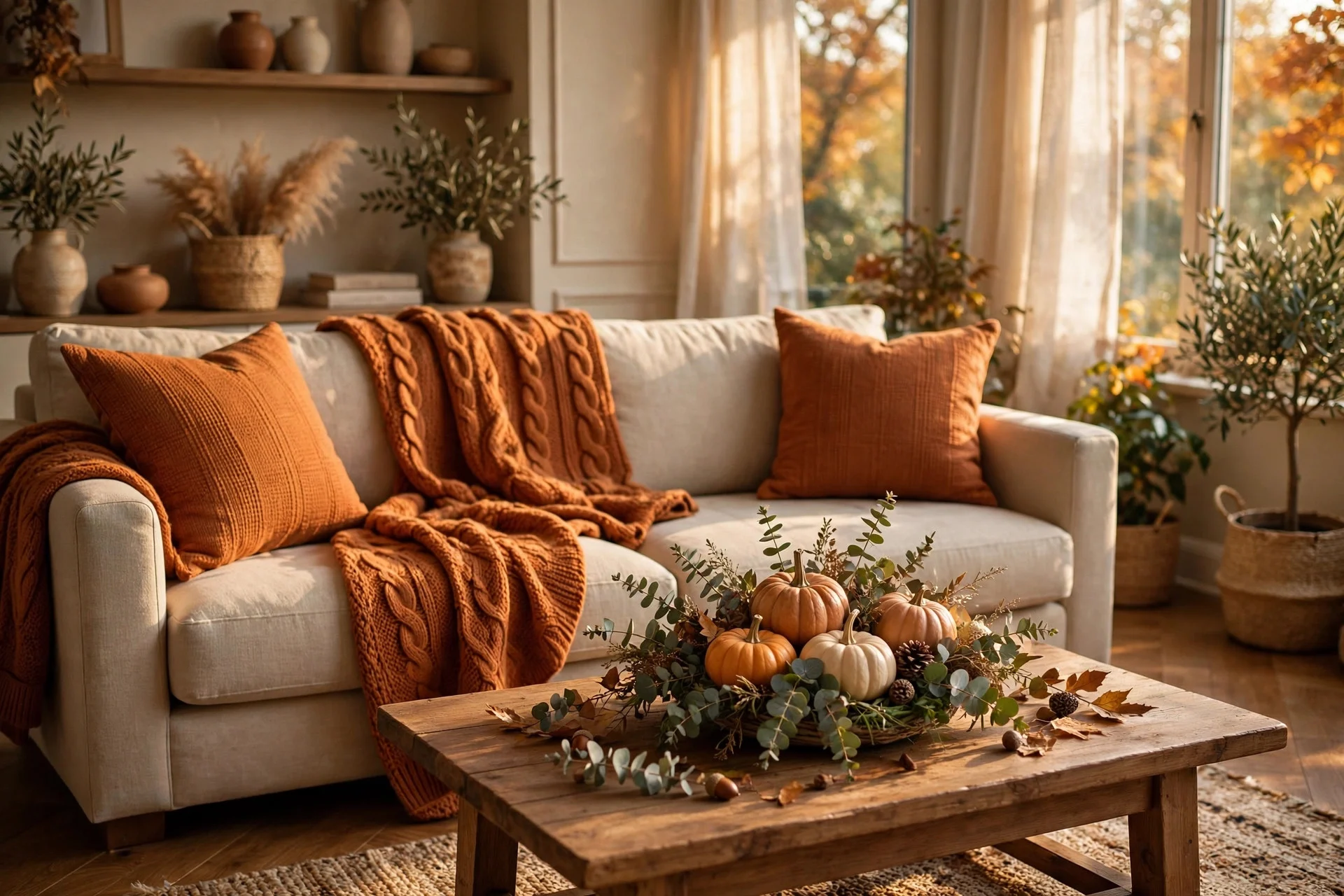
In fall, try warm candles, darker ceramics, or dried branches. Spring works beautifully with fresh flowers and lighter colors. Winter styling often benefits from cozy textures and soft lighting.
This approach works especially well in homes where the living room serves as a gathering space for guests and family.
The key is restraint. One seasonal element is often enough. A coffee table covered in themed décor can quickly feel cluttered or temporary.
Neutral base pieces make seasonal updates easier. If your tray, books, or larger accessories stay timeless, you only need to swap smaller accents occasionally.
Avoid buying lots of trend-driven seasonal decorations that may feel outdated quickly.
In real life, subtle seasonal styling simply helps the home feel refreshed and cared for without turning decorating into a full-time project.
12. Layer Textures for a More Expensive Look
Rooms often feel luxurious not because they contain expensive furniture, but because they contain layered textures.
Texture creates depth and prevents the coffee table from feeling flat or sterile. This is especially important in neutral living rooms where color contrast may be limited.
Try combining:
- Wood
- Glass
- Ceramic
- Metal
- Linen
- Woven materials
For example, a wooden tray paired with a ceramic vase and glass candle holder creates much more visual interest than using all matching materials.
Texture layering works beautifully in modern, Scandinavian, rustic, and transitional interiors.
Avoid using too many shiny surfaces together. Excessive gloss can make the room feel cold rather than welcoming.
Soft matte finishes often feel calmer and more sophisticated in everyday spaces.
Layered textures also make inexpensive décor appear more thoughtfully curated. The table feels richer visually without requiring a large budget.
Most importantly, textured arrangements make the living room feel comfortable instead of overly polished or intimidating.
13. Keep Remote Controls Contained
Nothing ruins a beautifully styled coffee table faster than random clutter scattered everywhere. Remotes are usually the main culprit.
The solution is not hiding everything completely. Instead, integrate storage into the styling itself.
Decorative boxes, trays, or small bowls help contain practical items while still looking intentional. This approach works especially well in family rooms where technology is used daily.
Choose containers that match your overall décor style. Woven boxes feel relaxed and cozy, while sleek wood or marble containers look more modern.
Placement matters too. Keep frequently used items accessible rather than buried under decorative layers.
Avoid oversized storage pieces that dominate the table visually. Functional storage should blend naturally into the arrangement.
In everyday life, this small change makes the entire room feel more organized with very little effort. The space stays cleaner longer, and you spend less time constantly tidying the table.
14. Don’t Ignore Scale and Proportion
Scale is the reason some coffee tables instantly look balanced while others feel awkward, even with beautiful décor.
Tiny objects on a large coffee table often disappear visually. Oversized accessories on a small table can feel cramped and overwhelming.
Understanding proportion helps everything feel more intentional.
Large rectangular coffee tables usually need larger trays, substantial books, or wider arrangements. Smaller apartment tables often look better with just one or two carefully chosen pieces.
Height matters too. Extremely tall décor can interrupt sightlines and make conversation uncomfortable.
Round coffee tables benefit from curved arrangements that follow the table shape naturally instead of rigid square layouts.
One of the easiest beginner tricks is stepping back across the room to evaluate the arrangement. Sometimes items look balanced up close but feel too small or crowded from a distance.
Good proportion quietly makes the entire living room feel calmer and more professionally styled without anyone necessarily knowing why.

15. Edit Your Coffee Table Regularly
The best-styled coffee tables are rarely static forever. They evolve naturally over time.
Sometimes a setup that looked beautiful initially starts feeling cluttered after a few weeks. Other times the room simply needs a refresh.
Editing helps maintain balance. Remove items occasionally and reassess what the table actually needs.
This is especially useful in busy homes where objects slowly accumulate without notice.
Try rotating décor seasonally or swapping items from different rooms occasionally. Even small changes can make the space feel refreshed.
Avoid emotionally attaching yourself to every decorative object. Not every item needs permanent display space.
A simple edit often improves the room more than buying new décor. Removing one unnecessary object can instantly make the entire table feel calmer and more sophisticated.
In daily life, regularly editing your coffee table helps the living room stay intentional instead of slowly turning into a storage zone for random household clutter.
Coffee Table Styling Comparison Table
| Type | Best Use | Material | Style/Vibe | Difficulty Level |
|---|---|---|---|---|
| Decorative Tray | Organizing décor | Wood, marble, metal | Modern, cozy, classic | Easy |
| Coffee Table Books | Adding height and personality | Hardcover paper | Sophisticated, relaxed | Easy |
| Candles | Creating warmth | Wax, glass, ceramic | Cozy, elegant | Easy |
| Greenery/Plants | Adding freshness | Natural or faux plants | Organic, calming | Medium |
| Decorative Bowl | Holding small items | Ceramic, stone, woven | Minimal, functional | Easy |
| Sculptural Objects | Creating visual interest | Metal, resin, stone | Modern, artistic | Medium |
Buying Guide: How to Choose Coffee Table Décor
Choosing coffee table décor sounds easy until you realize how quickly things can look cluttered, mismatched, or oddly sized. The secret is not buying more items. It is buying the right scale, materials, and combinations for your specific room.
Start with sizing and proportion first. Large coffee tables need larger decorative pieces so the arrangement does not disappear visually. Small tables benefit from fewer items with cleaner spacing. A common beginner mistake is buying lots of tiny décor objects that create visual clutter instead of balance.
Material choice matters more than people think. Wood adds warmth and softness, which works beautifully in cozy or neutral living rooms. Glass and metal feel more modern and lightweight. Ceramic and stone introduce texture and depth. Mixing materials usually creates a more layered and natural look than matching everything perfectly.
Durability should also match your lifestyle. If you have kids, pets, or a heavily used family room, fragile glass décor may become frustrating quickly. In practical spaces, sturdy trays, woven baskets, ceramic pieces, and durable candles are usually smarter choices.
Maintenance matters too. Some décor looks beautiful online but collects dust constantly in real life. Open woven textures, artificial florals, and highly reflective surfaces often require more upkeep than people expect.
Budget-wise, you do not need luxury décor for a stylish coffee table. A few thoughtfully chosen affordable pieces often look better than many trendy impulse purchases. Invest more in timeless foundation pieces like trays or books, then add smaller accents gradually.
Most importantly, avoid overcrowding. A coffee table should still function comfortably. Beautiful styling works best when the room feels relaxed and livable rather than overly staged.
Conclusion
Styling a coffee table is less about following strict decorating rules and more about creating balance between beauty and everyday living. The best coffee tables feel thoughtful without looking overly designed. They add personality to the room while still leaving space for real life to happen.
Simple changes like adding a tray, layering books, mixing textures, or introducing greenery can completely change how the living room feels. At the same time, practical decisions matter just as much as aesthetics. A coffee table that looks amazing but becomes annoying to use rarely stays that way for long.
For beginners, the easiest approach is starting small. Focus on a few well-chosen pieces instead of trying to fill every inch of the table. Pay attention to scale, texture, and functionality, then adjust gradually as your style becomes clearer.
Most importantly, remember that coffee table styling does not need to feel perfect. Real homes are meant to feel comfortable, personal, and lived-in. A slightly relaxed arrangement often feels far more inviting than a setup that looks too polished to touch.
When styling feels natural and practical at the same time, the entire living room becomes a space people genuinely enjoy spending time in.
FAQs
1. How many items should be on a coffee table?
Usually three to five decorative elements are enough. Too many objects can make the table feel cluttered and impractical. Focus on balance rather than quantity.
2. What is the easiest way to style a coffee table?
Start with a tray, a stack of books, and one decorative item like a candle or plant. This simple combination works in almost every living room style.
3. Should coffee table décor match the room exactly?
Not perfectly. Décor should coordinate with the room’s colors and materials, but slight contrast often creates a more natural and layered look.
4. Can I style a small coffee table without overcrowding it?
Yes. Use fewer but slightly larger pieces instead of many tiny objects. Leaving empty space helps small tables feel cleaner and more open.
5. Are coffee table books still in style?
Absolutely. They remain one of the easiest ways to add height, personality, and sophistication to a living room without making the space feel overly decorative.
6. What materials work best for coffee table décor?
Wood, ceramic, glass, metal, and woven textures all work well. Mixing materials usually creates more depth and visual interest than using only one finish.
7. How do I keep my coffee table functional?
Leave open surface space for daily use. Use trays or decorative bowls to organize practical items like remotes or coasters without creating clutter.
8. What is the biggest coffee table styling mistake?
Overdecorating. Many people add too many small objects, which makes the table feel crowded and difficult to use comfortably.