Bathrooms are one of the easiest rooms to overlook when decorating. Most people focus on towels, mirrors, storage baskets, or fancy faucets, then stop there. The walls either stay completely blank or end up covered with random signs that say things like “Relax” or “Wash Your Worries Away.” And honestly, that’s usually where the room starts feeling cluttered instead of stylish.
The tricky part with bathroom decor is that the space is often small, humid, and already packed with functional items. Unlike a living room, you cannot just layer shelves, lamps, and oversized accessories everywhere without making the room feel cramped. That is exactly why wall art matters so much in a bathroom. It adds personality without taking up valuable floor or counter space.
The good news is that bathroom wall art does not have to be expensive, dramatic, or overly trendy to work well. In fact, the best bathroom art choices are usually the ones that quietly improve the mood of the room while still feeling practical and intentional. A framed print, textured canvas, vintage sketch, or even a small sculptural piece can completely change how the space feels during everyday routines.
In this article, you will find 11 bathroom wall art ideas that actually work in real homes. Some are ideal for tiny powder rooms, while others suit larger spa-like bathrooms. You will also learn where to place them, what materials hold up best in humidity, common mistakes to avoid, and how to choose art that feels stylish without overwhelming the room.
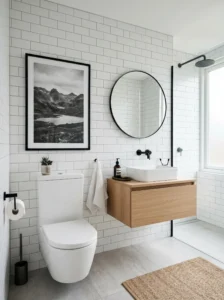
1. Minimal Black-and-White Photography
There is a reason black-and-white photography works in almost every bathroom style. It adds sophistication without demanding too much attention. Bathrooms already contain a lot of visual elements like tile patterns, mirrors, fixtures, and toiletries, so simple photography creates balance instead of chaos.
This type of art works especially well in modern, Scandinavian, industrial, or minimalist bathrooms. A single large print above the toilet or two matching frames beside the vanity can instantly make the room feel more curated. In smaller bathrooms, black-and-white images help the walls feel lighter and less visually crowded compared to colorful artwork.
The best subjects are usually calm and timeless: coastal photography, architectural shots, nature scenes, or abstract shadows. Avoid overly busy city scenes or loud typography because they can make compact bathrooms feel tense rather than relaxing.
Choose frames with moisture-resistant finishes like metal, acrylic, or sealed wood. Thin black frames tend to look cleaner than chunky decorative ones in bathrooms. If your bathroom lacks natural light, white mats around the prints can brighten the walls significantly.
One underrated benefit of black-and-white art is that it quietly elevates your daily routine. Even simple things like getting ready in the morning or washing your face at night feel slightly more polished when the room looks intentional instead of unfinished.
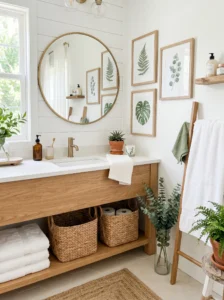
2. Botanical Prints for a Fresh, Relaxed Feel
Bathrooms and botanical prints naturally work well together because both create a sense of freshness. Even if you do not have room for real plants, leafy artwork can still bring softness and life into the space without adding maintenance.
Botanical art works particularly well in bathrooms with white tile, neutral paint colors, or natural wood finishes. Green tones instantly soften cold surfaces like porcelain and stone. This is especially useful in bathrooms that feel too sterile or overly modern.
For smaller bathrooms, try a set of two or three simple framed botanical sketches rather than one oversized piece. In larger bathrooms, a bigger watercolor-style print can become a subtle focal point without overpowering the room.
The style of the artwork matters. Vintage botanical illustrations create a more traditional look, while loose watercolor leaves feel modern and airy. Avoid extremely bright tropical prints unless the rest of the bathroom already has a bold color palette.
Placement is important too. Botanical prints look best near mirrors, above towel bars, or beside floating shelves. Keep them at eye level so they feel connected to the rest of the room instead of floating awkwardly above fixtures.
One practical advantage is that green artwork makes bathrooms feel calmer almost immediately. Even during rushed mornings, the room feels softer and less clinical, which honestly matters more than people realize.
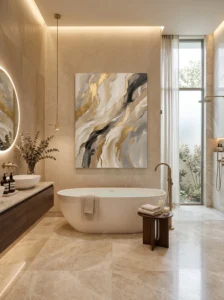
3. Oversized Canvas Art for Large Bathrooms
Many large bathrooms actually feel empty instead of luxurious. People install expensive vanities and beautiful tile, then leave giant blank walls untouched. Oversized canvas art solves that problem without adding physical clutter.
A large canvas works best in spacious primary bathrooms with open wall areas near soaking tubs, double vanities, or dressing sections. One statement piece often looks far more expensive and intentional than several smaller frames scattered around the room.
Abstract art is usually the safest choice because it adds movement and texture without overwhelming the space. Soft neutrals, muted blues, earthy greens, or warm taupe tones tend to work best in bathrooms since they create a spa-like atmosphere.
Canvas is also practical because it is lightweight and does not require glass, which reduces glare from bathroom lighting. However, make sure the canvas is sealed or protected against humidity. Bathrooms with poor ventilation can damage untreated artwork over time.
Scale matters here. The art should feel proportional to the wall. A tiny piece above a large bathtub almost always looks awkward and unfinished. Aim for artwork that fills at least two-thirds of the available wall width.
The biggest benefit of oversized art is emotional rather than decorative. It makes the bathroom feel complete. Instead of looking like a purely functional room, the space starts feeling connected to the rest of the home’s design.
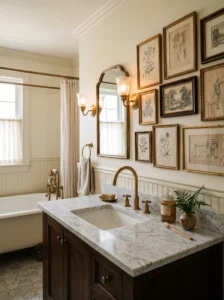
4. Vintage Sketches and Antique-Style Prints
Vintage artwork brings warmth into bathrooms that otherwise feel too sleek or impersonal. Old architectural sketches, antique maps, figure drawings, or botanical studies add character without making the room feel crowded.
This style works beautifully in traditional, cottage, farmhouse, or Parisian-inspired bathrooms. It also creates an interesting contrast inside modern bathrooms that need a little softness and personality.
One reason vintage-style art works so well is that the muted tones blend naturally with common bathroom materials like marble, brass, and wood. You rarely have to fight with color matching because aged paper tones already feel subtle and relaxed.
For placement, gallery-style arrangements work especially well with vintage prints. A grouping of three or four smaller frames above the toilet or along an empty side wall can look charming without overwhelming the room.
Stick to cohesive frames for a cleaner appearance. Brass, black, or distressed wood usually work best. Mixing too many frame styles can quickly make a bathroom feel visually messy.
A common mistake is choosing artwork that looks fake or overly themed. You want the room to feel collected, not like a restaurant restroom trying too hard to look “vintage.”
The charm of antique-style art is that it adds depth quietly. Bathrooms can sometimes feel cold because everything is new and polished. Vintage pieces help soften that feeling and make the room feel lived in.
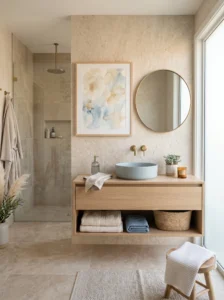
5. Abstract Watercolor Art
Watercolor artwork has a softness that naturally suits bathrooms. The blurred edges and layered tones create a calm atmosphere that works especially well in spaces meant for relaxation.
This style fits nearly every bathroom type, from tiny guest bathrooms to large spa-inspired primary suites. Soft blues, sandy neutrals, sage greens, and muted grays are especially effective because they mimic natural water and stone tones.
Abstract watercolor pieces are ideal if you want color without heaviness. Bright or heavily detailed artwork can make small bathrooms feel visually busy, while watercolor art keeps the room airy and open.
Frameless canvas watercolor prints work beautifully in modern bathrooms, while matted and framed versions fit more classic spaces. Acrylic frames are also practical in humid environments because they resist moisture damage better than untreated wood.
Placement matters here because watercolor art often relies on subtle details. Avoid hanging it in dark corners where the colors disappear. Opposite a mirror or near natural light usually works best.
One practical design trick is to pull a small accent color from the artwork into towels or accessories. This makes the bathroom feel coordinated without looking overly designed.
What makes watercolor art particularly effective is the mood it creates. Bathrooms are one of the few spaces where softness genuinely improves the experience of using the room every day.
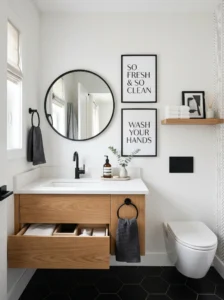
6. Framed Typography Done the Right Way
Typography art gets a bad reputation because so many bathrooms use cheesy quotes or overly decorative signs. But when done properly, text-based artwork can actually look stylish and modern.
The key is restraint. Simple typography with clean fonts and subtle wording works far better than giant novelty signs. Think understated phrases, vintage typography, or minimalist black text on neutral backgrounds.
This style works best in powder rooms, guest bathrooms, or modern spaces that need a little personality. Smaller bathrooms especially benefit from typography because it adds visual interest without requiring complicated imagery.
Placement should stay intentional. One framed piece above the toilet or beside a mirror is usually enough. Filling every wall with quotes quickly turns the bathroom into a themed gift shop.
Typography also pairs well with other art forms. A small text print beside a botanical sketch or abstract piece creates variety while still feeling cohesive.
For materials, choose moisture-resistant frames and avoid paper prints without protective glass. Bathrooms generate more humidity than people expect, especially after hot showers.
The best typography art feels subtle rather than loud. A clever phrase or beautifully designed text piece can make a bathroom feel personal and relaxed without screaming for attention every time someone walks in.
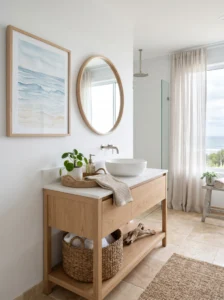
7. Coastal Artwork for a Calm Atmosphere
Coastal art works in bathrooms because the connection feels natural rather than forced. Water-inspired imagery instantly creates a calmer mood, which is exactly what most people want from a bathroom.
The mistake many homeowners make is going too literal with beach decor. You do not need giant seashell paintings or bright turquoise signs everywhere. Subtle coastal artwork feels far more modern and timeless.
Soft ocean photography, muted seascapes, abstract wave paintings, or sandy dune prints work best. These pieces pair beautifully with white tile, pale woods, brushed nickel fixtures, and natural textures.
Coastal artwork is especially effective in bathrooms without windows because it creates a lighter, airier feeling. In small bathrooms, horizontal coastal prints can visually widen the space slightly.
Try placing coastal art above towel hooks, near bathtubs, or opposite mirrors where reflections help bounce light around the room. Stick to softer tones instead of highly saturated blues for a more elevated look.
Texture matters too. Linen-framed prints, weathered wood frames, or canvas pieces add depth without cluttering the room physically.
One of the biggest advantages of coastal art is psychological. Bathrooms often serve as reset spaces during busy days. Water-inspired imagery quietly reinforces that relaxed feeling in a way bold or chaotic artwork simply cannot.
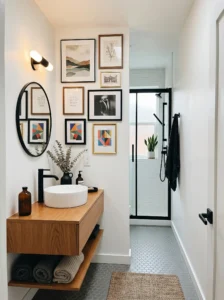
8. Small Gallery Walls in Narrow Spaces
Gallery walls are not just for living rooms. A carefully planned mini gallery wall can make awkward bathroom walls feel intentional and stylish without taking up extra space.
This idea works especially well in narrow bathrooms, powder rooms, or spaces with tall empty walls. Vertical gallery arrangements can draw the eye upward and make ceilings appear slightly taller.
The biggest mistake is overcrowding. Bathrooms need breathing room. Stick to four to six smaller pieces with consistent spacing and a cohesive color palette. Matching frames usually work better in bathrooms because they reduce visual noise.
Mixing art types keeps things interesting. Pair sketches, photography, small abstracts, or typography together. The goal is variety without chaos.
Gallery walls look best above toilets, beside vanities, or along hallway-style bathroom walls. Avoid placing too many frames directly near shower steam unless they are well protected.
Before hanging anything, lay the arrangement on the floor first or tape paper templates to the wall. Bathrooms are small enough that poor spacing becomes noticeable immediately.
A well-designed gallery wall gives bathrooms personality without making them feel overdecorated. It also creates little visual moments that make the room feel layered and thoughtfully designed instead of purely functional.
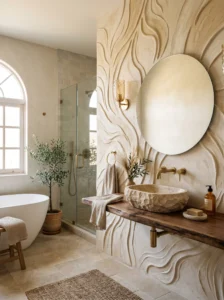
9. Sculptural Wall Decor for Texture
Not all bathroom wall decor needs to be framed art. Sculptural wall pieces add texture and dimension, which can make bathrooms feel richer without adding clutter to countertops or shelves.
This works especially well in modern, earthy, Mediterranean, or organic-style bathrooms. Woven wall hangings, ceramic wall pieces, carved wood panels, or metal sculptures create visual interest in spaces dominated by hard surfaces.
Texture matters in bathrooms because so many materials are smooth and reflective. Tile, mirrors, glass, and porcelain can make rooms feel flat. Sculptural decor breaks that up beautifully.
The key is moderation. One textured wall piece often works better than several competing elements. Above a freestanding tub or on a large blank wall is usually ideal.
Choose moisture-friendly materials whenever possible. Sealed wood, metal, resin, or ceramic generally handle bathroom conditions better than delicate fabrics.
Color should stay relatively neutral if the piece already has strong texture. Too many competing details can quickly overwhelm smaller bathrooms.
One underrated advantage of sculptural decor is that it changes throughout the day depending on lighting and shadows. Even simple bathroom lighting can create depth and movement, making the room feel more dynamic without adding extra visual clutter.
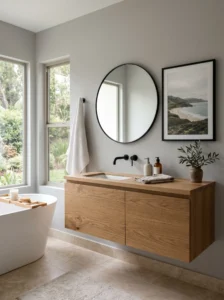
10. Nature-Inspired Landscape Prints
Landscape artwork gives bathrooms a sense of openness, which is especially useful in smaller spaces. A peaceful mountain scene, misty forest, or quiet desert landscape can visually “expand” the room.
Nature scenes work because bathrooms are already associated with cleansing and relaxation. Outdoor imagery reinforces that calming atmosphere naturally.
Muted landscapes fit almost every design style. Soft desert tones pair beautifully with warm modern bathrooms, while forest prints complement earthy or Scandinavian interiors. Black-and-white landscapes work well in minimalist spaces.
For placement, landscape art often looks best where it can be viewed directly from the vanity or bathtub. This creates a stronger emotional connection to the artwork during daily routines.
Avoid overly dramatic or dark landscapes in tiny bathrooms. Heavy storm scenes or intensely colorful prints can make compact rooms feel closed in.
Framed canvas or high-quality matte prints usually look more sophisticated than glossy posters. Glass with anti-glare coating also helps under bright bathroom lighting.
One subtle benefit of landscape art is that it gives your eyes somewhere restful to land. Bathrooms are often busy spaces mentally, especially during rushed mornings. A calm nature print can quietly soften that experience.
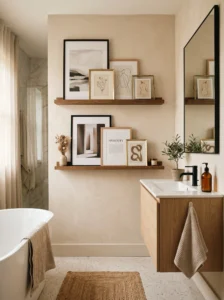
11. Floating Picture Ledges for Flexible Styling
Sometimes traditional framed art feels too permanent, especially if you like changing decor seasonally. Floating picture ledges offer flexibility while still keeping the bathroom visually organized.
These slim shelves allow you to layer framed art, small prints, and even tiny decorative objects without committing to multiple nail holes. They work especially well in modern and casual bathrooms.
Picture ledges are ideal above toilets, beside vanities, or on long empty walls. In family bathrooms, they also make it easier to swap artwork as styles change over time.
Keep styling minimal. Two or three overlapping frames usually look best. Adding too many objects defeats the entire purpose of reducing clutter.
Moisture-resistant wood or painted MDF shelves work well in bathrooms. Make sure the ledge depth stays relatively narrow so it does not intrude into walkways or make the room feel cramped.
One smart design trick is mixing one larger frame with one smaller piece instead of using identical sizes. The variation creates a more relaxed, collected look.
Floating ledges make bathrooms feel more personal and lived in without requiring a fully styled shelf system. They also offer flexibility for people who enjoy refreshing their decor occasionally without redesigning the whole room.