A bathroom remodel sounds exciting until you actually start planning one. Then suddenly, you’re staring at tile samples for three hours, wondering why every vanity costs as much as a small vacation. Most people go into bathroom renovations thinking only about looks, but the real challenge is creating a space that actually works better every single day.
That’s where many remodels fall short. A bathroom can look beautiful in photos and still feel cramped, poorly lit, impossible to clean, or oddly uncomfortable to use. And since bathrooms are one of the most frequently used spaces in any home, bad design choices become annoying fast.
The good news is that smart bathroom remodeling isn’t always about spending more money. Often, it’s about making better decisions with layout, storage, lighting, materials, and functionality. A few thoughtful upgrades can completely change how your bathroom feels without requiring a full luxury renovation.
In this guide, you’ll find 13 practical bathroom remodeling ideas that improve both style and usability. These aren’t trendy suggestions that only work in designer homes. They’re realistic upgrades that make bathrooms feel cleaner, brighter, more organized, and easier to live with. Whether you have a tiny guest bathroom, a dated family bath, or a master bathroom that feels stuck in 2008, these ideas can help you create a space that looks polished and functions better every day.
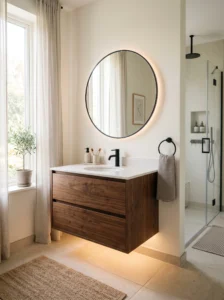
1. Install a Floating Vanity for a More Open Feel
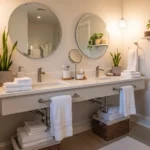
One of the smartest upgrades in modern bathrooms is replacing bulky vanities with floating versions. Traditional floor-mounted cabinets often make bathrooms feel heavier and more crowded, especially in smaller layouts. A floating vanity creates visual space underneath, which instantly makes the room feel larger and lighter.
This idea works especially well in compact bathrooms, powder rooms, and narrow layouts where every inch matters. Even in larger bathrooms, floating vanities add a cleaner and more contemporary look. They also make cleaning much easier since there are no awkward corners collecting dust and hair underneath.
When choosing one, pay attention to width and storage balance. Some ultra-minimal designs look beautiful but barely hold toothpaste. If storage matters, choose deep drawers instead of open shelving. Wood finishes in oak, walnut, or light ash tend to feel warmer and more timeless than glossy white lacquer.
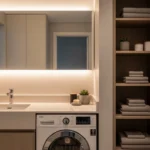
Wall-mounted lighting pairs nicely with floating vanities because it keeps the overall design visually uncluttered. You can also add under-cabinet LED lighting for a subtle glow at night, which honestly feels more luxurious than people expect.
One mistake people make is installing the vanity too high. Comfortable daily use matters more than showroom aesthetics. A vanity should feel natural when washing your hands or leaning over the sink, not like a kitchen counter awkwardly placed in a bathroom.
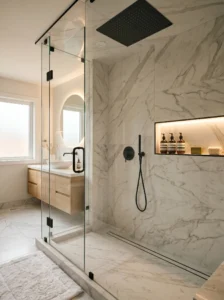
2. Upgrade to a Walk-In Shower
Bathtubs are nice in theory, but many homeowners rarely use them. A walk-in shower often provides better daily functionality while making the bathroom feel larger and more modern.
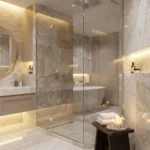
This upgrade works especially well in primary bathrooms and smaller spaces where a bulky tub dominates the layout. Frameless glass panels help maintain openness and allow natural light to move through the room instead of visually cutting it in half.
Large-format tiles are particularly effective in walk-in showers because fewer grout lines make the space feel cleaner and easier to maintain. Matte tiles also reduce slipping compared to overly polished surfaces. Built-in niches are another practical addition since they eliminate the need for hanging shower caddies that always look messy.
Rainfall showerheads are popular, but don’t ignore practicality. Pairing a rainfall head with a handheld sprayer gives much better flexibility for cleaning and daily use. This setup is especially useful for families, pets, and easier shower maintenance.
Drain placement matters more than people realize. Linear drains create a cleaner visual look and improve water flow in curbless showers. Speaking of curbless designs, they make bathrooms feel seamless and are easier to access long-term.
A well-designed walk-in shower changes the entire mood of a bathroom. It feels less cramped, more spa-like, and significantly more functional during busy mornings.
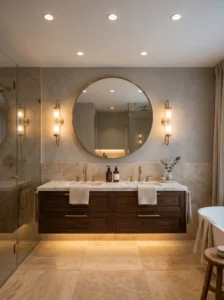
3. Add Layered Lighting Instead of One Harsh Fixture
Bad bathroom lighting can ruin even the nicest remodel. Many older bathrooms rely on one ceiling light that creates shadows, harsh brightness, and an overall flat atmosphere. Layered lighting completely changes how the room looks and feels.
The best bathrooms combine three types of lighting: ambient, task, and accent. Ambient lighting provides overall brightness. Task lighting helps with grooming, makeup, and shaving. Accent lighting adds warmth and atmosphere.
Vanity sconces placed at eye level are one of the most practical upgrades you can make. Overhead vanity lighting alone creates shadows under the eyes and chin, which is terrible for grooming. Side lighting distributes illumination much more evenly.
This approach works in every bathroom size, though it’s especially transformative in windowless spaces. Recessed ceiling lights keep the room bright without making it feel cluttered. Warm white bulbs usually create the most natural and comfortable atmosphere.
Dimmers are worth installing even if they seem unnecessary at first. Bright lighting is great in the morning, but nobody wants full stadium lighting during a late-night trip to the bathroom.
Backlit mirrors are another smart option because they combine function with softer visual appeal. They also help smaller bathrooms feel more upscale without adding extra décor.
Good lighting doesn’t just improve appearance. It genuinely affects how comfortable and relaxing the bathroom feels every single day.
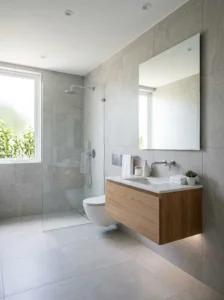
4. Use Large Tiles to Make the Space Feel Bigger
Small tiles can make bathrooms feel visually busy very quickly. Large-format tiles create a calmer, cleaner appearance because there are fewer grout lines interrupting the surface.
This trick works particularly well in smaller bathrooms where visual simplicity helps the room feel more spacious. Light-colored porcelain tiles are especially effective because they reflect light while remaining durable and easy to maintain.
Many people assume large tiles only work in big bathrooms, but that’s actually not true. Bigger tiles often make small bathrooms feel more expansive because the eye moves across the room more smoothly.
For walls, vertical tile placement can make ceilings feel taller. For floors, larger rectangular tiles installed lengthwise can visually stretch narrow spaces. Matching floor and wall tones also creates continuity, which makes the room feel less segmented.
One important detail is grout color. High-contrast grout emphasizes tile outlines, while closely matched grout creates a softer and more seamless appearance. If you want a clean, modern look, subtle grout usually works best.
Textured matte finishes are practical for flooring because they reduce slipperiness without looking overly industrial. Glossy wall tiles can still work nicely for reflecting light, especially in darker bathrooms.
The overall result feels cleaner, calmer, and surprisingly more expensive, even if the materials themselves are fairly budget-friendly.
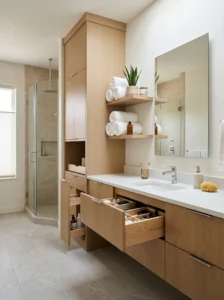
5. Include Smart Storage Solutions
Bathroom clutter builds up fast. Towels, skincare products, hair tools, cleaning supplies, extra toilet paper — somehow it all ends up piled on countertops. Smart storage is one of the most important parts of a successful remodel because it improves daily functionality immediately.
Built-in storage works better than forcing freestanding furniture into tight spaces. Recessed medicine cabinets are particularly useful because they provide storage without sticking awkwardly into the room. Tall vertical cabinets are another smart solution for narrow bathrooms.
Drawer organizers make a huge difference inside vanities. Without compartments, bathroom drawers become chaotic within weeks. Pull-out storage trays also help maximize awkward lower cabinet areas.
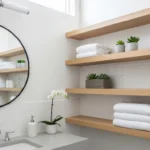
Open shelving can work well in moderation, especially for decorative towels or baskets. But too much open storage quickly looks messy unless you’re extremely disciplined. A balanced combination of hidden and visible storage usually feels most practical.
This idea matters even more in family bathrooms where multiple people share the same space. Designated storage zones reduce clutter and make mornings less frustrating.
One underrated feature is adding outlets inside drawers or cabinets for electric toothbrushes and hair tools. It keeps counters cleaner and avoids tangled cords everywhere.
Good storage doesn’t just organize a bathroom. It makes the entire room feel calmer and easier to maintain long-term.
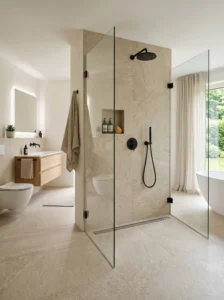
6. Try a Curbless Shower Design
Curbless showers have become increasingly popular for good reason. Removing the raised edge between the shower and bathroom floor creates a smooth, continuous look that feels modern and spacious.
This design works especially well in contemporary bathrooms and smaller spaces where visual openness matters. It’s also practical for aging-in-place renovations because there’s no step to trip over.
Proper drainage is critical here. Slight floor slopes and quality waterproofing are non-negotiable. Linear drains are commonly used because they handle water efficiently while maintaining a clean appearance.
Large-format tiles pair beautifully with curbless showers since uninterrupted surfaces enhance the seamless effect. Frameless glass partitions also help preserve openness without splashing water everywhere.
One thing people underestimate is how much bigger a bathroom feels when flooring continues directly into the shower area. The room stops feeling divided into separate zones.
Heated flooring is another excellent companion feature because open shower layouts can make tile floors feel cooler. It sounds luxurious, but many homeowners say it becomes one of their favorite daily upgrades.
Curbless showers blend style and practicality surprisingly well. They look sleek, improve accessibility, and create a more relaxed flow throughout the bathroom.
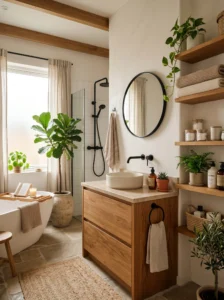
7. Add Natural Wood for Warmth
Many bathrooms suffer from feeling cold and sterile. Too much white tile, chrome, and glossy finishes can make the room feel more like a hospital than part of a home. Adding natural wood instantly softens the space.
Wood vanities, shelving, ceiling beams, or accent walls work particularly well in modern and Scandinavian-inspired bathrooms. Lighter wood tones create an airy feel, while darker woods add richness and contrast.
Engineered wood and moisture-resistant finishes are important in humid environments. Solid untreated wood may warp over time if ventilation is poor. Teak is especially popular because it naturally handles moisture well.
This idea works beautifully in bathrooms with lots of stone, tile, or black metal fixtures because wood balances those harder materials. Even small additions like wooden mirrors or stools can make the room feel more welcoming.
Avoid overdoing it, though. Too many wood tones can start looking chaotic. Usually one or two consistent finishes create the cleanest result.
Natural textures also improve the emotional feel of the bathroom. Spaces with warmth and contrast simply feel more comfortable during daily routines. It’s one of those subtle upgrades that makes the room feel less staged and more lived-in.
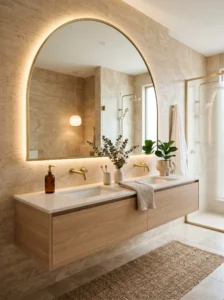
8. Upgrade Your Mirror Beyond Basic Builder Style
Bathroom mirrors are often treated like an afterthought, which is strange considering how frequently they’re used. Swapping out a plain builder-grade mirror can dramatically improve the room’s style without requiring major construction.
Oversized mirrors are excellent for making smaller bathrooms feel larger and brighter. Rounded mirrors soften harsh lines and add visual interest, especially in bathrooms filled with rectangular shapes.
Backlit mirrors provide both practical lighting and a modern aesthetic. They work particularly well in minimalist spaces because they eliminate the need for bulky fixtures around the vanity.
Framed mirrors add character and help tie together hardware finishes like brass, matte black, or brushed nickel. Thin metal frames generally feel more timeless than overly decorative styles.
This upgrade works in virtually every bathroom, regardless of size or budget. Even replacing an outdated mirror alone can make the entire room feel refreshed.
Placement matters too. Mirrors should feel proportionate to the vanity, not awkwardly undersized. Ideally, the mirror width should align closely with the vanity or lighting setup.
A better mirror improves both function and atmosphere. Morning routines feel easier, the room reflects more light, and the bathroom instantly looks more intentional overall.
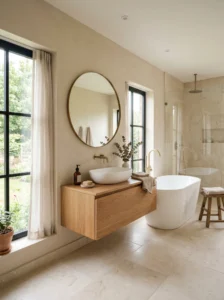
9. Use Neutral Colors That Age Well
Trendy bathroom colors often look dated faster than people expect. Bold tile colors and highly specific design trends may feel exciting initially, but neutral palettes tend to hold up much better over time.
Warm whites, soft beige, greige, muted sage, and earthy taupe tones create bathrooms that feel calm and flexible. These colors also pair easily with changing décor and hardware styles later.
Neutral doesn’t mean boring. Texture is what keeps the room interesting. Mixing matte tiles, natural wood, stone finishes, brushed metals, and soft textiles creates depth without overwhelming the space.
This approach works especially well for homeowners thinking about resale value. Buyers generally respond better to bathrooms that feel clean and adaptable rather than overly personalized.
Lighting significantly affects neutral colors, so always test samples before committing. Some grays suddenly look blue under cool lighting, while beige tones can shift yellow unexpectedly.
One smart strategy is keeping permanent materials neutral while adding personality through removable elements like artwork, towels, and accessories. That way, refreshing the space later becomes much easier and cheaper.
Neutral bathrooms usually age more gracefully because they prioritize balance and comfort over short-lived trends.
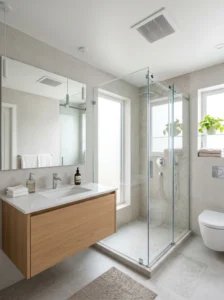
10. Install Better Ventilation
Ventilation is not the glamorous part of remodeling, but it may be one of the most important. Poor airflow leads to humidity damage, peeling paint, mildew, fogged mirrors, and that damp smell nobody wants lingering in a bathroom.
A quality exhaust fan helps protect your renovation investment long-term. It removes excess moisture before it settles into grout lines, drywall, and cabinetry.
This upgrade matters most in bathrooms without windows, though every bathroom benefits from proper airflow. Quiet fans are worth the extra money because loud, rattling models tend to get ignored or switched off too quickly.
Humidity-sensing fans are especially practical because they automatically turn on when moisture levels rise. That means better protection without needing to remember anything manually.
Placement also matters. Fans should ideally be installed near the shower area where moisture concentration is highest. Proper duct routing is equally important for effective airflow.
Many people spend thousands on beautiful tile and custom vanities but skip ventilation upgrades entirely. Then a few years later, mold and moisture damage start appearing around corners and ceilings.
Good ventilation may not be visually exciting, but it quietly keeps the entire bathroom cleaner, fresher, and easier to maintain every day.
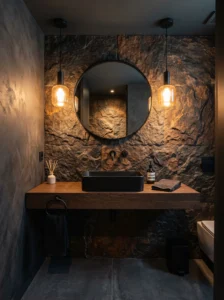
11. Add a Statement Wall Without Overdoing It
A statement wall gives bathrooms personality without overwhelming the entire room. The key is restraint. One thoughtfully designed focal point usually looks far better than covering every surface with dramatic tile.
Popular choices include textured tile, vertical slat wood, natural stone, patterned wallpaper, or bold paint behind the vanity. This approach works particularly well in powder rooms where people are more willing to experiment with design.
Smaller bathrooms can actually handle bolder statement walls because the limited square footage keeps things visually manageable. Large bathrooms benefit from focal points too since they prevent the room from feeling flat or overly sterile.
Balance matters here. If the statement wall is busy, surrounding materials should remain relatively calm. Otherwise, the room starts feeling visually exhausting very quickly.
Moisture-resistant wallpaper has improved dramatically in recent years and can work beautifully in low-humidity bathrooms. Textured tiles are another practical option because they add depth without relying entirely on color.
A good statement wall makes the bathroom feel intentional and customized rather than generic. It’s often the feature guests remember most after a remodel.
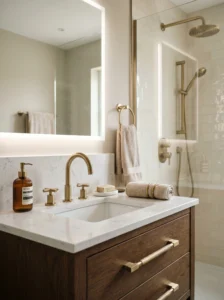
12. Upgrade Hardware and Fixtures Thoughtfully
Changing bathroom hardware seems small, but it has a surprisingly large impact on the overall look of the space. Faucets, drawer pulls, towel bars, and shower fixtures act like jewelry for the bathroom.
Consistency matters more than matching perfectly. Mixing metals can work beautifully when done intentionally, but random finishes usually feel accidental. Matte black, brushed brass, and brushed nickel remain popular because they balance modern style with versatility.
This upgrade works for nearly every remodel budget. Even modest bathrooms can feel significantly more polished with upgraded fixtures.
Function matters just as much as appearance. Cheap faucets often splash poorly, loosen over time, or show water spots constantly. Spending slightly more on quality hardware usually pays off in daily use and durability.
Wall-mounted faucets create a cleaner vanity surface and simplify countertop cleaning. However, they require more planning and plumbing adjustments during renovation.
One practical tip is testing handles before purchasing. Some ultra-modern designs look beautiful but feel awkward with wet hands.
Good hardware subtly improves the bathroom experience every single day. The room feels more cohesive, more durable, and simply better designed overall.
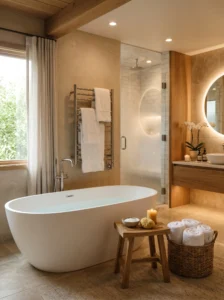
13. Incorporate Spa-Like Comfort Features
A bathroom doesn’t need to become a luxury spa to feel more relaxing. Small comfort-focused upgrades often make the biggest daily difference.
Heated floors are one example people rarely regret. Cold tile at 6 a.m. loses its charm very quickly, especially in colder climates. Heated flooring adds comfort without changing the room’s appearance dramatically.
Other practical comfort upgrades include towel warmers, shower benches, dimmable lighting, and quieter exhaust fans. These features improve how the bathroom feels rather than simply how it looks.
This approach works particularly well in primary bathrooms where homeowners spend more personal time. Even one or two comfort upgrades can elevate the entire experience.
Soft-close drawers and toilet seats are another underrated detail. They reduce noise and make the bathroom feel noticeably more refined during everyday use.
Aromatherapy showerheads and integrated speakers are becoming more common too, though simplicity often ages better than overly tech-heavy designs.
The best bathroom remodels aren’t just visually impressive. They create a calmer and more comfortable daily routine. That’s what makes a space genuinely feel upgraded long after the renovation excitement wears off.
Comparison Table
| Type | Best Use | Material | Style/Vibe | Difficulty Level |
|---|---|---|---|---|
| Floating Vanity | Small to medium bathrooms | Wood, MDF, Quartz | Modern, Minimal | Medium |
| Walk-In Shower | Primary bathrooms | Glass, Porcelain Tile | Spa-like, Contemporary | High |
| Large-Format Tile | Small bathrooms | Porcelain, Ceramic | Clean, Modern | Medium |
| Curbless Shower | Accessible layouts | Tile, Linear Drain | Luxury Modern | High |
| Statement Wall | Powder rooms | Tile, Wallpaper, Wood | Bold, Designer Look | Medium |
| Heated Flooring | Cold climates | Electric Radiant System | Cozy, Upscale | Medium |
Buying Guide: How to Choose the Right Bathroom Remodeling Features
Bathroom remodeling decisions become overwhelming quickly because there are so many materials, finishes, and layout options available. The smartest approach is focusing first on functionality, then layering style choices afterward.
Start by considering scale and proportion. Oversized vanities, giant tubs, or bulky storage cabinets can make small bathrooms feel cramped almost immediately. Measure carefully and think about movement space around doors, toilets, and showers. A bathroom should feel comfortable to move through, not packed wall-to-wall with features.
Material selection matters more in bathrooms than in many other rooms because moisture constantly affects surfaces. Porcelain tile is one of the safest long-term choices since it’s durable, water-resistant, and relatively low maintenance. Natural stone looks beautiful but usually requires more sealing and upkeep. Matte finishes often hide water spots better than glossy materials, which becomes important in busy family bathrooms.
Durability should always outweigh trendiness for permanent fixtures. Trend-heavy colors or overly specific tile patterns may feel outdated faster than expected. Neutral foundations with flexible accessories generally age better.
Budget planning is another area where people make mistakes. Many homeowners spend most of their money on visible features while ignoring plumbing, ventilation, waterproofing, or lighting upgrades. Those hidden elements affect long-term performance far more than expensive decorative details.
Storage is also frequently underestimated. Beautiful bathrooms quickly become frustrating when there’s nowhere practical to store daily essentials. Think realistically about how many products, towels, and personal items need space.
Finally, avoid chasing every trend at once. A bathroom with dramatic tile, bold wallpaper, mixed metals, statement lighting, and colorful cabinetry can start feeling chaotic. Usually, one standout design element paired with simpler supporting materials creates the most balanced and timeless result.
Conclusion
A smart bathroom remodel is less about copying luxury showroom trends and more about improving how the space works in everyday life. The best renovations combine practicality, comfort, durability, and style in a way that still feels functional years later.
Simple upgrades like better lighting, smarter storage, improved ventilation, and modern shower layouts often have a bigger impact than purely decorative features. Small details matter too. A quieter fan, warmer flooring, or better vanity lighting can noticeably improve your daily routine without requiring a massive renovation budget.
The most successful bathroom designs also balance aesthetics with long-term usability. Neutral materials, quality fixtures, and thoughtful layouts tend to age much better than highly trendy choices that lose appeal quickly.
Whether you’re planning a complete renovation or just updating a few elements, focusing on comfort, organization, and functionality usually leads to better results than chasing dramatic transformations. A bathroom doesn’t need to feel extravagant to feel upgraded. It simply needs to work better for the people using it every day.
In the end, the smartest remodeling decisions are the ones that continue making your life easier long after the renovation dust settles.
FAQs
1. What adds the most value in a bathroom remodel?
Walk-in showers, updated vanities, improved lighting, and modern tile usually add the most value. Buyers tend to notice clean layouts, storage, and functionality more than overly luxurious extras. Practical upgrades often deliver better long-term returns.
2. Are floating vanities practical for family bathrooms?
Yes, as long as they include enough storage. Deep drawers work better than shallow cabinets for family use. Floating designs also make floor cleaning easier, which becomes surprisingly helpful in busy households.
3. What is the best tile for bathroom floors?
Porcelain tile is one of the best choices because it’s durable, water-resistant, and relatively low maintenance. Matte or textured finishes are safer for wet floors since they provide better grip than highly polished surfaces.
4. Is a curbless shower worth the extra cost?
For many homeowners, yes. Curbless showers improve accessibility, create a cleaner look, and make bathrooms feel larger. However, proper waterproofing and drainage are essential, so installation quality matters significantly.
5. How can I make a small bathroom feel bigger?
Use large-format tiles, lighter colors, floating vanities, frameless glass showers, and oversized mirrors. Reducing visual clutter and improving lighting also helps small bathrooms feel more open and comfortable.
6. What bathroom trends age poorly?
Overly bold tile patterns, highly trendy colors, and excessive industrial styling often date quickly. Extremely specific design trends can also hurt resale appeal compared to cleaner, more timeless material choices.
7. How important is bathroom ventilation?
Very important. Poor ventilation leads to moisture damage, mildew, peeling paint, and unpleasant odors. A quality exhaust fan helps protect surfaces and keeps the bathroom healthier and easier to maintain over time.
8. Should I prioritize style or functionality first?
Functionality should always come first in bathrooms. Layout, storage, lighting, and ventilation affect daily comfort far more than decorative details. Once those basics work well, adding style becomes much easier and more effective.