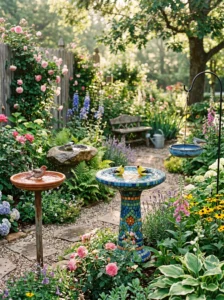
A lot of people add a bird bath to their yard expecting instant results, only to end up staring at a bowl of stale water that birds completely ignore. It’s surprisingly common. The truth is, birds are picky. They don’t just need water — they need a spot that feels safe, shallow, clean, and natural.
That’s why homemade bird baths often work better than expensive store-bought versions. When you build one yourself, you can customize the depth, texture, placement, and style to match your yard instead of forcing a decorative piece into the space and hoping for the best. Some of the most effective bird baths are made from simple items sitting in garages, thrift stores, or garden sheds.
Another thing people overlook is how much a bird bath changes the feel of a yard. It adds movement, sound, and a little daily routine. Once birds start visiting regularly, the entire outdoor space feels more alive. Even a tiny patio or balcony suddenly feels connected to nature in a way that expensive landscaping sometimes fails to achieve.
In this article, you’ll find 14 homemade bird bath ideas that are practical, attractive, and genuinely bird-friendly. Some are rustic, some modern, and some are almost free to make. More importantly, each one includes tips on placement, materials, maintenance, and mistakes to avoid so your bird bath actually gets used instead of becoming another ignored garden decoration.
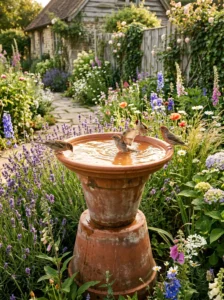
1. Terra Cotta Pot Bird Bath
There’s something timeless about terra cotta in a garden, and birds seem to love it just as much as gardeners do. A simple upside-down terra cotta pot with a matching saucer on top creates one of the easiest and most reliable homemade bird baths you can make.
What makes this design work so well is the texture. Terra cotta gives birds a better grip than slippery glazed bowls, which helps smaller birds feel safer when landing. The material also blends naturally into outdoor spaces, making the bath feel less artificial and more inviting.
This style works especially well in cottage gardens, herb gardens, or small backyard corners where you want something functional without looking overly decorative. It’s also perfect for beginners because it requires almost no tools.
Use a wide saucer instead of a deep bowl. Birds prefer shallow water — usually around 1 to 2 inches deep. Adding a few small stones in the center gives birds extra footing and encourages nervous birds to approach.
One mistake people make is placing terra cotta baths in direct afternoon sun. The water heats up quickly, especially in summer. Partial shade is usually better.
Over time, terra cotta develops a weathered look that actually improves the charm of the setup. It feels relaxed, natural, and lived-in instead of overly polished.
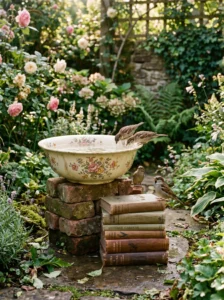
2. Vintage Bowl Bird Bath
Old kitchen bowls and thrifted serving dishes make surprisingly beautiful bird baths. In fact, slightly imperfect vintage pieces often create more personality in a garden than expensive outdoor decor.
This idea works because birds don’t care whether something was originally meant for dining tables or garden use. As long as the water is shallow and accessible, they’ll use it. Meanwhile, you get a bird bath that feels unique instead of mass-produced.
Vintage bowls work best in smaller outdoor spaces like patios, balconies, or flower beds where you want a decorative touch without taking up much room. Floral ceramic bowls, aged metal dishes, and stoneware pieces all work well.
The key is stability. Always secure the bowl on a sturdy base like stacked bricks, an old stool, or a tree stump. Wobbly bird baths scare birds away quickly.
Avoid bowls with very smooth interiors because birds can struggle to grip the surface. Adding a few flat pebbles solves the problem instantly.
One underrated advantage of this style is flexibility. You can swap bowls seasonally or whenever you want a different look. Some people even coordinate them with garden flowers or patio colors.
It’s also one of the easiest ways to repurpose items that would otherwise sit unused in cabinets for years.
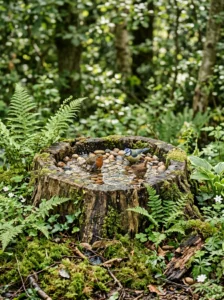
3. Tree Stump Bird Bath
A tree stump bird bath looks like it belongs in the landscape naturally, which is exactly why birds tend to trust it quickly. Instead of introducing a shiny object into the yard, you’re working with something already connected to the environment.
You can either hollow out the top of a stump slightly or place a shallow basin directly on top. Both options work well. The important part is keeping the water shallow and clean.
This style fits beautifully in woodland gardens, rustic landscapes, or larger backyards with mature trees. It creates a quiet, natural look that doesn’t feel overly styled or decorative.
The best part is that stumps naturally attract insects, moss, and shade — all things birds already associate with safe environments. Birds are much more cautious than people realize, and natural surroundings matter.
One practical tip is to level the top surface properly. Uneven bowls tip easily during storms or when larger birds land.
You should also avoid placing the stump too close to dense shrubs where cats could hide. Birds need clear visibility around water sources.
Over time, moss and weathering actually improve the appearance of this bird bath. Instead of aging poorly, it gains character and blends deeper into the landscape every season.
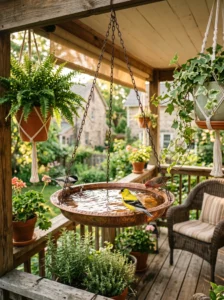
4. Hanging Bird Bath
Not every yard has space for a freestanding bird bath, which is why hanging versions are so smart. They use vertical space instead of ground space while also offering birds extra protection from predators.
A hanging bird bath can be made using a shallow metal tray, ceramic dish, or even a sturdy plant saucer suspended with rope or chains. The gentle movement may seem like a problem, but birds usually adapt surprisingly fast.
This idea works best on porches, balconies, patios, and compact urban gardens where floor space is limited. It’s also ideal if neighborhood cats are a constant issue.
The biggest mistake people make is hanging the bath too high. Birds prefer accessible water sources, especially smaller songbirds. Around chest to head height usually works best.
Choose sturdy rope or rust-resistant chain materials because constant water exposure destroys weak materials quickly. Drainage is also important after rainstorms.
A hanging bath creates a calmer atmosphere in outdoor seating areas too. Birds often feel comfortable approaching suspended water sources near humans because predators are less likely to reach them.
The soft movement of the bath combined with bird activity adds a relaxing feel that’s hard to recreate with ordinary garden decor.
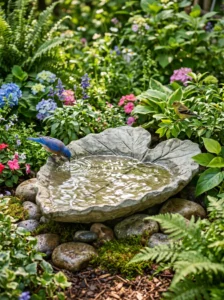
5. Concrete Leaf Bird Bath
Concrete leaf bird baths look artistic without feeling overly formal. They mimic the shape and texture of giant leaves, which naturally attracts birds because the surface resembles something found in nature.
These are usually made by pouring concrete over large leaves like rhubarb or elephant ear leaves. Once dried, the leaf veins create natural texture and grip for birds.
This idea works especially well in lush gardens filled with greenery, tropical plants, or layered landscaping. It blends beautifully into flower beds because it feels organic rather than manufactured.
One reason birds like this design is the shallow contours. Water naturally spreads into thin pools instead of forming deep areas birds avoid.
Seal the concrete properly before use to prevent minerals from affecting the water initially. After sealing, weather exposure actually softens the appearance nicely.
Placement matters a lot here. Concrete absorbs heat, so avoid intense all-day sun. Partial shade helps keep water cooler and more inviting.
These bird baths also become decorative garden pieces even when birds aren’t using them. During rainy weather, they collect water naturally and create small reflective surfaces throughout the garden.
They’re one of those rare DIY projects that look more expensive than they actually are.
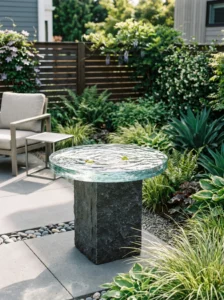
6. Glass Lid Bird Bath
Sometimes the simplest DIY ideas end up looking the most elegant. A large glass pot lid or microwave plate can become a surprisingly modern bird bath with almost no effort.
The transparent surface reflects light beautifully, which often catches birds’ attention faster than darker containers. It also creates a cleaner, lighter visual appearance in minimalist gardens.
This idea works best in modern patios, contemporary landscapes, or small outdoor spaces where bulky garden decor feels overwhelming. It’s especially useful if you want a bird bath that doesn’t visually clutter the area.
The biggest concern with glass is slipperiness. Always add smooth pebbles or small stones so birds can stand comfortably.
You’ll also need a secure base. Wooden crates, metal stands, or stacked stone bases all work well as long as the surface stays level.
One thing people appreciate about glass baths is how easy they are to clean. Dirt and algae are easier to spot immediately compared to darker materials.
At sunrise or sunset, the reflections can look surprisingly beautiful. It adds a subtle decorative touch without screaming “garden ornament,” which many people prefer in cleaner outdoor designs.
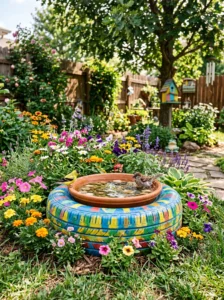
7. Upcycled Tire Bird Bath
An old tire may not sound attractive at first, but with paint and creativity, it can become a durable and surprisingly stylish bird bath base.
The tire works as a sturdy support structure while holding a shallow basin securely on top. Because tires are heavy, they stay stable during wind and storms better than many lightweight DIY options.
This setup works best in playful gardens, family backyards, or colorful outdoor spaces where a little creativity fits naturally. Painted tires can even become statement pieces.
The key is using non-toxic outdoor paint and avoiding overly bright reflective finishes that might make birds cautious initially.
One practical advantage is durability. Tires handle weather extremely well, which means less maintenance over time compared to wood or fragile ceramics.
Place the bath near plants or flowers to soften the look visually. Without greenery around it, the design can feel slightly harsh.
This type of bird bath is also a great way to involve kids in gardening projects. Painting and decorating the tire makes the project more personal while encouraging interest in wildlife.
And honestly, turning something headed for the landfill into something birds use daily feels pretty satisfying.
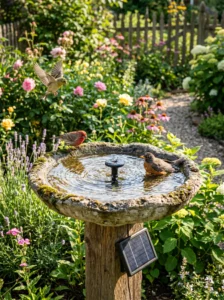
8. Solar Fountain Bird Bath
Birds are naturally attracted to moving water. That’s why adding a small solar fountain to a homemade bird bath often increases bird visits dramatically.
The movement catches their attention while also helping keep the water fresher for longer. Stagnant water becomes dirty quickly, especially during summer.
You don’t need an expensive setup either. A shallow bowl paired with a small floating solar fountain is usually enough.
This style works particularly well in larger yards where birds need help spotting water sources from a distance. It’s also useful in hot climates where water evaporation happens quickly.
The main thing to watch is fountain strength. Some cheap solar fountains spray water too aggressively, which actually scares smaller birds away. Gentle bubbling works best.
Regular cleaning is important because fountain pumps clog easily with leaves and debris.
A soft bubbling sound also changes the atmosphere of a backyard in a subtle way. It creates movement and sound without the maintenance of a full pond or water feature.
Many people notice birds visiting more consistently once moving water is introduced, especially during dry seasons.
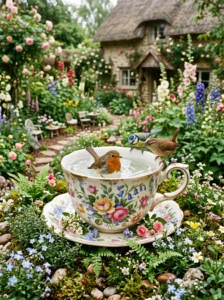
9. Teacup Bird Bath
Tiny gardens deserve bird baths too, and teacup bird baths are perfect for compact spaces. They’re charming, lightweight, and surprisingly functional for smaller bird species.
A large teacup paired with a saucer creates a whimsical look while still providing enough water for finches, chickadees, and sparrows.
This style works beautifully in balcony gardens, fairy gardens, or decorative flower beds where oversized bird baths would feel awkward.
The main thing is choosing oversized cups rather than standard tiny teacups. Birds still need enough room to move comfortably.
Use waterproof adhesive if attaching the cup permanently to the saucer or stand. Wind can knock lightweight setups over easily.
One fun aspect of this design is personality. Floral patterns, mismatched vintage cups, or colorful ceramics make the setup feel playful without trying too hard.
Even people who don’t usually enjoy traditional garden decor tend to appreciate this style because it feels creative instead of overly rustic.
It’s also one of the cheapest DIY bird bath ideas on this list, especially if you thrift the materials.
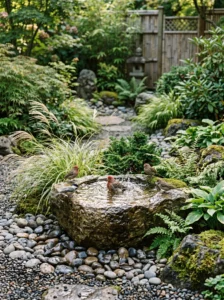
10. Rock Basin Bird Bath
Few things look more natural in a yard than a carved stone or rock basin filled with water. It almost disappears into the landscape while still attracting birds constantly.
This design works because stone retains a natural temperature better than metal or plastic. Birds generally prefer cooler water, especially in warm weather.
Rock basin bird baths fit best in natural gardens, Zen-style landscapes, or low-maintenance outdoor spaces where simplicity matters more than decoration.
Flat stones around the edges help create easy landing spots for birds of different sizes. Texture matters here — polished surfaces become slippery when wet.
One practical tip is to position the basin where rainwater can naturally refill it occasionally. This reduces maintenance slightly.
Stone bird baths are heavy, which is both good and bad. They’re incredibly stable, but moving them later can become a frustrating workout.
The visual effect is calming too. Instead of standing out, the bath feels integrated into the environment, almost like a naturally occurring water source birds discovered on their own.
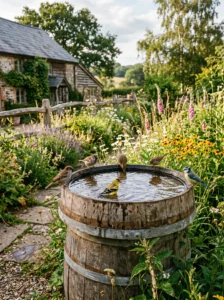
11. Wooden Barrel Lid Bird Bath
Old barrel lids make fantastic rustic bird baths because they already have character before you even start. The aged wood instantly creates a warm, farmhouse-style appearance.
This idea works best in country gardens, rustic patios, or backyard spaces with natural wood furniture and earthy landscaping.
Because wood absorbs water over time, sealing the surface properly is essential. Without sealing, the wood can crack or develop mildew faster than expected.
Use a shallow insert or waterproof liner inside the lid rather than filling bare wood directly with water constantly.
One advantage of wooden bird baths is visual warmth. Metal and concrete sometimes feel cold visually, while wood makes outdoor spaces feel softer and more relaxed.
Placement near wildflowers or vegetable gardens works especially well because the rustic style complements informal landscaping naturally.
As the wood ages, it develops a softer, weathered appearance that actually improves the aesthetic instead of ruining it.
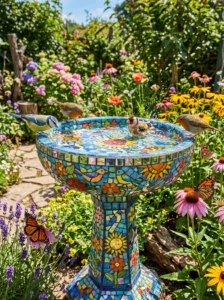
12. Mosaic Tile Bird Bath
A mosaic bird bath adds color and texture without needing expensive materials. Broken plates, leftover tiles, and glass pieces can turn a simple basin into something artistic and personal.
Birds benefit from the textured surface because it provides grip, while homeowners get a decorative focal point.
This style works best in colorful gardens, eclectic patios, or artistic outdoor spaces where bold details feel intentional.
The important thing is smoothing sharp edges carefully. Decorative shouldn’t mean dangerous.
Choose outdoor-safe adhesive and grout because constant water exposure destroys indoor materials quickly.
One underrated benefit of mosaic baths is visibility. Birds can spot reflective surfaces from farther away, especially when sunlight hits the tiles.
People also tend to enjoy maintaining these baths more because they feel handcrafted and unique. Instead of becoming ignored garden accessories, they stay visually interesting year-round.
Even small mosaic details can make a simple DIY bath look professionally designed.
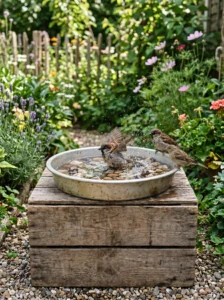
13. Shallow Baking Pan Bird Bath
Sometimes practicality beats aesthetics, especially if your main goal is attracting birds quickly. A shallow baking pan works extremely well because it naturally provides the depth birds prefer.
Metal baking pans are wide, easy to clean, and inexpensive. Birds generally choose function over appearance anyway.
This setup works best in beginner-friendly gardens, temporary outdoor spaces, or yards where you want to test bird activity before building something more decorative.
The biggest issue is heat. Metal pans warm up quickly in direct sunlight, so shaded placement is important.
Adding stones, gravel, or branches inside makes the setup look more natural while helping birds perch safely.
One advantage is maintenance simplicity. You can dump, rinse, and refill the pan in seconds.
People often overcomplicate bird baths, but birds honestly care more about water quality and safety than design trends. This setup proves that clearly.
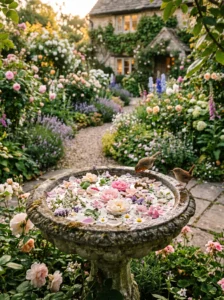
14. Floating Flower Bird Bath
Adding floating flowers or leaves to a bird bath creates a softer, more natural appearance that birds often find less intimidating.
This works because birds are naturally drawn to environments that resemble ponds or forest water sources. Floating petals, leaves, or herbs help reduce the harsh “bowl of water” appearance many artificial baths have.
This idea works especially well in decorative gardens, romantic cottage-style spaces, or backyard seating areas where aesthetics matter just as much as functionality.
Use pesticide-free flowers only. Marigolds, pansies, and rose petals work beautifully.
Avoid overcrowding the water surface. Birds still need open areas for drinking and bathing comfortably.
One nice detail is seasonal flexibility. You can change flowers depending on the time of year, making the bird bath feel fresh without replacing the structure itself.
The setup also photographs beautifully if you enjoy garden photography or social media gardening content.
More importantly, it subtly encourages daily maintenance because replacing flowers naturally reminds you to refresh the water too.
Comparison Table
| Type | Best Use | Material | Style/Vibe | Difficulty Level |
|---|---|---|---|---|
| Terra Cotta Pot Bath | Small gardens & patios | Terra cotta | Rustic & natural | Easy |
| Hanging Bird Bath | Balconies & compact spaces | Metal or ceramic | Light & airy | Easy |
| Concrete Leaf Bath | Decorative garden beds | Concrete | Artistic & organic | Medium |
| Solar Fountain Bath | Large backyards | Mixed materials | Relaxing & lively | Medium |
| Rock Basin Bath | Natural landscapes | Stone | Minimal & earthy | Medium |
| Mosaic Tile Bath | Colorful outdoor spaces | Tile & ceramic | Artistic & vibrant | Medium |
How to Choose the Right Homemade Bird Bath
Choosing the right bird bath is less about decoration and more about how birds actually behave. A beautiful bird bath that birds avoid isn’t doing much for your yard.
Start with size and depth. Most birds prefer shallow water — around 1 to 2 inches deep. Deep bowls may look elegant, but they often discourage smaller birds. Wider baths are usually better than deeper ones because they allow multiple birds to use the space comfortably.
Material matters more than people expect. Stone and concrete stay cooler longer, which helps during hot weather. Terra cotta offers great grip but can crack in freezing temperatures. Metal is durable but heats up quickly in direct sun. Glass looks attractive but may require added stones for traction.
Think carefully about placement. Birds want visibility and safety. A bird bath hidden deep inside dense shrubs might seem cozy, but it can actually create predator risks. Place the bath near plants or trees for quick escape routes while still keeping open sightlines around it.
Maintenance is another big factor. Complicated designs often become annoying to clean, and dirty water quickly drives birds away. Simpler shallow basins are usually easier to rinse and refill regularly.
Budget-wise, homemade bird baths are flexible. Some designs cost almost nothing if you repurpose household items, while decorative concrete or mosaic versions may require more materials. Expensive doesn’t automatically mean better for birds.
One common mistake is focusing too much on style and forgetting practicality. Birds care about stable footing, shallow clean water, and safety far more than decorative details. Another mistake is placing bird baths in full afternoon sun, which overheats water and increases algae growth.
The best homemade bird baths usually balance function and appearance naturally. They look good in the garden while still feeling comfortable and safe for wildlife.
Conclusion
Homemade bird baths work so well because they feel more personal, flexible, and natural than many store-bought options. Instead of forcing your yard to fit a manufactured design, you can create something that actually suits your space, budget, and style.
Some people prefer rustic stone basins that blend quietly into the landscape, while others enjoy colorful mosaic designs or playful vintage bowls. There’s no single “perfect” bird bath. What matters most is creating a safe, shallow, clean water source birds feel comfortable using regularly.
The good news is that attracting birds usually doesn’t require expensive materials or complicated DIY skills. In many cases, thoughtful placement and proper water depth matter far more than decoration. A simple baking pan in the right location can attract more birds than a fancy fountain placed poorly.
It’s also worth remembering that bird baths change the atmosphere of outdoor spaces in subtle ways. They add movement, sound, and small daily moments that make gardens feel calmer and more alive.
Start simple if you’re unsure. Watch how birds respond. Over time, you’ll naturally figure out what works best in your particular yard. That trial-and-error process is honestly part of the fun.
FAQs
1. How deep should a bird bath be?
Most birds prefer shallow water between 1 and 2 inches deep. Deeper water can make smaller birds nervous. Adding stones or pebbles helps create safe standing spots and varying depths.
2. Where is the best place to put a bird bath?
Place it in partial shade with some nearby trees or shrubs for shelter, but not too close to dense hiding spots for predators. Birds like open visibility around water sources.
3. How often should I clean a homemade bird bath?
Ideally every two to three days, especially during warm weather. Dirty water grows algae and bacteria quickly. A quick rinse and refill usually keeps it safe and attractive to birds.
4. Can I use plastic containers for a bird bath?
Yes, but choose sturdy, shallow containers. Plastic is lightweight and inexpensive, though it may fade or crack over time. Adding stones improves grip and appearance.
5. Why aren’t birds using my bird bath?
The most common reasons are poor placement, water being too deep, dirty water, or lack of nearby shelter. Birds sometimes need a few weeks to discover a new water source too.
6. Is moving water better for attracting birds?
Usually, yes. Birds notice movement and sound more easily than still water. Even a small solar fountain or dripper can increase bird activity significantly.
7. What materials last the longest outdoors?
Stone, concrete, and heavy ceramic usually last the longest. Wood and terra cotta can weather beautifully but may need more maintenance depending on climate conditions.
8. Should bird baths stay out during winter?
Yes, if possible. Birds still need water during winter. In colder climates, heated bird baths or regular ice removal can help keep water accessible safely.