A deck with a built-in bench around the edge seats a crowd without filling the floor with chairs. You get permanent seating, a clean edge, and a place for everyone to land with a drink — all from the same boards your deck is already made of. Pick the shape that fits your deck life: big dinners, quiet mornings, or evenings around a fire.
Below are 17 ways to build it, each with a realistic cost, a difficulty rating, and one money-saving tip. Most decks only need one or two.
Why Built-In Benches Work So Well on a Deck
Loose chairs slide around, blow over, and need storing every winter. A bench fixed to the deck edge stays put, seats three people in the space of two chairs, and doubles as a low wall that makes the deck feel like a room. It costs less than a full set of outdoor furniture, and most of these designs go up in a weekend with basic tools.
Before you start, measure the edge. A standard seat is 17 to 19 inches high and 16 to 18 inches deep. Sketch the run first, mark the steps and grill, and leave those spots open.
1. The Classic L-Shaped Perimeter Bench
Two straight runs meet at a corner, hugging two deck edges. It seats six to eight and leaves the middle open for a table or fire pit.
Cost: $900–$1,800 for a 12-foot run in pressure-treated pine; $1,800–$3,500 in cedar or hardwood. Difficulty: Moderate — a weekend for a confident DIYer. Tip: Slope the seat slightly toward the edge so rain runs off instead of pooling.
Watch out: Corners collect leaves — leave a half-inch gap where the runs meet.

2. The Full Wrap-Around Bench
Benches run along three sides of the deck, with the fourth side left open for the steps. It seats ten to twelve with no folding chairs — the best pick for big groups.
Cost: $2,000–$4,500 depending on deck size and wood. Difficulty: Moderate to advanced — allow two to three days. Tip: Break runs longer than eight feet into sections with a small gap, so the wood can move with the seasons without buckling.
Watch out: A bench on three sides hides the view from a low seat. Keep the seat near 16 inches high on the side facing the best view. If your deck wraps the house, these wraparound porch decor ideas tie the spaces together.

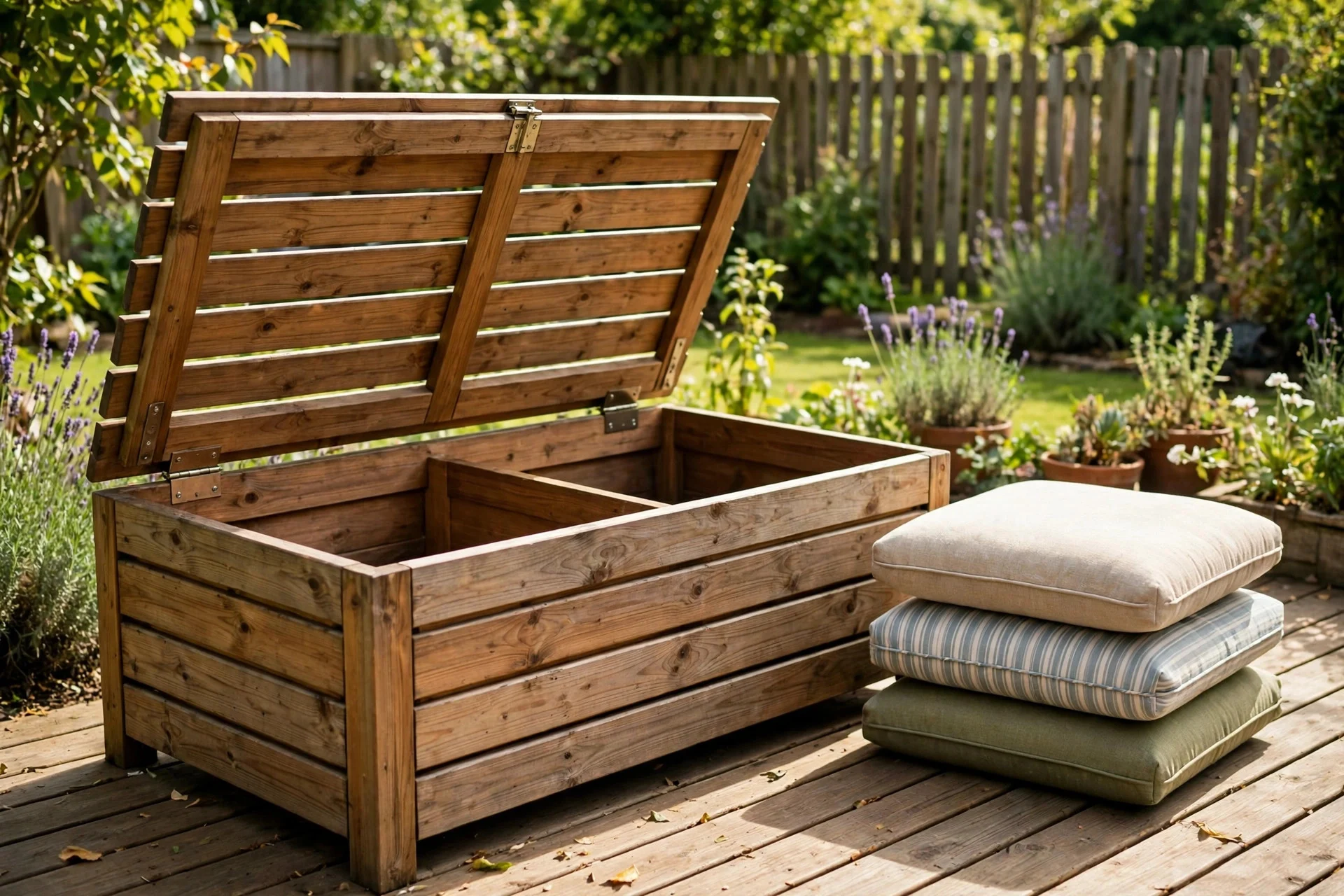
3. The Bench With Hidden Storage Under the Seat
The seat lifts on hinges to reveal a storage box underneath — the most useful bench on this list. Cushions, pool toys, garden tools, and outdoor games all disappear inside, and the deck stays clear. Pick this one first if your deck looks cluttered by July.
Cost: $1,200–$2,500 for a 10-foot run, including hinges and hardware. Difficulty: Moderate — the box is simple framing, but the lid must sit flush. Tip: Fit gas struts so the lid stays open, and drill drain holes in the bottom of each box.
Watch out: A sealed box traps damp. Leave a thin gap under the lid, and never store anything that must stay bone dry in there.
4. The Curved Bench Around a Fire Pit
Short bench segments join into a gentle curve around a round fire pit, so everyone faces the flames and nobody drags a chair across the deck. A full circle seats eight; a three-quarter curve leaves room for firewood.
Cost: $1,500–$3,800 plus the fire pit itself. Difficulty: Advanced — allow a weekend plus an evening for fitting. Tip: Build the curve from short straight segments of 18 to 24 inches each; the eye reads it as a curve, and the cuts stay simple.
Watch out: Check your local fire code for the required distance from the house and railing before you build.

This post contains affiliate links. As an Amazon Associate I earn from qualifying purchases — at no extra cost to you.
Shop this idea
Patio Wise Acacia Wood Railing Planter Box, Outdoor Hanging Flower, Plant, & Herb Boxes, 20-Inch Wide x 5-Inch Tall x 4.5-Inch Deep Rectangular Porch, Deck, & Balcony Planters, Teak Color
Hooks over a deck rail with no drilling, so greenery sits right beside the bench without taking up any seat space.
As an Amazon Associate I earn from qualifying purchases. (paid link)
5. The Bench and Planter Combo
Planter boxes sit at the ends of the bench — or between sections of it — so greenery frames the seating. Herbs near the grill, flowers on a sunny edge, tall grasses for privacy — the plants do the decorating.
Cost: $1,000–$2,200 for the bench and two planters. Difficulty: Easy to moderate — a day for a straight run with simple box planters. Tip: Set a separate liner box inside each planter so soil and water never touch the bench frame.
Watch out: Watering splashes stain raw wood. Seal the bench well and pick plants suited to that edge’s sun.

6. The Low Bench That Doubles as a Deck Step
A wide, low bench — 12 to 14 inches high — runs along the deck edge and works as a step down to the lawn. Kids sit on it, adults perch on it with a coffee, and everyone uses it to step down without hunting for the stairs.
Cost: $300–$800 in pressure-treated pine. Difficulty: Easy — half a day with basic tools. Tip: Make the seat at least 18 inches deep and round over the front edge for bare feet.
Watch out: A low bench at the edge can trip someone who mistakes it for the deck itself. Keep it clearly lower than the deck surface, and never put it where the main path crosses the edge.

7. The Bench With a Full Backrest
A backrest rises from the rear of the bench, usually against the railing, so you can lean back instead of perching. Add outdoor pillows and it feels close to a sofa. It suits readers, long dinners, and sore backs.
Cost: $1,400–$3,000 for a 10-foot run with a backrest. Difficulty: Moderate — the backrest adds a day of framing and fitting. Tip: Angle it 5 to 10 degrees; a straight-up back feels like a church pew after twenty minutes.
Watch out: A tall backrest blocks the view from inside the house. On the garden side, keep it under 36 inches above the seat.

8. The Corner Nook Bench With a Small Table
A short L-shaped bench tucks into a deck corner with a small table in front of it, making a nook for two. Morning coffee, a board game, a laptop in the shade — it gets used on ordinary weekdays, not just at parties.
Cost: $800–$1,900 for the bench; a small table adds $80–$250. Difficulty: Easy to moderate — a weekend, less if the corner is square. Tip: Leave about 24 inches between the seat edge and the table so legs fit and plates clear knees.
Watch out: A fixed table makes sweeping under it a chore. Use a freestanding table you can lift aside.

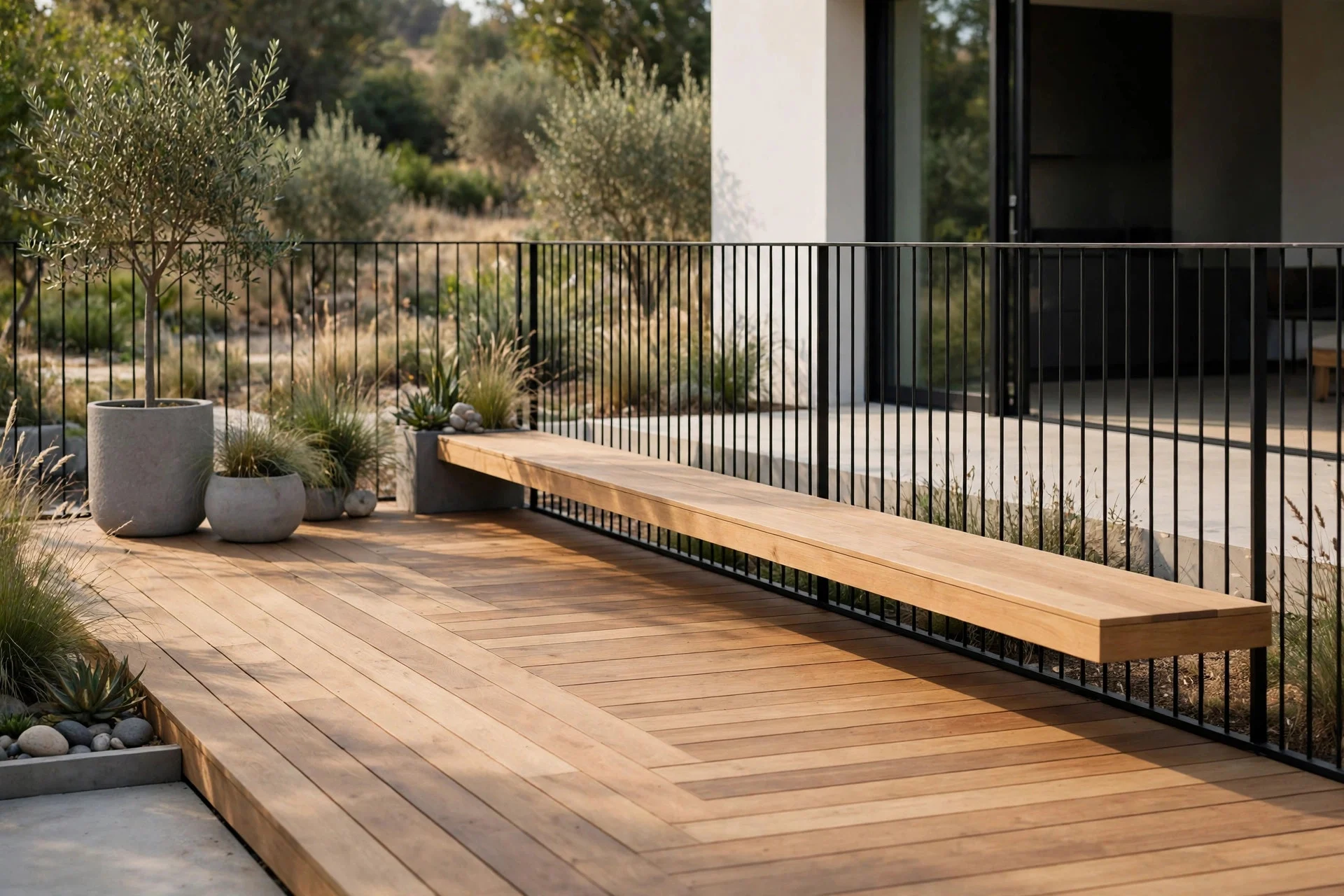
9. The Floating Bench Along One Edge
The bench cantilevers out from the deck frame or the house wall with no legs touching the deck — a clean, modern line that makes the deck feel bigger and lets you sweep straight underneath. It needs real structure behind it.
Cost: $1,100–$2,600, including steel brackets or hidden supports. Difficulty: Advanced — the framing must be sized for the load. Tip: Bolt rated steel brackets every 16 inches into solid framing, not just deck boards.
Watch out: Size the supports for adults leaning back with their feet up, not just for the bench’s own weight.
10. The Bench Around the Hot Tub or Pool Edge
A bench follows the curve of a hot tub or runs along the pool side of the deck, giving swimmers a place to sit, dry off, and set down towels and drinks.
Cost: $1,200–$3,000 depending on length and curve. Difficulty: Moderate — straight runs are simple; curves take more time. Tip: Leave a 6-inch gap between the bench and the tub so you can lift the cover, and use a non-slip finish on the seat.
Watch out: Splash water rots wood fast. Use composite boards here, or seal natural wood every year without fail. For the rest of the poolside setup, these pool deck decor ideas cover shade, storage, and seating that can handle the wet.

Shop this idea
Litever Under Cabinet LED Lighting Kit, 6 pcs 12 Inches Light Strips, 2000 Lumen, Warm White (6 Bars)
Slim, dimmable LED bars that tuck under the bench edge and light the deck after dark.
As an Amazon Associate I earn from qualifying purchases. (paid link)
11. The Bench With Integrated Lighting
A low-voltage LED strip hides under the front edge of the seat, washing the deck boards below in warm light. It marks the bench edge after dark so nobody trips, and it stretches deck season into the evening. It is the easiest upgrade here.
Cost: $150–$400 added to any bench build, for a kit and a transformer. Difficulty: Easy — most kits are plug-in or low-voltage and take an hour to fit. Tip: Pick warm white, around 2700K, and hide the strip in a small channel so you see the glow, not the bulbs.
Watch out: Keep the transformer somewhere dry and reachable — a dead light you cannot reach is worse than none.

Shop this idea
TESICA Floral Outdoor Bench Cushion Waterproof Seat Pad Patio Tufted Replacement Seat Pad for Garden Patio Furniture 40×20 in Navy Green
A thick waterproof pad with ties that turns the deep bench into a comfortable daybed seat.
As an Amazon Associate I earn from qualifying purchases. (paid link)
12. The Extra-Deep Bench That Works as a Daybed
Build the seat 30 to 36 inches deep, add thick cushions, and the bench becomes an outdoor daybed for naps, reading, and kids piling on with books. It fits best where there is room to spare, facing the sun or the garden.
Cost: $1,000–$2,400 for the frame, plus $200–$600 for outdoor cushions. Difficulty: Easy to moderate — the frame is simple; the cushions take the shopping time. Tip: Use quick-dry foam with a mesh bottom so rain drains through.
Watch out: A deep seat with no back is awkward — you slide around with nothing behind you. Add a backrest or a row of large firm pillows.

13. The Bench With a Built-In Drink Ledge
A narrow raised shelf runs behind the seat, just wide enough for a glass, a book, and a lantern. Nobody has to balance a drink on the seat or get up for a side table. People stay seated longer.
Cost: $100–$300 added to any bench build. Difficulty: Easy — a single board on short brackets, fitted in an hour. Tip: Make the ledge 6 to 8 inches wide and set it 8 to 10 inches above the seat so glasses sit flat and elbows clear it.
Watch out: Keep it low, and skip it where kids climb over the back.

14. The Two-Level Deck Bench
On a split-level deck, the bench sits on the lower tier and faces the upper one, like a small amphitheater. The level change itself becomes seating for a crowd.
Cost: $1,300–$3,200 depending on length. Difficulty: Moderate to advanced — the bench must tie into two levels of framing. Tip: Face the bench toward the best view or the grill, not toward the house wall, and keep the seat clear of the main stair path.
Watch out: The drop between levels needs a clear step or a light at night. Light the edge, or someone will misjudge it after dark.

15. The Bench Under a Pergola
A bench set under a pergola gets shade at midday and a frame of beams and climbing plants overhead. It anchors the pergola and turns a sunny edge into the coolest seat in the yard.
Cost: $900–$2,000 for the bench; a pergola adds $1,500–$5,000. Difficulty: Moderate — the bench is a weekend; the pergola is a bigger job. Tip: Line the bench up under the pergola beams so the shade falls on the seat at midday, not on the empty deck beside it.
Watch out: Leaves, pollen, and bird mess land on the seat. Pick a washable cushion fabric and keep a small brush by the door. For the open sides, these patio outdoor curtains and shade ideas show what holds up outside.

16. The Narrow Bench for a Small Deck
On a small deck, a full-depth bench eats the whole floor. A slim bench — 12 to 14 inches deep — runs along one edge and seats three or four people while leaving room for a bistro table and two chairs. It suits decks barely bigger than a balcony.
Cost: $400–$1,000 in pressure-treated pine or cedar. Difficulty: Easy — a day’s work with basic tools. Tip: Skip the backrest and keep the seat backless; a back on a narrow bench pushes sitters forward and wastes the depth you saved.
Watch out: Under 12 inches it feels like a ledge, not a seat — test-sit the depth with a scrap board first.

17. The Bench in a Contrasting Wood Tone
Build the bench in a different tone from the deck boards — pale cedar on a dark walnut deck, or a deep stain on pale pine — and the bench becomes a design feature instead of blending in. The contrast makes a plain rectangular deck look intentional, for the price of a second stain or wood choice.
Cost: Same as a standard bench, plus $100–$300 for the second wood or stain. Difficulty: Easy to moderate — the build is standard; the finish takes the care. Tip: Test stain samples on scrap boards in daylight, side by side with the deck, before you commit to a whole bench.
Watch out: Keep other furniture to one of the two tones, or they fight each other.

Frequently Asked Questions
How much does a built-in deck bench cost?
Most single runs cost $400 to $2,500, depending on length, wood, and extras like storage or lighting. A short pine bench can come in under $500, while a long cedar wrap-around with storage and lights can pass $4,000. Get wood quotes first — lumber prices move by region and season.
How deep and high should a deck bench seat be?
Aim for a seat 17 to 19 inches high and 16 to 18 inches deep, which fits most adults. Go 30 inches or more only for a daybed with cushions and a back. For a bench that doubles as a step, drop the height to 12 to 14 inches and widen the seat to at least 18 inches.
Can a built-in bench replace a deck railing?
Usually no. Most building codes require a guardrail of a set height on raised decks, and a bench seat is too low to count as one. A bench can sit inside a railing, and on a low deck near grade level you may not need a rail at all — but check your local code first — rules change by area and deck height.
What wood holds up best for an outdoor bench?
Cedar and redwood resist rot naturally and are the easiest to work with. Hardwoods like ipe and teak last longer but cost more and need special fasteners. Pressure-treated pine is the budget pick and lasts well if sealed. Composite needs almost no upkeep and suits wet spots, though it can feel hot in full sun.
Do built-in deck benches need cushions?
No — bare wood is comfortable for short sits and needs nothing but a seal. Cushions add comfort for long evenings and a shot of color, but they need storage or quick-dry foam, or they will mildew. If you hate hauling cushions inside, try thin seat pads hung by the door instead.
Pick One Edge and Start There
You do not need all 17 ideas — one good bench changes how a deck gets used. Start with the edge you sit on most, add storage if you can, and try lighting once you see the bench at night. Measure twice, and seal the wood before the first rain.